Uterine Polyp Removal in Seoul
Gangnam Y Queen Women's Clinic
Y Queen Women's Clinic provides English-speaking uterine polyp evaluation and treatment consultations in Gangnam, Seoul for local and international patients. Uterine or endometrial polyps are usually benign growths of the uterine lining that may cause heavy periods, bleeding between periods, postmenopausal bleeding, or fertility concerns. Our OB-GYN specialists evaluate suspected polyps using clinical assessment and pelvic ultrasound and can discuss hysteroscopic polypectomy, monitoring, fertility considerations, and pathology testing when appropriate. When specialized or hospital-based removal is required, referral can be coordinated while patients receive personalized, private, and foreigner-friendly gynecological care in Seoul.
Uterine polyps, also called endometrial polyps, are growths that develop from the inner lining of the uterus. Most are benign, but they can cause abnormal uterine bleeding, spotting between periods, heavy menstruation, or fertility concerns. Depending on their size, symptoms, and individual risk factors, your doctor may recommend monitoring or removal.
At Y Queen Women's Clinic in Gangnam, Seoul, we provide comprehensive evaluation and personalized management for suspected uterine polyps. Our English-speaking women's health team welcomes Korean residents, expats, international students, business travelers, and medical tourists seeking professional gynecological care in Korea.
Our OB-GYN specialists can evaluate uterine polyps using pelvic ultrasound and other appropriate diagnostic methods, discuss whether removal is recommended, and coordinate further procedural or hospital-based care when necessary.
What Is a Uterine Polyp?
A uterine polyp is an overgrowth of tissue arising from the endometrium, the lining inside the uterus.
Polyps can vary in:
- Size
- Number
- Shape
- Location within the uterus
Some are very small, while others can grow large enough to occupy part of the uterine cavity.
Most uterine polyps are noncancerous. However, because a small proportion can contain precancerous or cancerous changes, removed tissue may be sent for pathological examination when clinically appropriate.
What Are the Symptoms of Uterine Polyps?
Some uterine polyps cause no symptoms and are discovered during a routine ultrasound or fertility evaluation.
When symptoms occur, they may include:
- Bleeding between periods
- Irregular menstrual bleeding
- Heavy menstrual periods
- Prolonged menstrual bleeding
- Spotting
- Bleeding after sexual intercourse
- Bleeding after menopause
- Difficulty becoming pregnant
Abnormal bleeding should be evaluated because many conditions other than polyps can cause similar symptoms.
What Causes Uterine Polyps?
The exact cause is not always known, but uterine polyps appear to be influenced by hormonal factors, particularly estrogen.
Factors associated with endometrial polyps may include:
- Perimenopause or menopause
- Hormonal changes
- Certain medications
- Obesity
- High blood pressure
- Individual endometrial response to estrogen
Having one or more risk factors does not necessarily mean you will develop a uterine polyp.
Who Should Seek Evaluation?
You should consider a gynecological evaluation if you experience:
- Bleeding between periods
- Persistent irregular bleeding
- Heavy menstrual bleeding
- Bleeding after menopause
- Unexplained spotting
- Difficulty becoming pregnant
- Recurrent abnormal uterine bleeding
- A suspected polyp identified on previous imaging
Postmenopausal bleeding should always be medically evaluated.
How Are Uterine Polyps Diagnosed?
Evaluation may include:
- Medical history review
- Menstrual history assessment
- Pelvic examination
- Transvaginal pelvic ultrasound
- Saline infusion sonography when appropriate
- Hysteroscopy
- Endometrial sampling in selected patients
The appropriate diagnostic approach depends on your symptoms, age, ultrasound findings, and medical history.
What Is Uterine Polyp Removal?
Removal of a uterine polyp is known as a polypectomy.
Hysteroscopic polypectomy is a commonly used approach. A thin instrument with a camera, called a hysteroscope, is passed through the vagina and cervix into the uterus. This allows the physician to directly visualize the uterine cavity and remove the polyp.
Because the procedure is performed through the cervix, an abdominal incision is generally not required.
When Is Polyp Removal Recommended?
Removal may be considered when:
- The polyp causes abnormal bleeding
- Bleeding is persistent or heavy
- The patient has postmenopausal bleeding
- The polyp may be affecting fertility
- The polyp is relatively large
- Imaging findings require further evaluation
- There are risk factors for abnormal endometrial tissue
- Tissue diagnosis is medically appropriate
Small, asymptomatic polyps may sometimes be monitored instead of immediately removed.
Your doctor will recommend an individualized approach.
What Happens During Your Consultation?
Your appointment may include:
- Medical history review
- Menstrual and bleeding history
- Pregnancy and fertility history
- Pelvic examination when indicated
- Pelvic ultrasound
- Review of previous imaging
- Discussion of polyp size and location
- Discussion of monitoring versus removal
- Treatment planning
- Referral for hysteroscopic removal when necessary
Your doctor will explain the findings and recommended next steps.
Hysteroscopic Polyp Removal
Hysteroscopy allows the physician to look directly inside the uterine cavity.
During hysteroscopic polyp removal:
- A hysteroscope is inserted through the vagina and cervix.
- The uterine cavity is examined.
- The polyp is identified.
- Specialized instruments are used to remove it.
- Removed tissue may be sent to a laboratory for pathological examination.
The specific setting, anesthesia, and recovery process depend on the size and location of the polyp and the procedure being performed.
Does Uterine Polyp Removal Hurt?
Discomfort varies depending on the type of procedure and whether anesthesia or pain medication is used.
Patients may experience:
- Mild pelvic cramping
- Temporary pressure
- Light vaginal bleeding
- Mild discomfort after the procedure
Your treating physician will discuss pain-control options before treatment.
Recovery After Uterine Polyp Removal
Recovery is usually relatively quick after uncomplicated hysteroscopic polypectomy.
After the procedure, you may experience:
- Mild cramping
- Light vaginal bleeding
- Spotting
- Temporary vaginal discharge
Your doctor will provide instructions about exercise, sexual intercourse, tampon use, and other activities.
Seek medical attention if you develop heavy bleeding, severe pain, fever, or other concerning symptoms after the procedure.
Can Uterine Polyps Affect Fertility?
Uterine polyps can sometimes interfere with fertility, particularly when they affect the uterine cavity or implantation.
For women trying to become pregnant, your doctor may evaluate:
- Polyp size
- Polyp location
- Number of polyps
- Other uterine abnormalities
- Ovulation and ovarian health
- Additional fertility factors
Removing a polyp may be recommended in selected patients undergoing fertility treatment or experiencing difficulty conceiving.
Are Uterine Polyps Cancerous?
Most uterine polyps are benign.
However, a small percentage can contain precancerous or cancerous cells. Risk may be higher in certain groups, including some postmenopausal women and patients with abnormal bleeding.
For this reason, removed polyps are often sent for pathology testing to determine the type of tissue present.
Uterine Polyps vs. Uterine Fibroids
Polyps and fibroids are different conditions.
Uterine Polyps
Develop from the endometrial lining inside the uterus.
Uterine Fibroids
Develop from the muscular tissue of the uterus.
Both can cause heavy or irregular bleeding, but their diagnosis and treatment can differ.
How Should I Prepare?
Before your appointment:
- Track your menstrual cycles and bleeding
- Note when spotting occurs
- Bring previous ultrasound reports if available
- List medications and supplements
- Tell your doctor if you are pregnant or could be pregnant
- Bring relevant fertility records if applicable
If a procedure is scheduled, you will receive specific preparation instructions beforehand.
Uterine Polyp Removal Cost in Seoul
At Y Queen Women's Clinic:
- Consultation fees vary depending on the evaluation required.
- Additional costs may apply for pelvic ultrasound, laboratory testing, pathology, or other diagnostic procedures.
- If hysteroscopic or hospital-based removal is recommended, procedure costs depend on the treatment required and facility where it is performed.
Your doctor can explain the recommended evaluation and expected costs before treatment.
Why Choose Y Queen Women's Clinic?
International patients choose Y Queen because of its:
- English-speaking medical support
- Experienced OB-GYN specialists
- Uterine polyp evaluation
- Pelvic ultrasound available
- Abnormal uterine bleeding evaluation
- Fertility-focused counseling
- Personalized treatment planning
- Comfortable, private consultation rooms
- Convenient Gangnam location
- Foreigner-friendly appointment process
- Referral coordination when specialized procedures are required
We provide individualized gynecological care focused on identifying the cause of abnormal bleeding and selecting an appropriate treatment based on each patient's health and reproductive goals.
Convenient Location in Gangnam
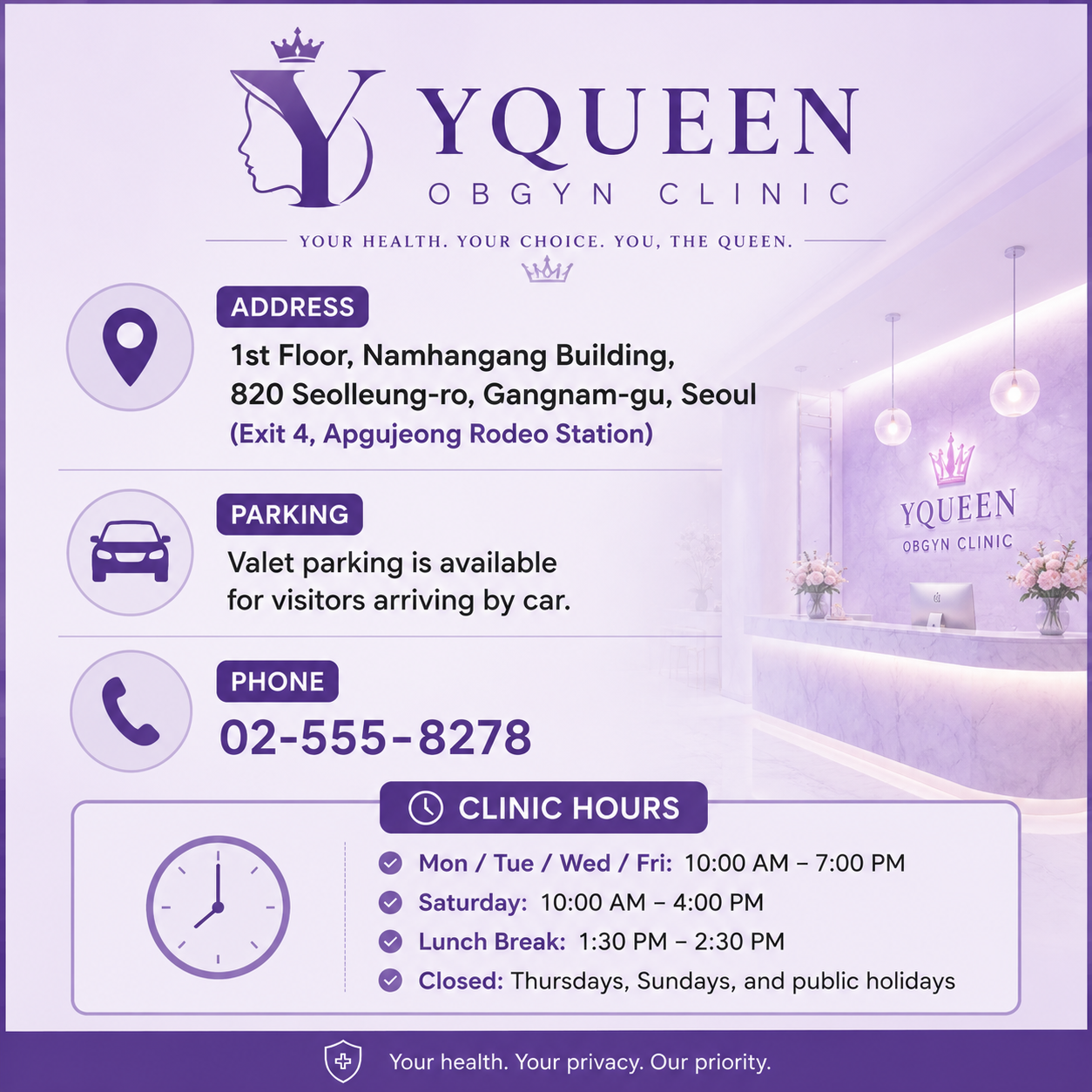
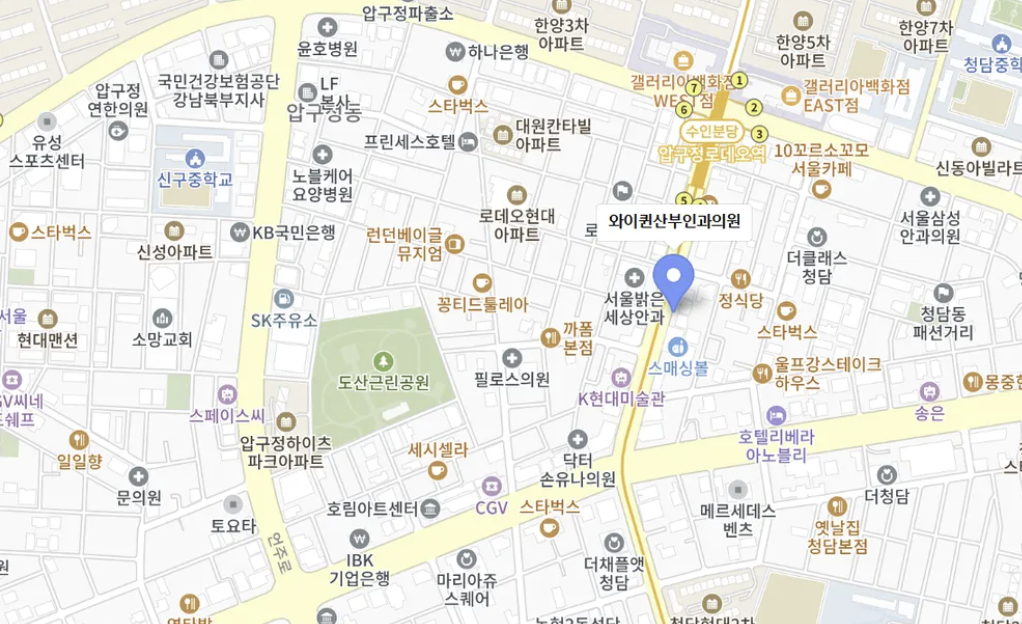
Y Queen Women's Clinic is located in Gangnam, Seoul, with convenient access near Apgujeong Rodeo Station.
The clinic is accessible for international patients living, working, studying, or staying in Gangnam, Cheongdam, Sinsa, Itaewon, Myeongdong, and other areas of central Seoul.
Frequently Asked Questions
What is a uterine polyp?
A uterine or endometrial polyp is an overgrowth of tissue from the inner lining of the uterus. Most polyps are benign, but some can cause abnormal bleeding or fertility concerns.
Do all uterine polyps need to be removed?
No. Small polyps without symptoms may sometimes be monitored. Removal may be recommended based on symptoms, size, age, fertility goals, and other clinical factors.
How are uterine polyps removed?
Uterine polyps are commonly removed using hysteroscopy, which allows the physician to see inside the uterus and remove the polyp through the cervix without an abdominal incision.
Can foreigners get uterine polyp treatment in Seoul?
Yes. Y Queen Women's Clinic welcomes international patients and provides English-speaking gynecological consultations and uterine polyp evaluations.
Can a uterine polyp cause heavy periods?
Yes. Uterine polyps may cause heavy periods, irregular bleeding, spotting between periods, or prolonged menstrual bleeding.
Can uterine polyps affect fertility?
Yes. Some polyps can interfere with implantation or fertility depending on their size and location. Removal may be recommended for selected patients trying to conceive.
Can uterine polyps come back after removal?
Yes. A removed polyp does not grow back, but new uterine polyps can develop in the future.
Are uterine polyps cancerous?
Most are benign. However, some polyps can contain precancerous or cancerous tissue, which is why pathological examination may be recommended after removal.
How long does recovery take?
Recovery after uncomplicated hysteroscopic polyp removal is generally short. Mild cramping and spotting may occur for several days, but individual recovery depends on the procedure performed.
Does Y Queen Women's Clinic perform uterine polyp removal?
Y Queen Women's Clinic can provide evaluation, pelvic ultrasound, treatment planning, and consultation for uterine polyps. The appropriate setting for polyp removal depends on the individual case; when hospital-based or specialized hysteroscopic treatment is required, referral can be coordinated.