Lichen Sclerosus Treatment in Seoul Gangnam Y Queen Women's Clinic
Y Queen Women's Clinic provides English-speaking lichen sclerosus evaluation and treatment in Gangnam, Seoul for local and international patients. Lichen sclerosus is a chronic inflammatory condition that commonly affects vulvar and perianal skin and may cause severe itching, burning, white patches, fragile skin, fissures, painful intercourse, and progressive scarring. It is not contagious and is not a sexually transmitted infection. High-potency prescription topical corticosteroids are the standard first-line treatment and can reduce inflammation, relieve symptoms, and help prevent further anatomical changes. Long-term follow-up is important because symptoms may recur and vulvar lichen sclerosus is associated with an increased risk of vulvar squamous cell carcinoma. Y Queen Women's Clinic offers confidential, foreigner-friendly vulvar care, biopsy when clinically indicated, treatment planning, skincare counseling, and ongoing monitoring in Seoul.
What Is Lichen Sclerosus?
Lichen sclerosus is a long-term inflammatory skin disorder that can affect genital and non-genital skin.
In women, it most commonly involves the:
- Vulva
- Labia
- Clitoral hood
- Perineum
- Skin around the anus
The vaginal canal itself is usually not the main site of disease.
The condition is not contagious and is not considered a sexually transmitted infection.
What Does Lichen Sclerosus Look Like?
Lichen sclerosus may cause:
- White or pale patches of skin
- Thin, fragile skin
- Smooth or shiny areas
- Small cracks or fissures
- Bruising
- Areas of redness
- Scar-like changes
- Narrowing or fusion of vulvar structures over time
Appearance can vary, especially in early disease.
Some patients mainly experience itching or discomfort before obvious skin changes develop.
What Are the Symptoms of Lichen Sclerosus?
Common symptoms include:
- Severe vulvar itching
- Burning
- Soreness
- Pain
- Skin tearing
- Pain during intercourse
- Bleeding from fragile skin
- Discomfort when urinating if urine contacts irritated skin
- Tightness around the vaginal opening
- Changes in vulvar anatomy
Some patients have visible skin changes with little discomfort.
Others experience significant symptoms.
Is Lichen Sclerosus an STD?
No.
Lichen sclerosus is not considered a sexually transmitted infection.
It does not spread from one partner to another through sexual contact.
However, the condition may cause pain or skin tearing during intercourse, which can affect sexual comfort.
Is Lichen Sclerosus Contagious?
No.
Lichen sclerosus is not contagious.
You cannot catch it from:
- Sexual contact
- Toilets
- Towels
- Swimming pools
- Casual skin contact
The exact cause is not fully understood.
What Causes Lichen Sclerosus?
The exact cause is unknown.
Possible contributing factors may include:
- Immune system activity
- Genetic susceptibility
- Hormonal influences
- Local skin vulnerability
- Previous trauma or irritation in some cases
Lichen sclerosus is considered an inflammatory condition rather than an infection.
Who Gets Lichen Sclerosus?
Lichen sclerosus can occur at any age.
It is more commonly recognized in:
- Postmenopausal women
- Adult women
- Girls before puberty
However, reproductive-age women can also develop the condition.
Because symptoms can be mistaken for yeast infections or irritation, diagnosis is sometimes delayed.
Lichen Sclerosus During Menopause
Lichen sclerosus is relatively common in postmenopausal women.
Menopause can also cause vaginal and vulvar dryness from low estrogen, which may occur at the same time.
This can make symptoms such as:
- Burning
- Itching
- Pain during intercourse
- Vulvar discomfort
more complicated to evaluate.
A gynecological examination can help distinguish lichen sclerosus from genitourinary syndrome of menopause and other vulvar disorders.
Lichen Sclerosus vs. Yeast Infection
These conditions can both cause itching, but they are different.
Lichen Sclerosus
More commonly causes:
- White vulvar patches
- Thin or fragile skin
- Tearing
- Chronic symptoms
- Scarring or structural changes
Yeast Infection
More commonly causes:
- Intense itching
- Redness
- Vaginal irritation
- Thick discharge
Repeated treatment for yeast without improvement should prompt evaluation for other causes.
Lichen Sclerosus vs. Lichen Planus
Lichen sclerosus and lichen planus are different inflammatory conditions.
Lichen planus may affect:
- Vulva
- Vagina
- Mouth
- Other skin areas
Lichen sclerosus typically affects vulvar and perianal skin and usually spares the internal vagina.
Biopsy may sometimes be needed to distinguish them.
Lichen Sclerosus vs. Vulvar Dermatitis
Vulvar dermatitis can cause:
- Itching
- Redness
- Burning
- Dryness
- Irritation
It may be triggered by soaps, detergents, pads, fragrances, or other irritants.
Lichen sclerosus may cause more characteristic white plaques, fragility, fissures, and anatomical changes.
Because the conditions can overlap, examination is important.
Can Lichen Sclerosus Affect the Clitoris?
Yes.
Lichen sclerosus can affect skin around the clitoral hood.
Over time, untreated inflammation and scarring may cause:
- Tightening of the clitoral hood
- Adhesions
- Reduced mobility of surrounding skin
- Changes in vulvar anatomy
Early treatment can help reduce the risk of progressive scarring.
Can Lichen Sclerosus Affect the Vaginal Opening?
Yes.
Scarring can sometimes cause narrowing or tightening around the vaginal entrance.
This may contribute to:
- Pain with penetration
- Difficulty with intercourse
- Tearing
- Discomfort during gynecological examinations
Medical treatment aims to control inflammation and prevent further tissue damage.
Can Lichen Sclerosus Cause Pain During Sex?
Yes.
Pain during intercourse may result from:
- Fragile skin
- Fissures
- Inflammation
- Scarring
- Narrowing around the vaginal opening
- Reduced elasticity
Treatment can improve inflammation, but significant scarring may require additional management.
Can Lichen Sclerosus Cause Bleeding?
Yes.
The affected skin can become thin and fragile.
Minor friction may lead to:
- Small tears
- Bruising
- Spotting
- Surface bleeding
Persistent, unexplained, or new bleeding should still be medically evaluated.
Can Lichen Sclerosus Cause Vulvar Scarring?
Yes.
Untreated or poorly controlled lichen sclerosus can lead to progressive scarring.
Possible changes include:
- Fusion of labial tissue
- Loss of normal vulvar contours
- Tightening around the clitoris
- Narrowing of the vaginal opening
- Adhesions
Controlling inflammation is important to reduce the risk of these changes.
How Is Lichen Sclerosus Diagnosed?
Diagnosis is often based on:
- Medical history
- Symptoms
- Vulvar examination
- Appearance of the skin
A biopsy may be recommended in selected cases.
Do I Need a Vulvar Biopsy?
Not every patient requires biopsy.
A biopsy may be considered if:
- The diagnosis is uncertain
- The skin appearance is atypical
- Treatment does not work as expected
- A persistent thickened area develops
- There is an ulcer or suspicious lesion
- Cancer or precancerous change needs to be excluded
A small tissue sample is sent to a pathology laboratory for examination.
Lichen Sclerosus Treatment in Seoul
The main goal of treatment is to control inflammation and protect vulvar skin.
Treatment may include:
- Prescription topical corticosteroids
- Gentle vulvar skincare
- Avoidance of irritating products
- Moisturizing or barrier care
- Long-term maintenance treatment in selected patients
- Regular follow-up examinations
- Treatment of associated scarring or narrowing when necessary
The treatment plan depends on symptom severity and examination findings.
Topical Steroid Treatment
High-potency topical corticosteroids are considered the standard medical treatment for vulvar lichen sclerosus.
A commonly used medication internationally is clobetasol propionate.
Treatment is typically used according to a structured schedule rather than applied randomly.
The goals are to:
- Reduce inflammation
- Control itching
- Improve soreness
- Prevent further scarring
- Restore healthier skin appearance where possible
Your physician should explain how much medication to use, where to apply it, and how treatment should be tapered or maintained.
Is Strong Steroid Cream Safe on the Vulva?
When prescribed and monitored appropriately, high-potency topical corticosteroids are widely used for lichen sclerosus.
Patients are sometimes worried because the medicine is described as "strong," but inadequate treatment can allow ongoing inflammation and scarring.
Correct use is important.
Using too little may fail to control disease, while unsupervised or inappropriate use can cause side effects.
Follow-up helps ensure treatment is effective and safe.
How Long Does Treatment Take?
Lichen sclerosus is usually a chronic condition.
Initial treatment may continue for weeks to months depending on severity.
After symptoms improve, some patients require maintenance therapy to reduce recurrence.
Treatment duration is individualized.
Does Lichen Sclerosus Go Away Permanently?
Lichen sclerosus often behaves as a long-term condition.
Symptoms may become well controlled and skin appearance may improve significantly, but recurrence is possible.
Regular follow-up and maintenance treatment may therefore be recommended even when symptoms are minimal.
What If Steroid Treatment Does Not Work?
If symptoms do not improve as expected, your doctor may reconsider:
- Whether the diagnosis is correct
- Whether medication is being applied correctly
- Whether treatment is strong enough
- Whether another condition is present
- Whether infection or dermatitis is also present
- Whether biopsy is needed
Other specialist treatments may be considered in selected cases.
Other Medications for Lichen Sclerosus
Alternative or additional treatments may occasionally be used when standard topical corticosteroids cannot be used or are not sufficient.
These may include selected topical immune-modulating medications.
However, these treatments are generally not considered first-line alternatives for every patient.
Treatment should be guided by an experienced clinician.
Vulvar Skincare for Lichen Sclerosus
Gentle skincare is an important part of symptom management.
Patients may be advised to:
- Avoid fragranced soaps
- Avoid harsh cleansers
- Avoid vaginal douches
- Avoid fragranced wipes
- Avoid unnecessary antiseptics
- Use gentle, non-irritating products
- Wear comfortable underwear
- Reduce friction when symptoms are active
A bland barrier ointment or moisturizer may also be recommended.
Should I Avoid Soap?
Many patients with vulvar lichen sclerosus benefit from avoiding harsh or fragranced soaps directly on affected skin.
Gentle washing with water or a suitable non-irritating cleanser may be recommended.
Overwashing can worsen dryness and irritation.
Can I Use Moisturizer?
A simple vulvar emollient or barrier ointment may help:
- Reduce dryness
- Protect fragile skin
- Reduce friction
- Improve comfort
Avoid heavily fragranced or irritating cosmetic products.
Your physician can recommend an appropriate product.
Can Lichen Sclerosus Be Treated With Laser?
Laser and other energy-based treatments have been studied for vulvar conditions, but they should not replace established first-line medical treatment without appropriate specialist evaluation.
Topical corticosteroid therapy remains the standard initial treatment for vulvar lichen sclerosus.
Patients should be cautious about procedures marketed as a guaranteed cure.
Can PRP Treat Lichen Sclerosus?
PRP has been explored as an experimental or adjunctive treatment for some vulvar conditions.
However, evidence is less established than for high-potency topical corticosteroids.
PRP should not automatically replace standard medical therapy.
Is Surgery Used for Lichen Sclerosus?
Surgery is not the primary treatment for active lichen sclerosus.
It may be considered for selected complications such as:
- Severe scar-related narrowing
- Significant adhesions
- Functional obstruction
- Certain anatomical complications
Active inflammation should generally be controlled medically.
Because scar tissue may recur if disease remains active, ongoing medical follow-up is important even after surgery.
Lichen Sclerosus and Clitoral Adhesions
Scarring around the clitoral hood can sometimes create adhesions.
Management depends on:
- Severity
- Pain
- Functional impact
- Degree of scarring
- Disease activity
Some patients may need specialist evaluation if adhesions cause significant symptoms.
Lichen Sclerosus and Vaginal Narrowing
Scarring around the vaginal opening can sometimes lead to narrowing.
Treatment may involve:
- Medical control of inflammation
- Gentle stretching or dilator therapy in selected cases
- Pelvic floor treatment
- Surgical management for severe structural problems
The approach should be individualized.
Lichen Sclerosus and Pelvic Floor Therapy
Some women develop pelvic floor muscle tightening because intercourse or examination becomes painful.
Pelvic floor physical therapy may help selected patients with:
- Muscle guarding
- Pain during penetration
- Pelvic floor tension
- Fear-related muscle tightening
It does not replace treatment of the underlying inflammatory skin condition.
Does Lichen Sclerosus Increase Cancer Risk?
Vulvar lichen sclerosus is associated with an increased risk of vulvar squamous cell carcinoma.
The overall risk for an individual patient remains relatively low, but it is important enough that long-term monitoring is recommended.
Good disease control and regular examination help identify concerning changes early.
What Changes Should I Report?
Contact your healthcare provider if you notice:
- A new persistent lump
- Thickened skin
- A sore that does not heal
- Persistent ulceration
- New bleeding
- A new painful area
- A change in skin color or texture
- A lesion that looks different from surrounding lichen sclerosus
These findings may require biopsy.
How Often Should I Have Follow-Up?
Follow-up schedules depend on:
- Severity
- Response to treatment
- Previous biopsy results
- Scarring
- Cancer-risk concerns
- Symptom recurrence
Long-term follow-up is usually recommended even when symptoms are well controlled.
Can I Check My Vulva at Home?
Yes.
Regular self-awareness can help you notice new changes.
You may occasionally use a mirror to look for:
- New ulcers
- Thickened areas
- Persistent sores
- New lumps
- Changes in color
- Changes in anatomy
Self-examination does not replace professional follow-up.
Lichen Sclerosus and Pregnancy
Lichen sclerosus can occur during reproductive years and pregnancy.
Management during pregnancy should be individualized.
Patients should tell their OB-GYN about:
- Current medications
- Symptom severity
- Significant vulvar scarring
- Pain around the vaginal opening
- Previous surgical treatment
Most patients can still receive appropriate management during pregnancy.
Can I Have a Vaginal Delivery With Lichen Sclerosus?
Many women with well-controlled lichen sclerosus can have vaginal delivery.
However, delivery planning may depend on:
- Degree of scarring
- Narrowing of the vaginal opening
- Skin fragility
- Other obstetric factors
Your obstetrician can assess the vulvar tissues during pregnancy.
Does Lichen Sclerosus Affect Fertility?
Lichen sclerosus does not directly affect the ovaries, fallopian tubes, or uterus.
It therefore does not usually cause infertility.
However, pain with intercourse or significant scar-related narrowing can indirectly make conception more difficult for some patients.
Can Lichen Sclerosus Cause Vaginal Discharge?
Lichen sclerosus itself does not typically cause significant vaginal discharge.
If discharge is present, your doctor may evaluate for another condition such as:
- Yeast infection
- Bacterial vaginosis
- Cervicitis
- STI
- Other vaginal infection
More than one condition can occur at the same time.
Does Lichen Sclerosus Cause Urinary Symptoms?
Lichen sclerosus can cause external burning when urine contacts inflamed or cracked vulvar skin.
Severe scarring can occasionally affect the urinary opening.
However, urinary frequency or bladder pain may have another cause such as:
- UTI
- Bladder condition
- Menopause-related urinary changes
Appropriate evaluation is important.
What Happens During Your Appointment?
Your appointment may include:
- Confidential symptom review
- Medical and gynecological history
- Menopause or hormonal history
- Review of previous treatments
- External vulvar examination
- Assessment for fissures and scarring
- Evaluation of clitoral and labial anatomy
- Examination of any suspicious lesion
- Biopsy when indicated
- Discussion of topical treatment
- Vulvar skincare counseling
- Long-term follow-up planning
The exact evaluation depends on your symptoms and previous diagnosis.
How Should I Prepare for an Appointment?
Before your visit:
- Note when symptoms began
- Bring a list of creams or medications you have used
- Mention previous yeast treatments
- Tell your doctor about pain during intercourse
- Note any bleeding or skin tearing
- Mention menopause or pregnancy status
- Bring previous biopsy reports if available
- Tell your doctor about autoimmune conditions
- Note any recent change in the appearance of the vulva
Avoid applying new irritating products before your examination.
Lichen Sclerosus Treatment Cost in Seoul
At Y Queen Women's Clinic:
- Consultation fees depend on the evaluation required.
- Prescription medication costs depend on the treatment prescribed.
- Biopsy and pathology testing may have separate fees when indicated.
- Additional costs may apply for infection testing, pelvic examination, or other investigations.
- Specialist referral may be recommended for complex scarring or suspicious lesions.
Exact treatment and testing costs can be discussed after evaluation.
Why Choose Y Queen Women's Clinic?
International patients choose Y Queen because of its:
- English-speaking medical support
- Confidential vulvar healthcare
- Lichen sclerosus evaluation
- Assessment of chronic vulvar itching
- Evaluation of vulvar white patches
- Vulvar biopsy when clinically indicated
- Prescription treatment planning
- Vulvar skincare counseling
- Evaluation of painful intercourse
- Assessment of scarring and adhesions
- Long-term follow-up planning
- Menopause-related women's healthcare
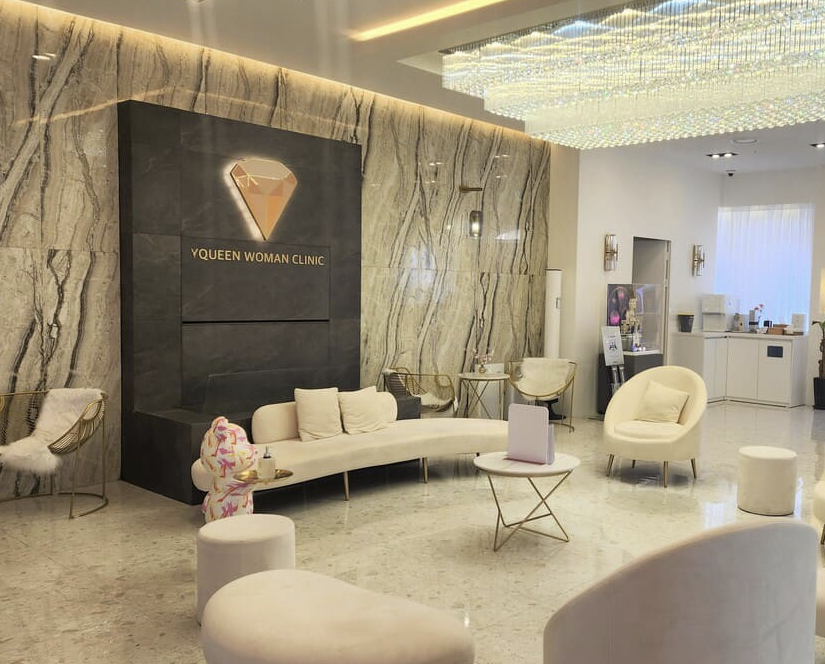
- Comfortable, private consultation environment
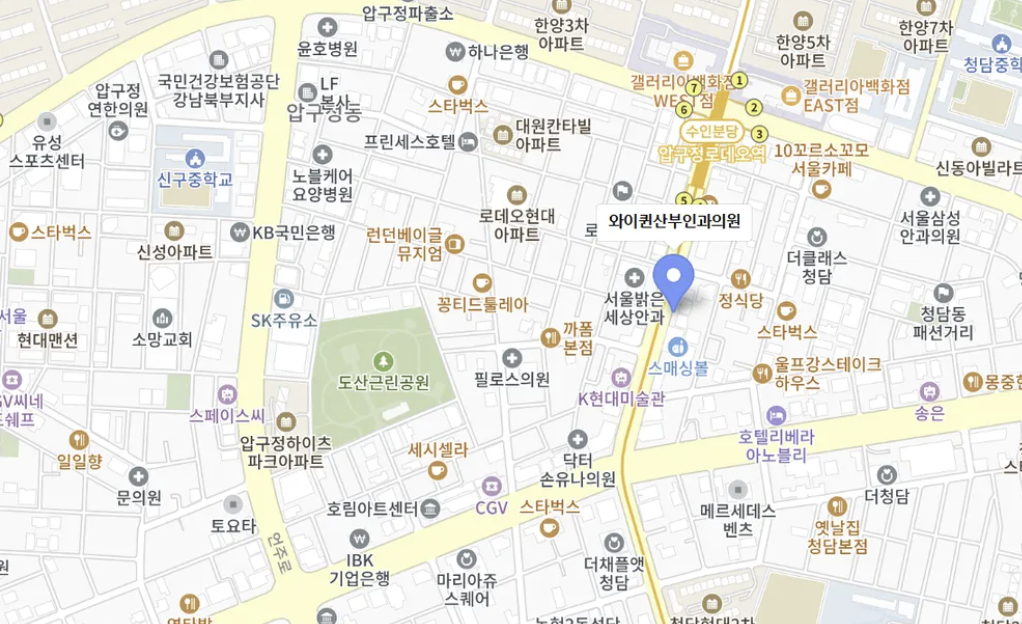
- Convenient Gangnam location
- Foreigner-friendly appointment process
Our approach focuses on controlling inflammation, protecting vulvar anatomy, relieving symptoms, and providing appropriate long-term monitoring.
Convenient Location in Gangnam
Y Queen Women's Clinic is located in Gangnam, Seoul, with convenient access near Apgujeong Rodeo Station.
The clinic is accessible for international patients living, working, studying, or staying in Gangnam, Cheongdam, Apgujeong, Sinsa, Itaewon, Myeongdong, and other central Seoul neighborhoods.
Frequently Asked Questions
What is lichen sclerosus?
Lichen sclerosus is a chronic inflammatory skin condition that most commonly affects vulvar and perianal skin in women.
Is lichen sclerosus an STD?
No. Lichen sclerosus is not a sexually transmitted infection and is not contagious.
Can foreigners get lichen sclerosus treatment in Seoul?
Yes. Y Queen Women's Clinic provides English-speaking evaluation and treatment planning for international patients with vulvar itching, white patches, skin tearing, and suspected lichen sclerosus.
What does lichen sclerosus look like?
It may cause white or pale patches, thin fragile skin, fissures, bruising, redness, and gradual changes in vulvar anatomy.
What are the main symptoms?
Common symptoms include severe itching, burning, soreness, skin tearing, pain during intercourse, and discomfort around the vulva.
What is the main treatment for lichen sclerosus?
High-potency prescription topical corticosteroids are the standard first-line treatment for vulvar lichen sclerosus.
Is strong steroid cream safe?
When correctly prescribed and monitored, high-potency topical steroids are widely used for lichen sclerosus and help prevent ongoing inflammation and scarring.
Can lichen sclerosus be cured permanently?
It is usually considered a chronic condition. Symptoms can often be controlled very effectively, but recurrence is possible and long-term follow-up may be needed.
Can lichen sclerosus cause scarring?
Yes. Untreated inflammation can lead to adhesions, fusion of tissue, tightening around the clitoral hood, and narrowing of the vaginal opening.
Can lichen sclerosus cause painful sex?
Yes. Fragile skin, fissures, inflammation, and scarring can make intercourse painful.
Do I need a biopsy?
Not always. Biopsy may be recommended when the diagnosis is uncertain, a lesion looks atypical, treatment is not working, or cancer needs to be excluded.
Does lichen sclerosus increase cancer risk?
Yes. Vulvar lichen sclerosus is associated with an increased risk of vulvar squamous cell carcinoma, which is why long-term follow-up and evaluation of new lesions are important.
Can laser cure lichen sclerosus?
Laser should not be considered a guaranteed cure or a replacement for established first-line medical treatment. Prescription topical corticosteroid therapy remains the standard treatment.
Does lichen sclerosus affect fertility?
It does not directly affect the uterus, ovaries, or fallopian tubes, so it does not usually cause infertility.
Can I have children if I have lichen sclerosus?
Yes. Most women with lichen sclerosus can become pregnant. Pregnancy and delivery planning may require additional assessment if significant vulvar scarring is present.
Can lichen sclerosus cause discharge?
It does not usually cause significant vaginal discharge. Discharge may indicate a separate vaginal infection or another condition.
How often do I need follow-up?
Follow-up depends on severity and treatment response, but long-term monitoring is generally recommended because symptoms can recur and persistent lesions need assessment.
Does Y Queen Women's Clinic treat lichen sclerosus?
Y Queen Women's Clinic can provide confidential evaluation for suspected or diagnosed vulvar lichen sclerosus, prescription treatment planning, assessment of scarring and painful intercourse, biopsy when clinically indicated, vulvar skincare counseling, and long-term follow-up. Complex scarring or suspicious lesions may require referral to an appropriate specialist.