Colposcopy in Seoul
Gangnam Y Queen Women's Clinic
Y Queen Women's Clinic provides English-speaking colposcopy examinations in Gangnam, Seoul for both local and international patients. Colposcopy is a specialized diagnostic procedure used to evaluate the cervix, vagina, and vulva following abnormal Pap smear results, positive HPV tests, or other cervical abnormalities. Our OB-GYN specialists perform detailed cervical examinations, cervical biopsies when indicated, HPV evaluation, and personalized follow-up care using modern diagnostic equipment in a comfortable, private, and foreigner-friendly environment.
Colposcopy in Seoul at Gangnam Y Queen Women's Clinic
A colposcopy is a specialized gynecological examination used to closely examine the cervix, vagina, and vulva for abnormal cells or other changes. It is commonly recommended after an abnormal Pap smear or a positive high-risk HPV test to help identify whether additional evaluation or treatment is needed.
At Y Queen Women's Clinic in Gangnam, Seoul, we provide gentle and confidential colposcopy examinations in a comfortable, private environment. Our English-speaking women's health team welcomes Korean residents, expats, international students, business travelers, and medical tourists seeking expert gynecological care in Korea.
Our experienced OB-GYN specialists use modern diagnostic equipment to evaluate cervical abnormalities and provide personalized follow-up care based on your test results.
What Is a Colposcopy?
A colposcopy is a diagnostic procedure that allows your doctor to examine the cervix, vagina, and vulva using a colposcope, a specialized instrument with magnification and bright light.
Unlike a Pap smear, a colposcopy does not collect cervical cells as a screening test. Instead, it provides a magnified view of the tissue to identify abnormal areas that may require a biopsy.
If necessary, your doctor may collect a small tissue sample (biopsy) during the procedure for laboratory analysis.
Why Might I Need a Colposcopy?
A colposcopy may be recommended if you have:
- An abnormal Pap smear result
- A positive high-risk HPV test
- Persistent HPV infection
- Abnormal cervical appearance during a pelvic exam
- Unexplained vaginal bleeding
- Bleeding after sexual intercourse
- Cervical inflammation requiring further evaluation
- Follow-up after previous cervical treatment
A colposcopy helps determine whether abnormal cervical cells require monitoring or treatment.
What Happens During a Colposcopy?
Your appointment typically includes:
- Medical history review
- Discussion of your Pap smear or HPV results
- Pelvic examination
- Placement of a speculum
- Examination of the cervix using a colposcope
- Application of special solutions to highlight abnormal cells
- Cervical biopsy if indicated
- Explanation of findings and follow-up recommendations
The colposcope remains outside the body throughout the examination.
Does a Colposcopy Hurt?
Most women describe a colposcopy as:
- Similar to a routine pelvic examination
- Mildly uncomfortable
- Well tolerated
- Quick
If a biopsy is performed, you may experience brief cramping or mild discomfort that usually resolves quickly.
How Should I Prepare?
For the most accurate examination:
- Schedule the appointment when you are not menstruating if possible
- Avoid sexual intercourse for 24–48 hours beforehand
- Avoid vaginal creams, medications, or douching unless instructed otherwise
- Empty your bladder before the examination
- Bring previous Pap smear or HPV test results if available
Your doctor will provide any additional preparation instructions if needed.
What Happens After a Colposcopy?
If no biopsy is performed, you can usually return to your normal activities immediately.
If a biopsy is taken, you may experience:
- Mild spotting
- Light vaginal bleeding
- Mild cramping for one or two days
Your doctor may recommend avoiding sexual intercourse, tampon use, and swimming for a short period while the cervix heals.
Biopsy results are typically available within several days, depending on laboratory processing.
Colposcopy Cost in Seoul
At Y Queen Women's Clinic:
- Consultation fees vary depending on your evaluation.
- The cost depends on whether a biopsy or additional laboratory testing is performed.
- Your doctor will explain the recommended examination and estimated costs during your consultation.
Why Choose Y Queen Women's Clinic?
International patients choose Y Queen because of its:
- English-speaking medical support
- Experienced OB-GYN specialists
- Colposcopy and cervical evaluation
- Abnormal Pap smear follow-up
- HPV testing available
- Cervical biopsy when indicated
- Modern diagnostic equipment
- Comfortable, private consultation rooms
- Convenient Gangnam location
- Foreigner-friendly appointment process
We provide compassionate, evidence-based care for women requiring cervical evaluation and follow-up after abnormal screening results.
Convenient Location in Gangnam
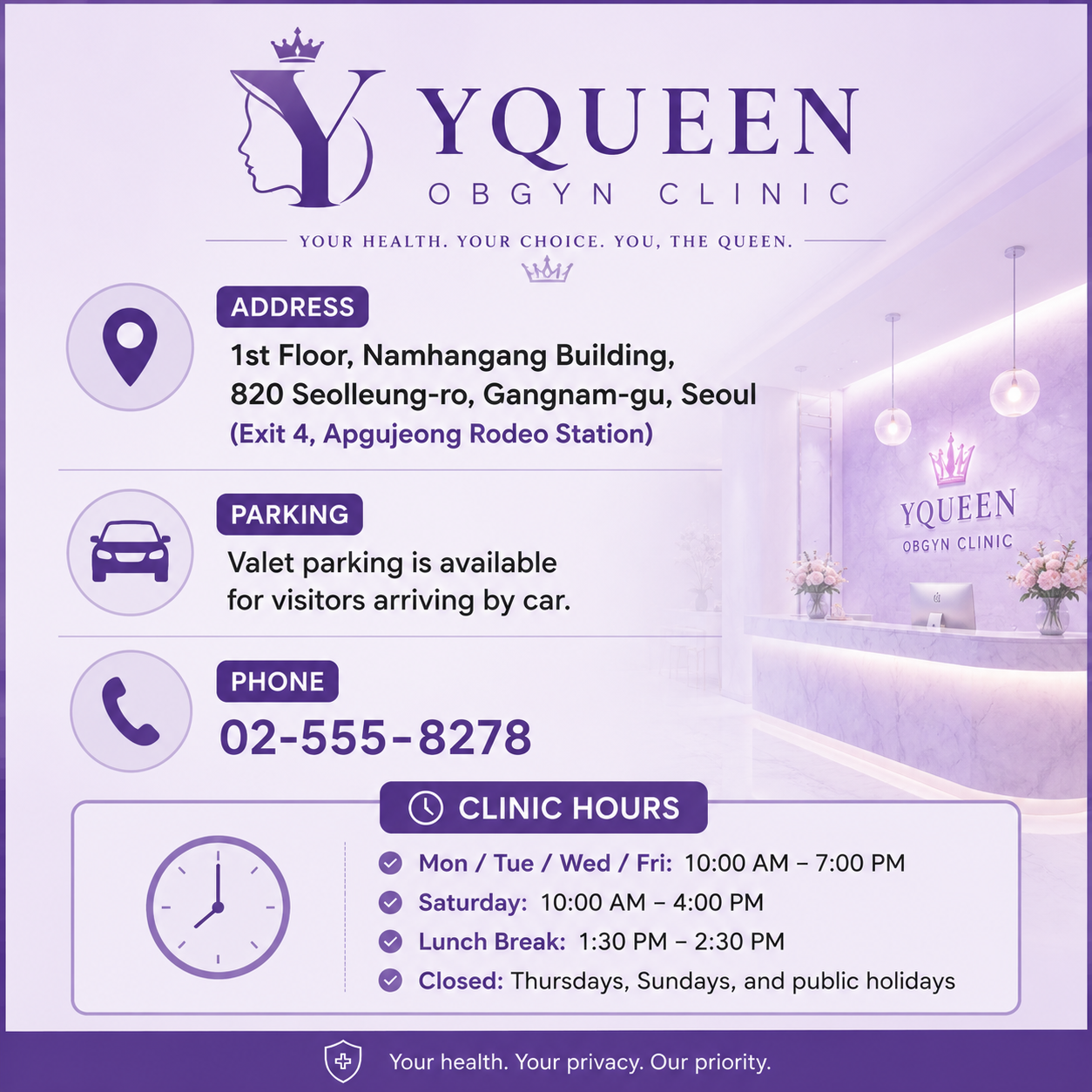
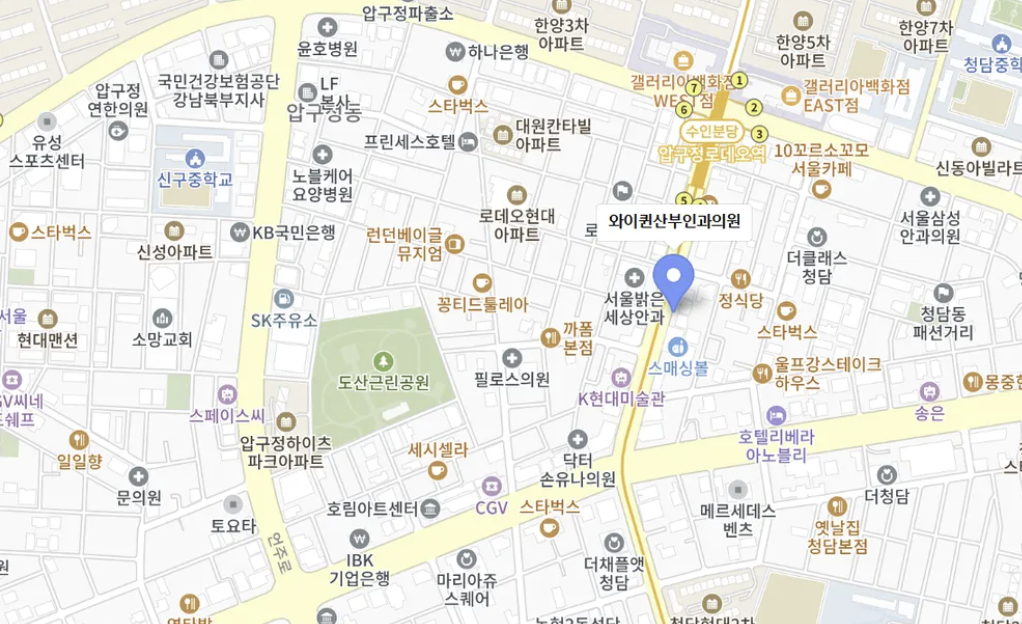
Y Queen Women's Clinic is located in Gangnam, Seoul, with convenient access near Apgujeong Rodeo Station, making it easy for international visitors staying in Gangnam, Cheongdam, Sinsa, Itaewon, Myeongdong, or other central Seoul neighborhoods to visit.
Frequently Asked Questions
What is a colposcopy?
A colposcopy is a diagnostic examination that uses a magnifying instrument to closely evaluate the cervix, vagina, and vulva for abnormal cells or tissue changes.
Why would I need a colposcopy?
It is commonly recommended after an abnormal Pap smear, a positive high-risk HPV test, persistent HPV infection, or other abnormal cervical findings.
Does a colposcopy hurt?
Most patients experience only mild discomfort similar to a pelvic examination.
If a biopsy is performed, brief cramping or slight discomfort may occur.
Can foreigners receive a colposcopy in Seoul?
Yes. Y Queen Women's Clinic welcomes international patients and provides English-speaking assistance.
Will I need a biopsy?
Not always. A biopsy is performed only if your doctor identifies an area that requires further evaluation.
How long does the procedure take?
The examination itself usually takes 10–20 minutes, while the entire appointment is typically completed within 30–45 minutes.
Can I return to normal activities afterward?
Yes. Most patients resume normal daily activities immediately.
If a biopsy is performed, your doctor will provide temporary activity restrictions while the cervix heals.
Can a colposcopy detect cervical cancer?
A colposcopy helps identify abnormal cervical tissue. If suspicious areas are found, a biopsy can determine whether precancerous or cancerous changes are present.