Genital Herpes Treatment in Seoul
Gangnam Y Queen Women's Clinic
Y Queen Women's Clinic provides English-speaking genital herpes treatment and HSV-related sexual healthcare in Gangnam, Seoul for local and international patients. Genital herpes is caused by HSV-1 or HSV-2 and can produce painful blisters, ulcers, burning, itching, tingling, or mild symptoms that may be mistaken for other genital conditions. Diagnosis may involve examination and laboratory testing of active lesions, while antiviral medications such as acyclovir, valacyclovir, or famciclovir can shorten outbreaks, reduce symptoms, and help manage recurrences. Daily suppressive antiviral therapy may be considered for frequent outbreaks or to reduce transmission risk. HSV can sometimes spread even when visible sores are absent, so condoms, avoiding sex during outbreaks, and partner counseling are important. Y Queen Women's Clinic offers confidential, foreigner-friendly HSV evaluation, antiviral treatment, STI testing, recurrence management, and pregnancy-related counseling in Seoul.
What Is Genital Herpes?
Genital herpes is an infection caused mainly by:
- Herpes simplex virus type 1 (HSV-1)
- Herpes simplex virus type 2 (HSV-2)
Both viruses can infect the genital area.
HSV remains in the body after infection and can become active again later, causing recurrent outbreaks.
Some people experience frequent recurrences, while others have very few or none.
What Causes Genital Herpes?
Genital herpes spreads through direct contact with HSV-infected skin, mucous membranes, or secretions.
Transmission may occur through:
- Vaginal sex
- Oral sex
- Anal sex
- Genital skin-to-skin contact
- Contact with an active herpes lesion
- Contact during periods of asymptomatic viral shedding
HSV can sometimes be transmitted even when no visible sores are present.
HSV-1 vs. HSV-2
Both HSV-1 and HSV-2 can cause genital herpes.
Genital HSV-1
HSV-1 is commonly associated with oral cold sores but can also infect the genital area, often through oral-genital contact.
Genital HSV-1 generally tends to recur less frequently than genital HSV-2.
Genital HSV-2
HSV-2 is more commonly associated with recurrent genital herpes.
It may cause more frequent outbreaks and asymptomatic viral shedding.
Knowing the HSV type can sometimes help with counseling about recurrence and transmission.
What Are the Symptoms of Genital Herpes?
Possible symptoms include:
- Painful genital blisters
- Open sores or ulcers
- Tingling
- Burning
- Itching
- Pain during urination
- Vulvar pain
- Vaginal discomfort
- Tender lymph nodes
- Fever or flu-like symptoms during a first outbreak
Symptoms vary widely.
Some infections are so mild that they are mistaken for:
- Razor irritation
- Ingrown hairs
- Small cuts
- Pimples
- Yeast infection
- Other vulvar irritation
What Does Genital Herpes Look Like?
Genital herpes may begin as:
- Small red bumps
- Fluid-filled blisters
- Clusters of blisters
- Painful shallow ulcers
The lesions may later:
- Break open
- Form sores
- Crust or heal
Appearance alone is not always enough to confirm herpes because other conditions can look similar.
Where Can Genital Herpes Appear?
Lesions can occur on or around the:
- Labia
- Vulva
- Vaginal opening
- Perineum
- Buttocks
- Inner thighs
- Around the anus
- Cervix or vagina in some cases
Some infections cause pain without obvious external sores.
First Genital Herpes Outbreak
The first recognized outbreak may be more severe than later recurrences.
Symptoms can include:
- Multiple painful lesions
- Significant vulvar pain
- Pain with urination
- Fever
- Body aches
- Headache
- Swollen lymph nodes
- Fatigue
However, not every first infection is severe.
Some patients experience only mild symptoms.
Recurrent Genital Herpes
After the first infection, HSV remains inactive in nearby nerves and may reactivate later.
Recurrent outbreaks are often:
- Shorter
- Less painful
- Less extensive
than an initial outbreak.
Some patients notice warning symptoms before lesions appear.
These are called prodromal symptoms.
What Are Prodromal Symptoms?
Prodromal symptoms may occur before a recurrent herpes outbreak.
Possible symptoms include:
- Tingling
- Burning
- Itching
- Local sensitivity
- Mild genital pain
- Nerve-like discomfort
Starting episodic antiviral treatment early may be most useful when prescribed for recurrent outbreaks.
What Triggers Herpes Outbreaks?
Recurrences can occur without an obvious trigger.
Possible triggers may include:
- Illness
- Stress
- Lack of sleep
- Menstruation
- Physical irritation
- Immune changes
- Other individual factors
Triggers vary considerably between patients.
Can You Have Genital Herpes Without Symptoms?
Yes.
Many people with HSV have mild, unrecognized, or no symptoms.
They may still occasionally shed virus from genital skin and potentially transmit HSV to a partner.
This is called asymptomatic viral shedding.
Is Genital Herpes an STD?
Yes.
Genital herpes is a sexually transmitted infection.
However, HSV can remain in the body for a long time without noticeable symptoms.
A new diagnosis does not necessarily indicate a recent infection or establish when transmission occurred.
Genital Herpes vs. Genital Warts
Genital herpes and genital warts are caused by different viruses.
Genital Herpes
Caused by HSV and typically associated with:
- Blisters
- Painful sores
- Burning
- Recurrent outbreaks
Genital Warts
Caused by certain HPV types and typically appear as:
- Flesh-colored bumps
- Raised growths
- Clustered or cauliflower-like lesions
A medical examination can help distinguish between them.
Genital Herpes vs. Yeast Infection
A yeast infection usually causes symptoms such as:
- Intense itching
- Vaginal irritation
- Thick discharge
- External redness
Genital herpes is more likely to cause:
- Painful blisters
- Open sores
- Tingling
- Local burning
However, symptoms can overlap and both conditions can occasionally occur together.
Genital Herpes vs. Ingrown Hair
An ingrown hair often appears as a localized bump around a hair follicle.
It may contain:
- A visible hair
- Pus
- Local inflammation
Herpes more commonly produces clusters of painful blisters or shallow ulcers.
If you are unsure, avoid squeezing or treating the lesion yourself before evaluation.
How Is Genital Herpes Diagnosed?
Diagnosis may involve:
- Medical history
- Sexual health history
- Examination of genital lesions
- Swab testing from an active lesion
- Blood testing in selected situations
- Testing for other STIs when appropriate
Testing is most useful when an active lesion is present and can be sampled.
HSV PCR or Swab Testing
If a fresh blister or ulcer is present, a sample may be collected.
Laboratory testing can help determine:
- Whether HSV is present
- Whether the infection is HSV-1 or HSV-2
Testing is generally more informative when performed on active lesions before they have fully healed.
Blood Testing for Herpes
Type-specific HSV antibody blood testing may be useful in selected circumstances, but it has limitations.
Blood tests:
- Cannot always determine the location of infection
- May not become positive immediately after recent exposure
- Can sometimes produce results that require careful interpretation
Your doctor can advise whether blood testing is useful in your situation.
Can a Herpes Test Be Negative Even If I Have HSV?
Yes.
A lesion swab may be negative if:
- The lesion is already healing
- There is little virus present
- Sampling occurs late
- The sore is caused by something else
Blood testing can also be negative early after a new infection before antibodies develop.
Testing should therefore be interpreted alongside symptoms and examination.
Genital Herpes Treatment in Seoul
Antiviral medications are the main medical treatment for genital herpes.
Common antiviral medicines used internationally include:
- Acyclovir
- Valacyclovir
- Famciclovir
The specific medication, dose, and duration depend on whether treatment is for:
- A first outbreak
- A recurrent outbreak
- Long-term suppressive therapy
- Pregnancy-related management
- Another individual circumstance
Treatment for a First Genital Herpes Outbreak
Antiviral medication is commonly recommended for a first recognized genital herpes episode.
Treatment can help:
- Shorten symptoms
- Reduce lesion duration
- Reduce pain
- Promote faster healing
Starting treatment early is generally preferable.
Treatment for Recurrent Genital Herpes
Recurrent herpes can be managed with episodic therapy.
This means taking antiviral medication when symptoms begin.
Treatment may work best when started:
- During tingling or burning
- At the first sign of a lesion
- Very early in an outbreak
Your doctor can provide a prescription and instructions appropriate for recurrent symptoms.
Suppressive Herpes Treatment
Some patients take antiviral medication every day to reduce outbreaks.
This is called suppressive therapy.
It may be considered for patients who:
- Have frequent outbreaks
- Have particularly distressing recurrences
- Want to reduce transmission risk to a partner
- Prefer fewer outbreaks
The decision is individualized.
Can Antiviral Medication Cure Herpes?
No.
Antiviral medication does not permanently remove HSV from the body.
However, it can:
- Reduce symptom severity
- Shorten outbreaks
- Reduce recurrence frequency
- Reduce viral shedding
- Lower transmission risk when used as suppressive therapy
How Quickly Does Herpes Treatment Work?
Response varies depending on:
- How early treatment begins
- Severity of the outbreak
- Whether it is a first or recurrent episode
- Individual immune response
Pain and new lesion formation generally improve as the outbreak resolves.
Persistent or worsening symptoms should be reassessed.
How Long Does a Genital Herpes Outbreak Last?
Duration varies.
A first outbreak can last longer than recurrent episodes.
Recurrent outbreaks often heal more quickly.
Healing time depends on:
- Severity
- Number of lesions
- Treatment timing
- Individual immune response
Avoid sexual contact while active sores are present.
Pain Relief During a Herpes Outbreak
In addition to antiviral medication, symptom management may include:
- Appropriate pain medication
- Gentle cleansing
- Loose clothing
- Avoiding irritating products
- Keeping the area dry and comfortable
- Urinating with water running over the area if severe external burning occurs
Your doctor can recommend appropriate supportive care.
Painful Urination With Genital Herpes
Urine touching open vulvar sores can cause significant burning.
Helpful measures may include:
- Drinking adequate fluids
- Urinating while pouring lukewarm water over the vulva
- Using appropriate pain medication
- Treating the HSV outbreak promptly
If you cannot urinate because of severe pain or swelling, seek urgent medical care.
When Should I Seek Urgent Medical Attention?
Seek prompt medical evaluation if you experience:
- Severe genital pain
- Inability to urinate
- Extensive rapidly worsening lesions
- High fever
- Severe weakness
- Significant headache or neurological symptoms
- Herpes symptoms during pregnancy
- Eye symptoms after possible HSV exposure
- Serious illness or immune suppression
Complications are uncommon but require appropriate care.
Can Genital Herpes Come Back?
Yes.
HSV remains in the body after infection and can reactivate.
Some patients experience:
- Frequent recurrences
- Occasional recurrences
- No recognizable recurrence
HSV-2 generally recurs more often genitally than HSV-1.
Can Genital Herpes Be Transmitted Without Sores?
Yes.
HSV can occasionally be released from the skin even without visible lesions.
This is known as asymptomatic viral shedding.
Transmission risk is highest during active outbreaks but is not zero between outbreaks.
How Can I Reduce Herpes Transmission?
Risk can be reduced by:
- Avoiding sexual activity during outbreaks
- Avoiding sex during prodromal symptoms
- Using condoms consistently
- Taking suppressive antiviral medication when appropriate
- Discussing HSV status with partners
No strategy eliminates transmission risk completely.
Do Condoms Prevent Genital Herpes?
Condoms reduce the risk of HSV transmission but cannot completely prevent it.
HSV can infect skin that is not covered by a condom.
Consistent condom use still provides useful protection against HSV and many other STIs.
Should I Tell My Partner?
Discussing HSV with sexual partners allows informed decisions about:
- Condom use
- Sexual activity during outbreaks
- Testing
- Suppressive treatment
- Pregnancy planning
Because HSV can remain asymptomatic for long periods, diagnosis does not prove when or from whom the infection was acquired.
Does My Partner Need Herpes Testing?
Testing may be considered if a partner:
- Has symptoms
- Has genital lesions
- Wants to understand HSV status
- Is planning pregnancy with an HSV-positive partner
- Has another specific clinical reason for testing
Routine blood testing is not necessarily appropriate for every asymptomatic person.
Can Oral Herpes Cause Genital Herpes?
Yes.
HSV-1 commonly causes cold sores around the mouth, but it can be transmitted to the genital area through oral sex.
This is a common cause of genital HSV-1 infection.
Can Genital Herpes Spread to the Mouth?
Yes.
HSV can be transmitted through oral-genital contact.
A partner can potentially acquire oral or genital infection depending on the type of contact and HSV type.
Genital Herpes and Pregnancy
Genital herpes requires special consideration during pregnancy.
The greatest concern is transmission to the baby around the time of delivery, particularly when a new genital HSV infection occurs late in pregnancy.
Pregnant patients should tell their obstetrician about:
- Previous genital herpes
- New genital sores
- Partner HSV history
- Symptoms near delivery
Antiviral treatment and delivery planning may be recommended based on individual circumstances.
Can Women With Genital Herpes Have a Vaginal Delivery?
Many women with a history of genital herpes can deliver vaginally.
However, delivery planning depends on whether:
- Active genital lesions are present
- Prodromal symptoms are present
- Infection is newly acquired late in pregnancy
- Other obstetric factors are present
Your obstetrician will determine the safest delivery approach.
Does Genital Herpes Affect Fertility?
Genital herpes does not usually cause infertility.
HSV generally does not damage the ovaries, uterus, or fallopian tubes.
Other sexually transmitted infections such as untreated chlamydia or gonorrhea are more strongly associated with tubal infertility.
Can Genital Herpes Cause Cervical Cancer?
No.
Genital herpes does not cause cervical cancer.
Cervical cancer is primarily associated with persistent infection with certain high-risk HPV types.
HSV and HPV are different viruses.
Should I Get a Pap Smear Because I Have Herpes?
Having genital herpes does not automatically require more frequent Pap testing.
Cervical cancer screening should generally follow appropriate age- and risk-based recommendations.
If you are due for screening, it can be discussed during your gynecological visit.
STI Testing With Genital Herpes
Patients diagnosed with one STI may benefit from testing for others depending on individual sexual history and risk.
Testing may include:
- Chlamydia
- Gonorrhea
- HIV
- Syphilis
- Other infections when clinically appropriate
Your doctor can recommend appropriate screening.
Can Stress Cause a Herpes Outbreak?
Stress is reported by some patients as a possible trigger, although outbreaks can occur without a clear trigger.
Maintaining general health may help, but herpes recurrence cannot always be prevented through lifestyle changes alone.
Does Menstruation Trigger Herpes?
Some women notice outbreaks around menstruation, although this does not happen to everyone.
Hormonal, immune, and physical changes may contribute in some individuals.
Can I Exercise During a Herpes Outbreak?
Light activity may be possible if you feel well.
However, exercise that causes:
- Friction
- Sweating
- Pressure
- Significant discomfort
around active lesions may worsen irritation.
Wear loose, breathable clothing and allow painful lesions to heal.
When Can I Have Sex After a Herpes Outbreak?
Avoid sexual activity involving the affected area while:
- Blisters are present
- Open sores are present
- Lesions are healing
- Prodromal tingling or burning is present
Sex can generally be resumed after lesions have fully healed, although asymptomatic transmission remains possible.
Can I Use Creams or Home Remedies?
Do not apply strong acids, disinfectants, household remedies, or unapproved products to genital sores.
These can cause irritation or chemical injury.
Prescription antiviral medication is the primary treatment for genital HSV outbreaks.
How Should I Prepare for an Appointment?
If possible, note:
- When symptoms started
- Whether this is your first outbreak
- Whether you had similar symptoms before
- Recent sexual contacts
- Oral or genital herpes history
- Current medications
- Possibility of pregnancy
- Previous STI test results
- Partner HSV history if known
If visible lesions are present, seek evaluation before they fully heal because lesion testing may be more useful while sores are active.
Genital Herpes Treatment Cost in Seoul
At Y Queen Women's Clinic:
- Consultation fees depend on the evaluation required.
- HSV lesion testing may have a separate laboratory fee.
- Blood testing may involve additional costs when clinically indicated.
- Antiviral medication costs depend on the prescription and treatment duration.
- Additional costs may apply for STI testing, pregnancy testing, pelvic examination, or other investigations.
Exact testing and treatment costs can be discussed after evaluation.
Why Choose Y Queen Women's Clinic?
International patients choose Y Queen because of its:
- English-speaking medical support
- Confidential sexual healthcare
- Genital herpes evaluation
- HSV lesion testing when appropriate
- Antiviral treatment
- Recurrent outbreak management
- Suppressive therapy counseling
- STD testing
- Pregnancy-related HSV counseling
- Evaluation of genital sores and ulcers
- Personalized treatment planning
- Private consultation environment
- Convenient Gangnam location
- Foreigner-friendly appointment process
- Follow-up gynecological care
Our approach focuses on accurate diagnosis, prompt symptom relief, recurrence management, transmission counseling, and confidential long-term sexual healthcare.
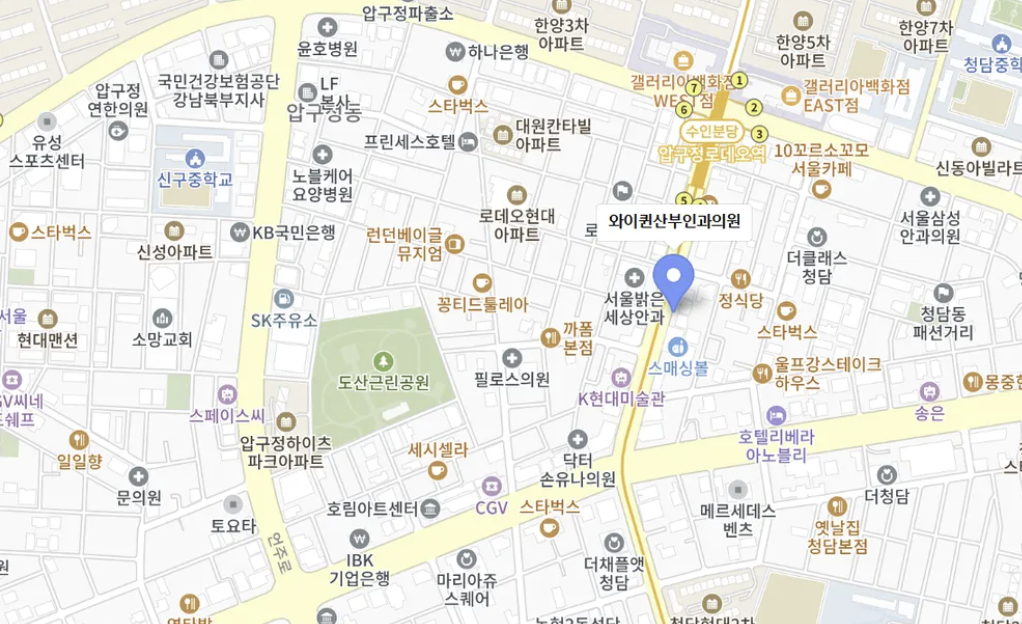
Convenient Location in Gangnam
Y Queen Women's Clinic is located in Gangnam, Seoul, with convenient access near Apgujeong Rodeo Station.
The clinic is accessible for international patients living, working, studying, or staying in Gangnam, Cheongdam, Apgujeong, Sinsa, Itaewon, Myeongdong, and other parts of central Seoul.
Frequently Asked Questions
What causes genital herpes?
Genital herpes is caused by herpes simplex virus type 1 or type 2 and is transmitted through direct contact with infected skin or secretions.
Is genital herpes an STD?
Yes. Genital herpes is a sexually transmitted infection.
Can foreigners get genital herpes treatment in Seoul?
Yes. Y Queen Women's Clinic provides confidential, English-speaking evaluation and treatment for international patients with genital herpes symptoms or concerns.
What does genital herpes look like?
It may cause clusters of small blisters that break into painful ulcers, but symptoms can also be mild and resemble cuts, irritation, ingrown hairs, or other skin conditions.
How is genital herpes diagnosed?
Active sores can often be tested with a lesion swab or PCR-type test. Blood testing may be useful in selected cases.
Can a herpes test be negative even if I have herpes?
Yes. Lesion testing can become less sensitive as sores heal, and blood tests may be negative early after a new infection.
Can genital herpes be cured?
No current treatment permanently removes HSV from the body. Antiviral medication can control outbreaks and reduce transmission risk.
How is genital herpes treated?
Treatment usually involves antiviral medications such as acyclovir, valacyclovir, or famciclovir, selected according to whether the episode is new, recurrent, or being managed with suppressive therapy.
What is suppressive herpes treatment?
Suppressive therapy means taking antiviral medication daily to reduce recurrence frequency and lower the risk of transmitting HSV.
Can genital herpes come back?
Yes. HSV remains in the body and may reactivate later.
Can I spread herpes when I have no symptoms?
Yes. HSV can sometimes be transmitted through asymptomatic viral shedding even when there are no visible sores.
Do condoms prevent genital herpes?
Condoms reduce transmission risk but cannot completely eliminate it because HSV can be present on uncovered skin.
Should I avoid sex during an outbreak?
Yes. Avoid sexual contact involving the affected area while lesions or warning symptoms such as tingling or burning are present.
Can oral herpes cause genital herpes?
Yes. HSV-1 from oral cold sores can be transmitted to the genital area through oral sex.
Does genital herpes cause infertility?
Genital herpes does not usually cause infertility.
Does genital herpes cause cervical cancer?
No. Cervical cancer is mainly associated with high-risk HPV, not HSV.
Can I have a baby if I have genital herpes?
Yes. Many people with genital herpes have healthy pregnancies and deliveries. Pregnancy and delivery planning require specific HSV counseling, especially if symptoms occur near delivery.
Do I need STI testing if I have genital herpes?
Other STI testing may be recommended depending on your sexual history and risk factors.
Does Y Queen Women's Clinic treat genital herpes?
Y Queen Women's Clinic provides confidential evaluation of genital sores and suspected HSV infection, lesion testing when appropriate, antiviral treatment, recurrent outbreak management, suppressive therapy counseling, STI screening, and pregnancy-related herpes counseling. Exact testing and treatment options depend on individual findings.