Ovarian Cystectomy in Seoul
Gangnam Y Queen Women's Clinic
Y Queen Women's Clinic provides English-speaking ovarian cystectomy consultations and ovarian cyst evaluations in Gangnam, Seoul for local and international patients. Ovarian cystectomy is a surgical procedure that removes an ovarian cyst while preserving as much healthy ovarian tissue as possible. Our OB-GYN specialists evaluate ovarian cysts using pelvic ultrasound, symptom assessment, medical history, and additional testing when indicated. We provide personalized management for functional cysts, endometriomas, dermoid cysts, and other ovarian masses while considering fertility and ovarian preservation. When laparoscopic, open, or other hospital-based surgery is required, referral to an appropriate gynecologic surgeon or medical center can be coordinated.
An ovarian cystectomy is a surgical procedure used to remove a cyst from an ovary while preserving as much healthy ovarian tissue as possible. Most ovarian cysts are benign and many disappear without treatment, but surgery may be considered when a cyst is persistent, large, painful, growing, has concerning imaging features, or causes complications. At Y Queen Women's Clinic in Gangnam, Seoul, we provide comprehensive evaluation and personalized management for ovarian cysts. Our English-speaking women's health team welcomes Korean residents, expats, international students, business travelers, and medical tourists seeking professional gynecological care in Korea. Our OB-GYN specialists evaluate ovarian cysts using pelvic ultrasound, medical history, symptoms, and other appropriate testing. When ovarian cystectomy or hospital-based surgical care is recommended, referral to an appropriate gynecologic surgeon or medical center can be coordinated.
What Is an Ovarian Cystectomy?
An ovarian cystectomy is an operation that removes an ovarian cyst while attempting to preserve the ovary.
Unlike an oophorectomy, which removes an ovary, ovarian cystectomy is designed to preserve healthy ovarian tissue whenever medically appropriate.
The procedure may be considered for:
- Persistent ovarian cysts
- Large ovarian cysts
- Painful ovarian cysts
- Endometriomas
- Dermoid cysts
- Cysts with complex ultrasound findings
- Cysts that continue to grow
- Certain cysts associated with fertility concerns
The appropriate treatment depends on the type, size, appearance, and symptoms associated with the cyst.
What Is an Ovarian Cyst?
An ovarian cyst is a fluid-filled or sometimes partially solid structure that develops on or within an ovary.
Common types include:
- Functional cysts
- Follicular cysts
- Corpus luteum cysts
- Endometriomas
- Dermoid cysts (mature cystic teratomas)
- Cystadenomas
Many ovarian cysts in women of reproductive age are benign and resolve naturally.
When Is Ovarian Cystectomy Recommended?
Surgery may be considered when an ovarian cyst:
- Persists over time
- Continues to increase in size
- Causes significant pelvic pain
- Is relatively large
- Has complex or concerning ultrasound features
- Is suspected to be an endometrioma or dermoid cyst
- Causes pressure on surrounding organs
- Is associated with certain fertility concerns
- Has characteristics requiring pathological diagnosis
Not every ovarian cyst requires surgery.
Your doctor will determine whether monitoring, medical management, additional imaging, or surgery is most appropriate.
Common Symptoms of Ovarian Cysts
Many ovarian cysts cause no symptoms.
When symptoms occur, they may include:
- Pelvic pain
- Lower abdominal pain
- Pelvic pressure
- Abdominal bloating
- Pain during sexual intercourse
- Menstrual changes
- Frequent urination
- Feeling full quickly
- Sudden severe pelvic pain if a complication occurs
Symptoms alone cannot determine the type of ovarian cyst, so pelvic ultrasound is often important.
How Are Ovarian Cysts Evaluated?
Your evaluation may include:
- Medical history review
- Menstrual history assessment
- Symptom evaluation
- Pelvic examination
- Pelvic or transvaginal ultrasound
- Pregnancy testing when appropriate
- Blood tests in selected cases
- Tumor marker testing when clinically indicated
- MRI or additional imaging in selected cases
Ultrasound can provide important information about the cyst's size, location, internal appearance, and relationship to the ovary.
What Happens During Your Consultation?
Your appointment may include:
- Detailed medical history
- Discussion of pelvic pain or other symptoms
- Menstrual and pregnancy history
- Pelvic examination when appropriate
- Pelvic ultrasound
- Review of previous scans
- Assessment of cyst size and characteristics
- Discussion of fertility goals
- Review of monitoring versus surgical treatment
- Referral for ovarian cystectomy when appropriate
Your doctor will explain the findings and available treatment options.
Laparoscopic Ovarian Cystectomy
Many ovarian cystectomies can be performed using minimally invasive laparoscopic surgery.
During laparoscopic cystectomy:
- Several small abdominal incisions are made.
- A laparoscope with a camera is inserted.
- The ovarian cyst is identified.
- The cyst is carefully separated from healthy ovarian tissue.
- The cyst is removed.
- The remaining ovary is preserved whenever possible.
Laparoscopic surgery often allows smaller incisions and a shorter recovery compared with traditional open abdominal surgery.
Open Ovarian Cystectomy
In certain situations, open abdominal surgery may be recommended.
This may be considered when:
- The cyst is very large
- Surgical access is difficult
- Imaging findings are concerning
- There are extensive pelvic adhesions
- Other complex conditions are present
The surgical approach is determined by the treating surgeon based on individual clinical circumstances.
Ovarian Cystectomy and Fertility
Preserving ovarian function can be especially important for women who want future pregnancies.
During ovarian cystectomy, the surgeon generally aims to remove the cyst while preserving as much normal ovarian tissue as possible.
However, fertility considerations depend on:
- Type of cyst
- Cyst size
- Number of cysts
- Whether one or both ovaries are affected
- Previous ovarian surgery
- Ovarian reserve
- Age
- Other fertility factors
Women planning pregnancy should discuss fertility goals before surgery.
Ovarian Cystectomy for Endometriomas
An ovarian endometrioma is a cyst associated with endometriosis.
Surgery may be considered depending on:
- Cyst size
- Pelvic pain
- Previous treatment
- Fertility plans
- Ovarian reserve
- Imaging findings
Because surgery for endometriomas can sometimes affect healthy ovarian tissue and ovarian reserve, treatment decisions should be individualized, particularly for patients planning pregnancy.
Ovarian Cystectomy vs. Oophorectomy
These procedures are different.
Ovarian Cystectomy
Removes the cyst while preserving the ovary whenever possible.
Oophorectomy
Removes the entire ovary.
For many benign ovarian cysts, preserving the ovary is preferred when medically appropriate, especially in younger patients and those concerned about fertility.
Risks and Possible Complications
As with any surgical procedure, ovarian cystectomy has potential risks.
These may include:
- Bleeding
- Infection
- Anesthesia-related complications
- Injury to surrounding organs
- Pelvic adhesions
- Loss of healthy ovarian tissue
- Reduced ovarian reserve in some cases
- Cyst recurrence
- Need for additional surgery
In some situations, removal of the affected ovary may become necessary depending on surgical findings.
Your surgeon will discuss individual risks before treatment.
Can an Ovarian Cyst Rupture or Twist?
Yes. Two important complications are ovarian cyst rupture and ovarian torsion.
Cyst Rupture
A cyst can rupture and cause sudden pelvic pain and, in some cases, internal bleeding.
Ovarian Torsion
An enlarged ovary or ovarian cyst can sometimes twist around its supporting tissues, potentially reducing blood supply to the ovary.
Sudden severe pelvic pain, particularly with nausea or vomiting, requires urgent medical evaluation.
Recovery After Ovarian Cystectomy
Recovery depends on the surgical approach and individual circumstances.
After laparoscopic surgery, patients generally recover more quickly than after open abdominal surgery.
Your surgeon will provide specific guidance regarding:
- Returning to work
- Exercise
- Lifting
- Sexual activity
- Bathing
- Medication
- Follow-up appointments
Follow your surgeon's instructions carefully during recovery.
How Should I Prepare for an Ovarian Cystectomy Consultation?
Before your appointment:
- Track your menstrual cycles
- Record pelvic pain and other symptoms
- Bring previous ultrasound or MRI reports
- List current medications and supplements
- Bring previous surgical records if available
- Consider your future pregnancy plans
This information helps your doctor determine the most appropriate management strategy.
Ovarian Cystectomy Consultation Cost in Seoul
At Y Queen Women's Clinic:
- Consultation fees vary depending on the evaluation required.
- Additional costs may apply for pelvic ultrasound, laboratory testing, or other diagnostic examinations.
- If surgery is recommended, hospital and surgical costs depend on the surgical method, anesthesia, hospitalization, and treating facility.
Treatment options and estimated costs can be discussed before referral or surgery.
Why Choose Y Queen Women's Clinic?
International patients choose Y Queen because of its:
- English-speaking medical support
- Experienced OB-GYN specialists
- Comprehensive ovarian cyst evaluation
- Pelvic ultrasound available
- Personalized cyst management
- Fertility-conscious treatment planning
- Endometriosis and endometrioma evaluation
- Comfortable, private consultation rooms
- Convenient Gangnam location
- Foreigner-friendly appointment process
- Surgical referral coordination when required
We provide individualized gynecological care focused on accurate diagnosis, appropriate treatment, and preservation of reproductive health whenever possible.
Convenient Location in Gangnam
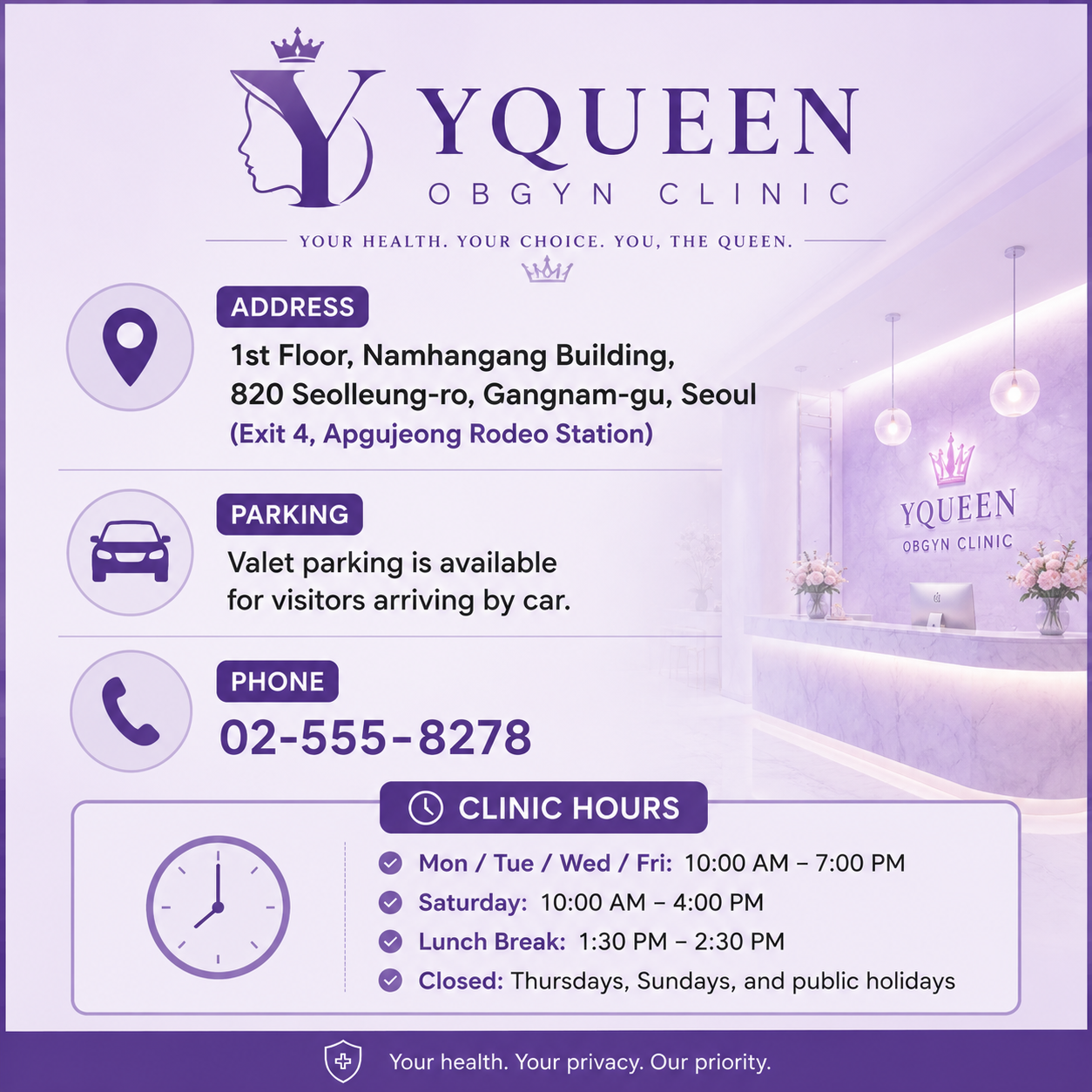
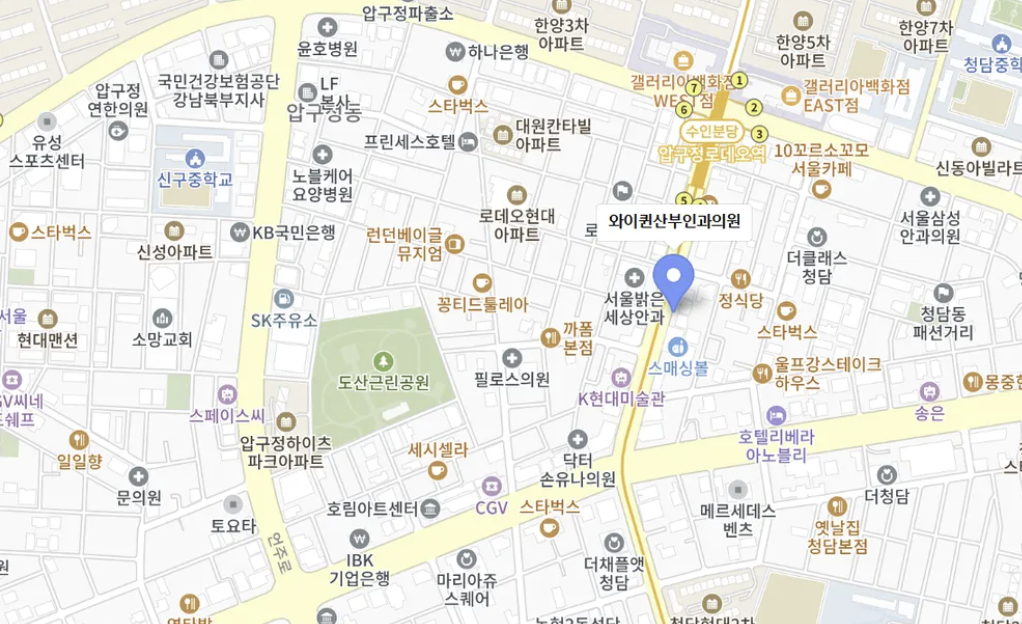
Y Queen Women's Clinic is located in Gangnam, Seoul, with convenient access near Apgujeong Rodeo Station.
The clinic is accessible for international patients living, working, studying, or staying in Gangnam, Cheongdam, Sinsa, Itaewon, Myeongdong, and other central Seoul neighborhoods.
Frequently Asked Questions
What is an ovarian cystectomy?
An ovarian cystectomy is a surgical procedure that removes an ovarian cyst while preserving as much healthy ovarian tissue as possible.
Do all ovarian cysts need surgery?
No. Many ovarian cysts are benign and disappear naturally. Surgery may be considered for persistent, large, symptomatic, growing, or otherwise concerning cysts.
Can foreigners get an ovarian cystectomy consultation in Seoul?
Yes. Y Queen Women's Clinic welcomes international patients and provides English-speaking gynecological consultations and ovarian cyst evaluations.
Will I need an ultrasound?
Yes. Pelvic or transvaginal ultrasound is commonly used to evaluate an ovarian cyst's size and appearance and to help determine whether monitoring or treatment is appropriate.
Is ovarian cystectomy the same as removing the ovary?
No. Cystectomy removes the cyst while attempting to preserve the ovary. Oophorectomy removes the ovary itself.
Can ovarian cystectomy affect fertility?
It can in some cases because surgery may affect healthy ovarian tissue or ovarian reserve. The risk depends on factors such as the type and size of the cyst and whether previous ovarian surgery has been performed.
Can an ovarian cyst come back after surgery?
Yes. The removed cyst itself does not return, but new ovarian cysts can develop later depending on the type of cyst and underlying condition.
How long does recovery take?
Recovery depends on the surgical approach. Laparoscopic ovarian cystectomy generally has a shorter recovery period than open abdominal surgery.
When is an ovarian cyst an emergency?
Sudden severe pelvic or abdominal pain, especially when accompanied by nausea, vomiting, dizziness, fainting, or significant bleeding, requires urgent medical evaluation because ovarian torsion or cyst rupture may be possible.
Does Y Queen Women's Clinic perform ovarian cystectomy surgery?
Y Queen Women's Clinic can provide ovarian cyst evaluation, pelvic ultrasound, treatment planning, and consultation regarding ovarian cystectomy. When hospital-based surgery is required, referral to an appropriate gynecologic surgeon or medical center can be coordinated.