Endometriosis Excision in Seoul
Gangnam Y Queen Women's Clinic
Y Queen Women's Clinic provides English-speaking endometriosis excision consultations and comprehensive endometriosis evaluations in Gangnam, Seoul for local and international patients. Endometriosis excision is a surgical approach used to remove visible endometriosis lesions and may be considered for persistent pelvic pain, painful periods, ovarian endometriomas, pelvic adhesions, deep endometriosis, or selected fertility concerns. Our OB-GYN specialists provide pelvic ultrasound, individualized symptom assessment, hormonal treatment counseling, fertility-focused planning, and evaluation for surgery. Because endometriosis can involve the ovaries, bowel, bladder, ureters, and other pelvic structures, complex cases may require specialized multidisciplinary surgical care. When hospital-based laparoscopic excision is appropriate, referral to an experienced gynecologic surgeon or medical center can be coordinated.
What Is Endometriosis Excision?
Endometriosis excision is surgery that aims to identify and remove visible endometriosis lesions.
Depending on the extent of disease, surgery may involve treatment of endometriosis affecting the:
- Pelvic lining
- Ovaries
- Tissue behind the uterus
- Pelvic ligaments
- Pelvic sidewalls
- Fallopian tubes
- Areas near the bladder
- Areas near the bowel
- Other pelvic structures
Surgical complexity varies significantly depending on the location and depth of the disease.
What Is Endometriosis?
Endometriosis occurs when tissue similar to the endometrium, the lining inside the uterus, develops outside the uterine cavity.
Endometriosis can cause:
- Inflammation
- Pelvic pain
- Scar tissue
- Pelvic adhesions
- Ovarian endometriomas
- Distortion of reproductive anatomy
- Fertility problems in some patients
Symptoms and disease severity do not always correspond. Some women with extensive endometriosis have relatively mild symptoms, while others with limited disease experience significant pain.
Common Symptoms of Endometriosis
Symptoms may include:
- Severe menstrual cramps
- Chronic pelvic pain
- Pain before or during menstruation
- Pain during or after sexual intercourse
- Pain with bowel movements during menstruation
- Pain with urination during menstruation
- Lower back or abdominal pain
- Heavy or irregular menstrual bleeding
- Difficulty becoming pregnant
- Fatigue or bloating associated with the menstrual cycle
These symptoms can also occur with other gynecological conditions, so appropriate evaluation is important.
When Is Endometriosis Excision Considered?
Surgical treatment may be considered when:
- Pelvic pain is severe or persistent
- Symptoms significantly affect daily life
- Conservative treatment has not provided adequate relief
- An ovarian endometrioma requires surgical evaluation
- Pelvic adhesions significantly distort anatomy
- Deep endometriosis is suspected
- Endometriosis may be contributing to fertility problems
- Diagnosis remains uncertain and surgical evaluation is appropriate
Surgery is not automatically necessary for every patient with endometriosis.
Excision vs. Ablation for Endometriosis
Two surgical approaches commonly discussed are excision and ablation.
Excision
Endometriosis lesions are surgically cut out and removed.
Ablation
Visible lesions are treated by destroying their surface using an energy-based surgical technique.
The appropriate method depends on lesion location, depth, disease complexity, surgeon expertise, and individual circumstances.
Deep endometriosis may require more extensive surgical planning than superficial disease.
How Is Endometriosis Evaluated Before Surgery?
Your evaluation may include:
- Detailed medical history
- Menstrual history
- Pelvic pain assessment
- Fertility history
- Pelvic examination
- Pelvic or transvaginal ultrasound
- Assessment for ovarian endometriomas
- Review of previous surgery
- Review of previous imaging
- MRI in selected cases
Imaging can provide important information, but not all endometriosis lesions are visible on routine ultrasound.
What Happens During Your Consultation?
Your appointment may include:
- Detailed discussion of symptoms
- Menstrual and pain history
- Previous endometriosis treatment
- Pregnancy and fertility history
- Pelvic examination when appropriate
- Pelvic ultrasound
- Evaluation for endometriomas
- Review of previous scans or operative reports
- Discussion of medication and hormonal treatment
- Discussion of fertility goals
- Assessment of whether surgery may be appropriate
- Referral to an endometriosis surgeon when required
The goal is to develop an individualized treatment strategy rather than recommending surgery solely because endometriosis is suspected.
Laparoscopic Endometriosis Excision
Endometriosis surgery is commonly performed laparoscopically when appropriate.
During laparoscopic excision:
- Small abdominal incisions are made.
- A laparoscope with a camera is inserted.
- The surgeon examines the pelvic cavity.
- Visible endometriosis lesions are identified.
- Appropriate lesions are carefully excised.
- Pelvic adhesions may be released when necessary.
- Ovarian endometriomas may be treated when appropriate.
- Removed tissue may be sent for pathological examination.
The exact procedure depends on the location and extent of disease.
Deep Infiltrating Endometriosis
Deep endometriosis can involve tissues beneath the surface of the pelvis and may affect structures such as the:
- Bowel
- Bladder
- Ureters
- Pelvic ligaments
- Tissue between the vagina and rectum
Complex cases may require treatment at a specialized surgical center and sometimes a multidisciplinary surgical team.
Careful preoperative planning is particularly important when bowel or urinary tract involvement is suspected.
Endometriosis Excision for Ovarian Endometriomas
An endometrioma is an ovarian cyst associated with endometriosis.
Surgery may be considered depending on:
- Cyst size
- Pelvic pain
- Ultrasound characteristics
- Previous ovarian surgery
- Fertility plans
- Ovarian reserve
- Other clinical factors
Surgery involving an ovary can sometimes reduce healthy ovarian tissue or ovarian reserve. Fertility considerations should therefore be discussed before treatment.
Endometriosis Excision and Fertility
Endometriosis can affect fertility through several mechanisms, including:
- Pelvic inflammation
- Ovarian endometriomas
- Pelvic adhesions
- Distorted fallopian tube anatomy
- Changes involving the ovaries
- Other reproductive factors
Surgical treatment may improve reproductive anatomy in selected patients, but surgery does not guarantee pregnancy.
For women planning pregnancy, treatment decisions should consider:
- Age
- Ovarian reserve
- Location and severity of disease
- Previous surgery
- Fallopian tube function
- Other fertility factors
- Whether assisted reproductive treatment such as IVF is being considered
Endometriosis Excision vs. Hormone Treatment
Hormonal therapy can help control endometriosis-related symptoms in many patients.
Options may include:
- Combined hormonal contraception
- Progestin-based treatment
- Hormonal IUDs
- GnRH-based therapies in selected patients
- Other individualized hormonal approaches
Hormonal treatment can suppress symptoms but does not surgically remove existing lesions.
Surgery may be considered when symptoms persist, anatomical disease requires treatment, fertility circumstances favor surgery, or other clinical indications are present.
Can Endometriosis Return After Excision?
Yes.
Endometriosis is a chronic condition, and symptoms or lesions can recur after surgery.
Recurrence depends on factors such as:
- Disease severity
- Age
- Location of endometriosis
- Completeness of surgical treatment
- Hormonal factors
- Postoperative treatment
- Future pregnancy plans
Long-term management may include follow-up, hormonal therapy, fertility planning, or additional treatment when necessary.
Risks and Possible Complications
As with any surgery, endometriosis excision has potential risks.
These may include:
- Bleeding
- Infection
- Anesthesia-related complications
- Pelvic adhesions
- Injury to the bowel
- Injury to the bladder or ureters
- Injury to blood vessels
- Damage to reproductive organs
- Reduced ovarian reserve after ovarian surgery
- Persistent or recurrent pain
- Need for additional surgery
Risk depends substantially on the location and complexity of the disease.
Recovery After Endometriosis Excision
Recovery varies according to the extent of surgery.
After uncomplicated laparoscopic surgery, patients may experience:
- Abdominal or pelvic discomfort
- Temporary bloating
- Fatigue
- Incision soreness
- Mild vaginal spotting
- Temporary changes in bowel function
More extensive surgery involving the bowel, bladder, ureters, or multiple pelvic organs may require a longer recovery.
Your surgeon will provide individualized postoperative instructions.
When Should I Seek Urgent Medical Attention?
After surgery, seek prompt medical evaluation for symptoms such as:
- Severe or worsening abdominal pain
- Heavy vaginal bleeding
- Persistent fever
- Repeated vomiting
- Fainting or severe dizziness
- Increasing abdominal swelling
- Difficulty urinating
- Concerning wound changes
Your surgical team will provide specific instructions about warning signs before discharge.
How Should I Prepare for an Endometriosis Excision Consultation?
Before your appointment:
- Track pelvic pain and menstrual symptoms
- Note whether symptoms change during your cycle
- Bring previous ultrasound or MRI reports
- Bring previous operative reports if available
- List medications and hormonal treatments
- Bring relevant fertility testing results
- Consider your future pregnancy goals
- Record previous responses to endometriosis treatment
Detailed symptom and treatment history can help guide management decisions.
Endometriosis Excision Consultation Cost in Seoul
At Y Queen Women's Clinic:
- Consultation fees vary depending on the evaluation required.
- Additional costs may apply for pelvic ultrasound, laboratory testing, or specialized imaging.
- If surgery is recommended, costs depend on the complexity of the procedure, anesthesia, hospitalization, pathology, and treating facility.
An individualized evaluation and treatment plan can be discussed before surgical referral.
Why Choose Y Queen Women's Clinic?
International patients choose Y Queen because of its:
- English-speaking medical support
- Experienced OB-GYN specialists
- Comprehensive endometriosis evaluation
- Pelvic ultrasound available
- Endometrioma assessment
- Chronic pelvic pain evaluation
- Fertility-focused counseling
- Personalized hormonal and surgical treatment planning
- Comfortable, private consultation rooms
- Convenient Gangnam location
- Foreigner-friendly appointment process
- Specialist surgical referral coordination when required
We provide individualized care based on symptoms, reproductive goals, previous treatment, and the suspected extent of endometriosis.
Convenient Location in Gangnam
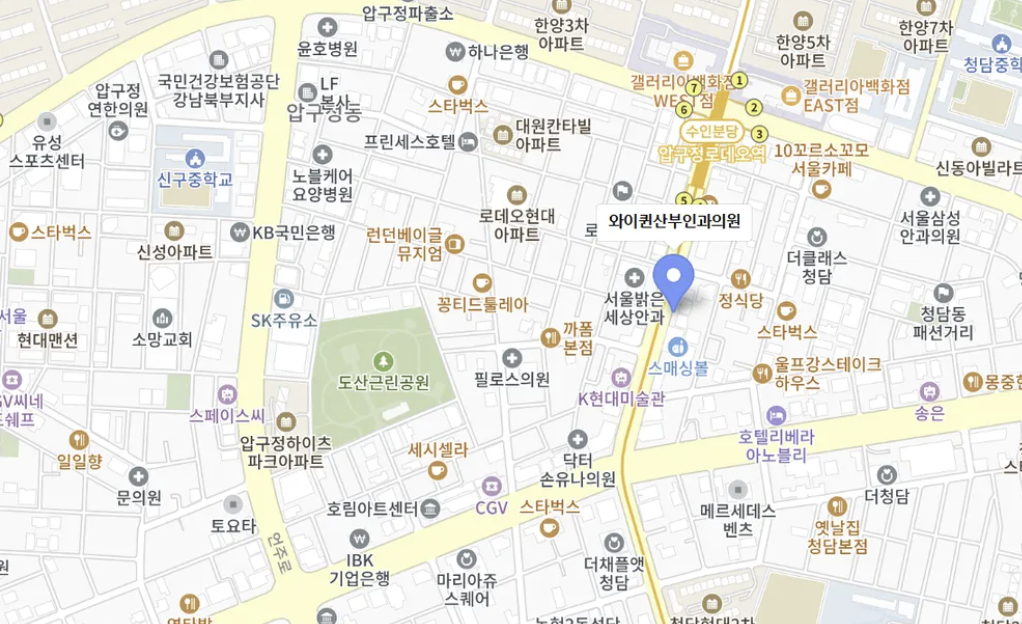
Y Queen Women's Clinic is located in Gangnam, Seoul, with convenient access near Apgujeong Rodeo Station.
The clinic is accessible for international patients living, working, studying, or staying in Gangnam, Cheongdam, Sinsa, Itaewon, Myeongdong, and other central Seoul neighborhoods.
Frequently Asked Questions
What is endometriosis excision?
Endometriosis excision is surgery that identifies and removes visible endometriosis lesions from affected pelvic tissues.
Is excision the same as ablation?
No. Excision removes lesions by cutting them out, while ablation destroys the surface of selected lesions using surgical energy. The appropriate technique depends on the type and location of disease.
Can foreigners get an endometriosis excision consultation in Seoul?
Yes. Y Queen Women's Clinic welcomes international patients and provides English-speaking gynecological consultations for endometriosis and chronic pelvic pain.
Can ultrasound detect endometriosis?
Ultrasound can identify ovarian endometriomas and some forms of deeper disease, but a normal ultrasound does not completely exclude endometriosis.
Does everyone with endometriosis need surgery?
No. Many patients can manage symptoms with medication or hormonal therapy. Surgery is considered based on symptoms, anatomy, fertility goals, response to previous treatment, and other clinical factors.
Can endometriosis excision help pelvic pain?
Surgery can improve endometriosis-related pain for some appropriately selected patients, but results vary and pain can persist or recur.
Can endometriosis excision improve fertility?
It may improve reproductive anatomy or fertility in selected patients, but the benefit depends on age, disease location, ovarian reserve, tubal function, previous surgery, and other fertility factors.
Can endometriosis return after excision surgery?
Yes. Endometriosis can recur after surgery, so long-term follow-up or additional medical treatment may sometimes be recommended.
Can surgery for an endometrioma affect ovarian reserve?
Yes. Surgery involving ovarian endometriomas can sometimes remove or damage healthy ovarian tissue and reduce ovarian reserve. This is particularly important for patients planning pregnancy.
Is endometriosis excision performed laparoscopically?
Many endometriosis surgeries are performed using minimally invasive laparoscopy. However, the surgical approach depends on disease severity and which organs are involved.
Does Y Queen Women's Clinic perform endometriosis excision surgery?
Y Queen Women's Clinic can provide endometriosis evaluation, pelvic ultrasound, chronic pelvic pain assessment, fertility counseling, and treatment planning. When specialized or hospital-based laparoscopic endometriosis excision is required, referral to an appropriate gynecologic surgeon or medical center can be coordinated.