Genital Warts Treatment in Seoul
Gangnam Y Queen Women's Clinic
Y Queen Women's Clinic provides English-speaking genital warts treatment and HPV-related women's healthcare in Gangnam, Seoul for local and international patients. Genital warts are benign growths caused by certain types of human papillomavirus and may appear on the vulva, labia, vaginal opening, perineum, perianal area, vagina, or cervix. Because normal genital anatomy, skin tags, molluscum contagiosum, herpes, and other conditions can resemble HPV warts, professional diagnosis is important before treatment. Treatment options may include prescription topical medication, cryotherapy, electrosurgery, laser treatment, or surgical removal depending on the size, number, and location of lesions. Removing visible warts does not necessarily eliminate HPV immediately, so recurrence is possible. Y Queen Women's Clinic also provides confidential STI evaluation, cervical health assessment, HPV counseling, and Gardasil vaccination guidance for international patients in Seoul.
What Are Genital Warts?
Genital warts, medically known as condyloma acuminata, are benign growths caused by certain HPV types.
They can develop around areas such as the:
- Vulva
- Labia
- Vaginal opening
- Perineum
- Around the anus
- Cervix or vagina in some cases
Warts vary considerably in size and appearance.
Some are easily visible, while others are small or located internally and may only be identified during an examination.
What Causes Genital Warts?
Genital warts are caused by infection with certain types of HPV.
HPV is extremely common and is primarily transmitted through intimate skin-to-skin sexual contact.
Transmission can occur through:
- Vaginal sexual contact
- Anal sexual contact
- Genital skin-to-skin contact
- Other intimate contact involving an infected area
Visible warts do not need to be present for HPV transmission to occur.
Are Genital Warts an STD?
Genital HPV infection is considered a sexually transmitted infection.
However, HPV behaves differently from many bacterial STIs.
A person may carry HPV without symptoms for months or longer, which can make it impossible to determine exactly when transmission occurred or which partner transmitted the infection.
A diagnosis of genital warts therefore does not necessarily indicate a recent exposure.
What Do Genital Warts Look Like?
Genital warts can appear as:
- Small flesh-colored bumps
- Whitish or pink growths
- Raised lesions
- Flat lesions
- Multiple clustered bumps
- Larger cauliflower-like growths
Some patients have only one lesion.
Others develop several lesions in different areas.
Because many benign skin conditions can resemble genital warts, visual self-diagnosis is not always reliable.
Where Can Genital Warts Appear in Women?
Genital warts may develop on or around the:
- Labia majora
- Labia minora
- Vaginal opening
- Clitoral area
- Perineum
- Perianal region
- Vagina
- Cervix
Internal lesions may require a pelvic examination for detection.
What Symptoms Do Genital Warts Cause?
Many genital warts cause no physical symptoms.
When symptoms occur, they may include:
- Visible or palpable bumps
- Genital itching
- Irritation
- Mild discomfort
- Bleeding after friction
- Discomfort during sexual activity
Painful ulcers, blisters, or open sores may suggest another condition and should be medically evaluated.
Genital Warts vs. Normal Genital Skin
Normal vulvar anatomy can sometimes be mistaken for genital warts.
Examples include:
- Vestibular papillomatosis
- Sebaceous glands
- Fordyce spots
- Skin tags
- Normal variations in vulvar tissue
Unnecessary treatment can damage normal tissue, so professional examination is recommended before attempting wart removal.
Genital Warts vs. Herpes
Genital warts and genital herpes are different infections.
Genital Warts
Usually appear as persistent bumps or growths and are caused by HPV.
Genital Herpes
More commonly causes painful blisters, ulcers, burning, or recurrent sores and is caused by herpes simplex virus.
However, appearance varies, and examination or testing may be needed.
Genital Warts vs. Molluscum Contagiosum
Molluscum contagiosum can also produce small bumps around the genital region.
Molluscum lesions are often:
- Smooth
- Dome-shaped
- Firm
- Characterized by a small central indentation
A clinician can usually distinguish the conditions through examination.
Does HPV Always Cause Genital Warts?
No.
Most HPV infections do not cause visible genital warts.
A person may carry HPV without knowing it.
Only certain HPV types are commonly associated with genital warts.
Are Genital Warts Cancer?
Genital warts themselves are generally benign.
The HPV types that commonly cause genital warts are typically different from the high-risk HPV types most strongly associated with cervical and other HPV-related cancers.
However, having genital warts does not mean a patient cannot also have another HPV type.
Appropriate cervical cancer screening remains important.
Genital Warts and High-Risk HPV
HPV includes many different viral types.
They are broadly discussed as:
- Low-risk HPV types
- High-risk HPV types
Low-risk HPV types are commonly associated with genital warts.
High-risk HPV types are associated with precancerous cervical changes and cervical cancer risk.
Genital wart treatment and cervical cancer screening therefore address related but different clinical issues.
Genital Warts Diagnosis
Diagnosis is often based on careful examination of the affected area.
Your appointment may include:
- Review of symptoms
- Sexual health history
- Examination of the vulva
- Examination of the perineal or perianal area when relevant
- Pelvic examination when indicated
- Cervical screening when appropriate
- STI testing based on individual risk
Most external genital warts can be diagnosed clinically.
Do I Need an HPV Test for Genital Warts?
HPV testing is generally used primarily for cervical cancer screening and management of abnormal cervical screening results.
It is not routinely necessary simply to diagnose typical external genital warts.
Your physician can determine whether cervical HPV testing is appropriate based on your age, screening history, and other findings.
Do Genital Warts Need a Biopsy?
Most typical genital warts do not require biopsy.
A biopsy may be considered if a lesion:
- Has an unusual appearance
- Is pigmented
- Is hard or fixed
- Bleeds unexpectedly
- Is ulcerated
- Does not respond to treatment
- Has an uncertain diagnosis
The goal is to exclude another skin or vulvar condition.
Genital Warts Treatment in Seoul
Treatment can remove visible genital warts, but treatment does not guarantee immediate elimination of HPV from surrounding tissue.
Available approaches may include:
- Prescription topical medications
- Cryotherapy
- Chemical treatment
- Electrosurgical treatment
- Laser treatment
- Surgical removal
The appropriate treatment depends on lesion size, number, location, symptoms, previous treatment, and patient preference.
Cryotherapy for Genital Warts
Cryotherapy uses very cold temperatures to destroy wart tissue.
It may be appropriate for selected external genital warts.
During treatment, patients may experience:
- Burning
- Stinging
- Temporary discomfort
After treatment, the area may develop:
- Redness
- Swelling
- Blistering
- Crusting
Multiple sessions may sometimes be necessary.
Laser Genital Wart Removal
Laser treatment may be considered for selected lesions, particularly when warts are:
- Numerous
- Larger
- Recurrent
- Located in areas difficult to treat with other methods
The exact treatment approach depends on lesion location and clinical assessment.
Electrosurgical Genital Wart Removal
Electrosurgery uses controlled electrical energy to remove or destroy wart tissue.
It may be considered when lesions are:
- Larger
- Persistent
- Numerous
- Unsuitable for simpler treatments
Local anesthesia or other pain-control measures may be used depending on the procedure.
Surgical Removal
Selected genital warts can be physically removed.
Surgical removal may be considered for:
- Larger lesions
- Pedunculated lesions
- Persistent warts
- Lesions requiring tissue diagnosis
Your physician can discuss whether removal is appropriate and what aftercare is required.
Topical Treatment for Genital Warts
Certain prescription medications can be applied directly to external genital warts.
Treatment selection depends on:
- Location of the lesions
- Number of warts
- Pregnancy status
- Skin sensitivity
- Previous treatment
- Ability to follow application instructions
Not every topical medication is appropriate for every genital location.
Can I Use Over-the-Counter Wart Remover?
Do not use ordinary over-the-counter wart removers intended for hands or feet on genital tissue.
These products may contain strong acids or other ingredients that can injure sensitive vulvar or genital skin.
Genital lesions should be professionally evaluated before treatment.
Does Genital Wart Removal Cure HPV?
Removing visible warts does not necessarily eliminate HPV immediately.
Treatment focuses on removing or reducing visible lesions.
The immune system often suppresses HPV over time, but the timing varies between individuals.
This is why genital warts can sometimes recur after successful removal.
Can Genital Warts Come Back?
Yes.
Recurrence is possible, particularly during the months following treatment.
Recurrence does not necessarily mean that treatment failed or that there was a new sexual exposure.
HPV may remain present in nearby skin even after visible lesions have disappeared.
Recurrent Genital Warts
If genital warts repeatedly return, your doctor may reconsider:
- Diagnosis
- Number and location of lesions
- Previous treatment methods
- Alternative removal techniques
- Immune-related factors
- Smoking
- Other genital infections
A different treatment approach may sometimes be appropriate.
How Many Treatments Will I Need?
Some patients require only one treatment.
Others need several sessions.
The number of treatments depends on:
- Number of warts
- Wart size
- Location
- Treatment method
- Response to treatment
- Recurrence
Your doctor can provide a more individualized estimate after examination.
Does Genital Wart Treatment Hurt?
Discomfort varies by treatment.
Local anesthesia may be used for certain procedures.
After treatment, temporary symptoms can include:
- Tenderness
- Burning
- Swelling
- Mild bleeding
- Skin irritation
Your physician will provide aftercare instructions appropriate for the treatment performed.
Recovery After Genital Wart Removal
Recovery depends on the method used and the size and location of the treated area.
During healing, patients may be advised to:
- Keep the area clean
- Avoid irritating products
- Avoid picking at healing tissue
- Wear comfortable clothing
- Follow wound-care instructions
- Temporarily avoid sexual activity
Follow your physician's specific instructions.
When Can I Have Sex After Genital Wart Treatment?
It is generally advisable to wait until treated skin has adequately healed and pain, bleeding, or open wounds have resolved.
Sexual contact with healing tissue can:
- Cause pain
- Delay healing
- Cause bleeding
- Irritate the treatment area
Your doctor can advise when it is appropriate to resume sexual activity.
Can I Spread HPV After My Warts Are Removed?
Possibly.
Removing visible warts does not guarantee that HPV is immediately absent from surrounding genital skin.
HPV can sometimes be transmitted even when no visible warts are present.
Do Condoms Prevent Genital Warts?
Condoms can reduce HPV transmission risk but cannot provide complete protection because HPV can infect skin not covered by a condom.
Consistent condom use remains useful for reducing the risk of many sexually transmitted infections.
Should My Partner Be Tested?
There is no routine clinical HPV test used to determine the genital HPV status of all partners.
Partners may consider medical evaluation if they:
- Notice genital lesions
- Have symptoms
- Need STI screening
- Have questions about HPV vaccination
A diagnosis of genital warts does not make it possible to determine when HPV was acquired.
Should I Tell My Partner?
Discussing genital warts or HPV with a current sexual partner can support informed decisions about sexual health, condom use, vaccination, and medical evaluation.
Because HPV can remain asymptomatic for a long period, a diagnosis does not establish when or from whom infection was acquired.
HPV Vaccination After Genital Warts
HPV vaccination does not treat existing genital warts.
However, vaccination may still provide protection against HPV types a patient has not previously acquired.
Whether vaccination is recommended depends on:
- Age
- Previous vaccination
- Medical history
- Individual circumstances
Your doctor can discuss whether Gardasil 9 vaccination is appropriate.
Can Gardasil Treat Existing Genital Warts?
No.
Gardasil is preventive rather than a treatment for existing HPV lesions.
Visible genital warts require separate management.
Vaccination may still have preventive value against other HPV types.
Genital Warts During Pregnancy
Genital warts can sometimes change during pregnancy.
Treatment decisions need to consider:
- Pregnancy stage
- Wart size
- Location
- Symptoms
- Medication safety
Certain genital wart medications should not be used during pregnancy.
Always tell your doctor if you are pregnant or could be pregnant before treatment.
Genital Warts and Pap Smears
Having genital warts does not automatically mean that a Pap smear will be abnormal.
Pap testing evaluates cervical cells for changes associated with cervical cancer risk.
Patients should continue cervical screening according to appropriate recommendations.
Genital Warts and Colposcopy
Colposcopy is not automatically required simply because external genital warts are present.
It may be recommended if:
- Cervical screening is abnormal
- High-risk HPV findings require further evaluation
- A cervical lesion is suspected
- Another clinical indication exists
Your physician can determine whether colposcopy is necessary.
STI Testing With Genital Warts
Because genital warts are sexually transmitted, some patients may benefit from screening for other STIs based on sexual history and risk.
Testing may include:
- Chlamydia
- Gonorrhea
- HIV
- Syphilis
- Other infections when clinically indicated
Testing is individualized rather than automatically identical for every patient.
New Genital Bumps After Sexual Contact
A new genital bump does not automatically mean HPV.
Possible causes include:
- Genital warts
- Herpes
- Molluscum contagiosum
- Folliculitis
- Ingrown hairs
- Skin tags
- Normal anatomical variations
- Other vulvar skin conditions
Professional evaluation helps prevent unnecessary or incorrect treatment.
When Should I See a Doctor?
Consider medical evaluation if you notice:
- New genital bumps
- Multiple genital growths
- Rapidly increasing lesions
- Recurrent genital warts
- Bleeding lesions
- Persistent itching
- Uncertain genital skin changes
- Lesions after a new sexual exposure
- A growth that does not heal
Prompt evaluation is particularly important for unusual, pigmented, ulcerated, or rapidly changing lesions.
How Should I Prepare for an Appointment?
Before your appointment, consider:
- When you first noticed the lesion
- Whether the number or size has changed
- Previous genital wart treatment
- Previous HPV test results
- Pap smear history
- HPV vaccination history
- Recent sexual history
- Other STI concerns
- Current medications
- Possibility of pregnancy
Avoid applying non-prescribed wart-removal chemicals to the area before evaluation.
Genital Warts Treatment Cost in Seoul
At Y Queen Women's Clinic:
- Consultation fees depend on the evaluation required.
- Treatment costs vary according to the number, size, and location of warts.
- Cryotherapy, laser, electrosurgery, medication, or surgical removal may have different costs.
- Multiple treatment sessions may be necessary.
- Additional costs may apply for STI testing, cervical screening, HPV-related evaluation, biopsy, or other examinations when indicated.
Exact treatment options and pricing can be discussed after examination.
Why Choose Y Queen Women's Clinic?
International patients choose Y Queen because of its:
- English-speaking medical support
- Confidential women's sexual healthcare
- Genital wart evaluation
- HPV-related consultation
- Treatment of recurrent genital warts
- Evaluation of new genital bumps
- Cervical screening when appropriate
- Colposcopy when clinically indicated
- STD testing
- Gardasil HPV vaccination counseling
- Personalized treatment planning
- Private consultation environment
- Convenient Gangnam location
- Foreigner-friendly appointment process
- Follow-up gynecological care
Our approach focuses on accurate diagnosis, discreet treatment, appropriate HPV counseling, and ongoing women's sexual and cervical health.
Convenient Location in Gangnam
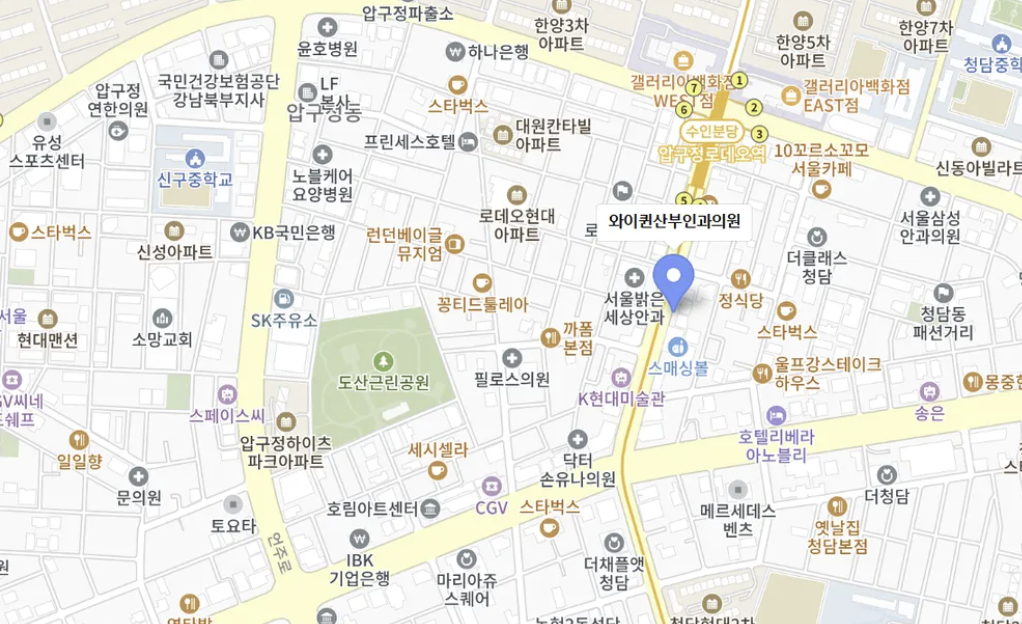
Y Queen Women's Clinic is located in Gangnam, Seoul, with convenient access near Apgujeong Rodeo Station.
The clinic is accessible for international patients living, working, studying, or staying in Gangnam, Cheongdam, Apgujeong, Sinsa, Itaewon, Myeongdong, and other parts of Seoul.
Frequently Asked Questions
What causes genital warts?
Genital warts are caused by certain types of human papillomavirus, or HPV, transmitted mainly through intimate skin-to-skin sexual contact.
Are genital warts an STD?
Yes. Genital HPV infection is sexually transmitted, although infection can remain unnoticed for a long time before warts appear.
Can foreigners get genital warts treatment in Seoul?
Yes. Y Queen Women's Clinic provides English-speaking, confidential evaluation for international patients concerned about genital warts or HPV.
Are genital warts dangerous?
Genital warts are generally benign. The HPV types most commonly responsible for genital warts are different from the high-risk types most strongly associated with cervical cancer.
Are genital warts cancer?
Genital warts themselves are generally not cancer. Unusual or uncertain lesions may require additional evaluation or biopsy.
How are genital warts diagnosed?
Typical external genital warts can often be diagnosed through clinical examination. Biopsy may be considered when the appearance is unusual or the diagnosis is uncertain.
Do I need an HPV test?
An HPV test is not usually needed simply to diagnose typical external genital warts. HPV testing is primarily used in cervical cancer screening and management.
How are genital warts removed?
Depending on the lesions, treatment may include topical medication, cryotherapy, chemical treatment, electrosurgery, laser treatment, or surgical removal.
Can genital warts come back after treatment?
Yes. Recurrence can occur because treatment removes visible warts but may not immediately eliminate HPV from surrounding tissue.
Does wart removal cure HPV?
No treatment can guarantee immediate elimination of HPV. Treatment primarily removes visible lesions.
Can I use a regular wart remover on genital warts?
No. Over-the-counter wart removers intended for hands and feet should not be applied to genital tissue.
Can genital warts spread without visible warts?
Yes. HPV can sometimes be transmitted even when visible genital warts are absent.
Do condoms prevent HPV?
Condoms can reduce HPV transmission risk but cannot completely prevent it because uncovered genital skin can carry HPV.
Does Gardasil remove genital warts?
No. HPV vaccination prevents infections with targeted HPV types but does not remove existing genital warts.
Should I get Gardasil if I already have genital warts?
Vaccination may still protect against HPV types you have not acquired. Your doctor can determine whether vaccination is appropriate based on age and vaccination history.
Do genital warts mean my partner cheated?
No. HPV can remain asymptomatic for months or longer, so the appearance of genital warts cannot reliably establish when infection occurred or who transmitted it.
Should my partner be treated?
Partners with visible genital lesions should seek medical evaluation. Routine treatment of a partner without lesions is not generally performed simply because another partner has genital warts.
Can genital warts affect pregnancy?
Genital warts can occur during pregnancy, and treatment options need to be selected carefully because some medications are not appropriate during pregnancy.
Does Y Queen Women's Clinic treat genital warts?
Y Queen Women's Clinic provides confidential evaluation of suspected genital warts and HPV-related lesions. Depending on the examination, treatment may include appropriate topical or procedural options, follow-up for recurrent lesions, cervical health assessment, STI testing, and HPV vaccination counseling. Exact procedures available should be confirmed during consultation.