Uterine Fibroid Management in Seoul Gangnam Y Queen Women's Clinic
Y Queen Women's Clinic provides English-speaking uterine fibroid management in Gangnam, Seoul for both local and international patients. Our OB-GYN specialists diagnose and monitor uterine fibroids using pelvic examinations, ultrasound imaging, and individualized clinical assessment. We provide personalized management for heavy menstrual bleeding, pelvic pressure, pain, anemia, and fertility concerns through regular monitoring, medication, hormonal therapy, fertility counseling, and referral for minimally invasive or surgical treatment when appropriate. Our clinic offers compassionate, foreigner-friendly women's healthcare focused on long-term reproductive health and quality of life.
Uterine Fibroid Management in Seoul at Gangnam Y Queen Women's Clinic
Uterine fibroids are one of the most common benign gynecological conditions in women of reproductive age. While many fibroids remain small and cause no symptoms, others can lead to heavy menstrual bleeding, pelvic pressure, painful periods, frequent urination, or fertility concerns. Proper evaluation helps determine whether regular monitoring, medication, or further treatment is the most appropriate approach.
At Y Queen Women's Clinic in Gangnam, Seoul, we provide comprehensive evaluation and personalized management for uterine fibroids. Our English-speaking women's health team welcomes Korean residents, expats, international students, business travelers, and medical tourists seeking high-quality gynecological care in Korea.
Using advanced pelvic ultrasound and individualized treatment plans, our OB-GYN specialists diagnose uterine fibroids, monitor their growth, and recommend treatment options based on your symptoms, fibroid size, age, and reproductive goals.
What Are Uterine Fibroids?
Uterine fibroids, also known as leiomyomas or myomas, are non-cancerous growths that develop from the muscular wall of the uterus.
Fibroids vary in:
- Size
- Number
- Location
- Growth rate
Common types include:
- Intramural fibroids
- Submucosal fibroids
- Subserosal fibroids
- Pedunculated fibroids
Most uterine fibroids are benign and do not increase the risk of uterine cancer.
Common Symptoms of Uterine Fibroids
Many women have no symptoms. When symptoms develop, they may include:
- Heavy menstrual bleeding
- Prolonged menstrual periods
- Pelvic pressure
- Pelvic pain
- Severe menstrual cramps
- Lower back pain
- Frequent urination
- Difficulty emptying the bladder
- Constipation
- Pain during sexual intercourse
- Difficulty becoming pregnant
Symptoms depend largely on the size and location of the fibroids.
What Causes Uterine Fibroids?
Although the exact cause is unknown, fibroid growth is associated with:
- Estrogen and progesterone
- Family history
- Genetic factors
- Reproductive age
- Obesity
- Early onset of menstruation
Fibroids often grow during the reproductive years and may shrink naturally after menopause.
Who Should Seek Evaluation?
You should visit a gynecologist if you experience:
- Heavy or prolonged menstrual bleeding
- Pelvic pressure or fullness
- Persistent pelvic pain
- Frequent urination
- Abdominal enlargement
- Pain during intercourse
- Infertility
- Recurrent miscarriage
- Fibroids identified during a routine health examination
Early evaluation allows appropriate monitoring and timely treatment when needed.
How Are Uterine Fibroids Diagnosed?
Your evaluation may include:
- Medical history review
- Menstrual history assessment
- Physical examination
- Pelvic examination
- Pelvic ultrasound
- Blood tests if heavy bleeding is present
- MRI in selected cases
Pelvic ultrasound is the primary imaging study used to determine the size, number, and location of fibroids.
Management and Treatment Options
Treatment depends on your symptoms, age, fibroid characteristics, and future pregnancy plans.
Management options may include:
- Regular monitoring with pelvic ultrasound
- Medications to reduce heavy bleeding
- Hormonal therapy
- Pain management
- Iron supplementation for anemia
- Fertility counseling
- Referral for minimally invasive procedures
- Referral for myomectomy or other surgical treatment when appropriate
Many women with small, asymptomatic fibroids only require routine follow-up.
Can Uterine Fibroids Affect Fertility?
Some fibroids may interfere with fertility or pregnancy depending on their size and location.
Women planning pregnancy may benefit from:
- Early diagnosis
- Fertility evaluation
- Regular fibroid monitoring
- Individualized treatment planning before conception
Your doctor will discuss whether treatment is recommended based on your reproductive goals.
How Should I Prepare?
Before your appointment:
- Track your menstrual cycles and bleeding patterns
- Record pelvic pain or pressure symptoms
- Bring previous ultrasound reports if available
- List current medications
- Prepare questions regarding fertility or treatment options
This information helps guide your evaluation and treatment plan.
Uterine Fibroid Management Cost in Seoul
At Y Queen Women's Clinic:
- Consultation fees vary depending on the evaluation required.
- Additional costs depend on pelvic ultrasound, laboratory testing, or additional imaging if recommended.
- Treatment recommendations and estimated costs will be discussed during your consultation.
Why Choose Y Queen Women's Clinic?
International patients choose Y Queen because of its:
- English-speaking medical support
- Experienced OB-GYN specialists
- Comprehensive fibroid evaluation
- Pelvic ultrasound available onsite
- Personalized management plans
- Fertility-focused care
- Modern diagnostic equipment
- Comfortable, private consultation rooms
- Convenient Gangnam location
- Foreigner-friendly appointment process
We provide evidence-based, compassionate care to help women effectively manage uterine fibroids while protecting their reproductive health.
Convenient Location in Gangnam
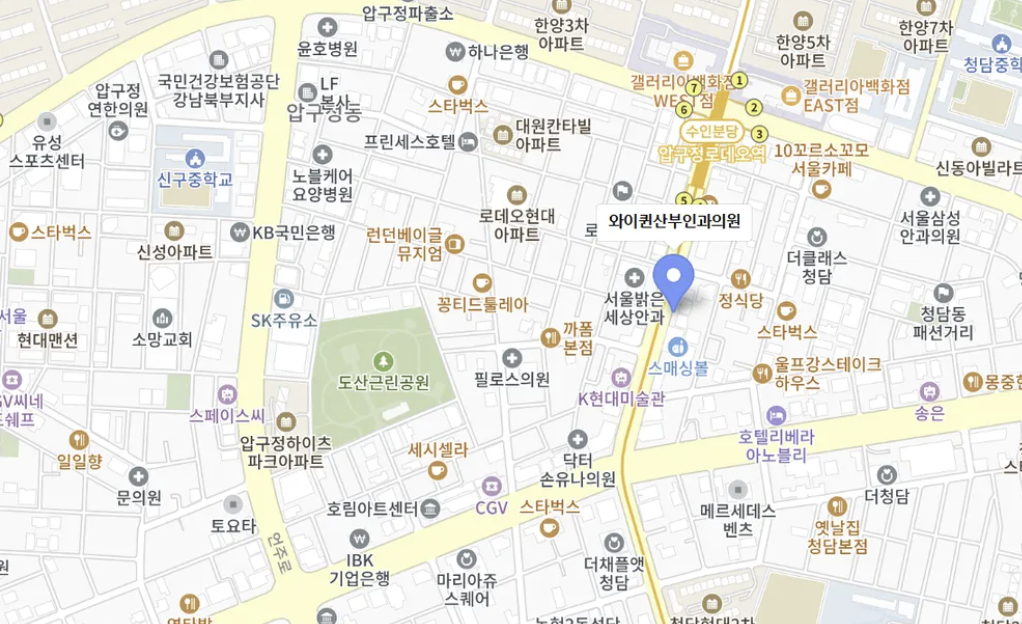
Y Queen Women's Clinic is located in Gangnam, Seoul, with convenient access near Apgujeong Rodeo Station, making it easy for international visitors staying in Gangnam, Cheongdam, Sinsa, Itaewon, Myeongdong, or other central Seoul neighborhoods to visit.
Frequently Asked Questions
What are uterine fibroids?
Uterine fibroids are benign growths that develop in the muscular wall of the uterus. They are one of the most common gynecological conditions among women of reproductive age.
Do all fibroids require treatment?
No. Many fibroids do not cause symptoms and only require regular monitoring with pelvic ultrasound. Treatment is recommended when fibroids cause significant symptoms or fertility concerns.
Can fibroids cause heavy periods?
Yes. Heavy menstrual bleeding and prolonged menstrual periods are among the most common symptoms of uterine fibroids.
Can foreigners receive fibroid treatment in Seoul?
Yes. Y Queen Women's Clinic welcomes international patients and provides English-speaking assistance.
How are uterine fibroids diagnosed?
Pelvic ultrasound is the primary imaging test used to diagnose uterine fibroids and evaluate their size, number, and location.
Can fibroids affect pregnancy?
Some fibroids may interfere with conception or pregnancy depending on their size and location. Your doctor will discuss any potential risks based on your individual condition.
How long does the appointment take?
Most consultations are completed within 30–60 minutes,
depending on whether additional examinations or imaging studies are required.
Will I need surgery?
Not necessarily. Many women successfully manage fibroids through observation or medication. Surgery is recommended only when appropriate based on symptoms, fibroid size, or fertility goals.