Bartholin's Cyst and Abscess Treatment
in Seoul Gangnam Y Queen Women's Clinic
Y Queen Women's Clinic provides English-speaking Bartholin's cyst and abscess evaluation and treatment in Gangnam, Seoul for local and international patients. A Bartholin's cyst develops when a gland duct near the vaginal opening becomes blocked, while infection can cause a painful Bartholin's abscess. Treatment depends on symptoms and may include observation, warm sitz baths, pain management, drainage, Word catheter placement, marsupialization, antibiotics when clinically indicated, or specialist surgery for selected recurrent cases. Patients with severe pain, rapidly increasing swelling, fever, recurrent cysts, or a new Bartholin-area mass after approximately age 40 should receive medical evaluation. The clinic offers confidential, foreigner-friendly gynecological care with individualized treatment and follow-up planning.
What Are the Bartholin Glands?
The Bartholin glands are two small glands located near the vaginal opening.
They produce fluid that contributes to lubrication around the vaginal entrance. Each gland drains through a small duct.
Normally, the glands are not noticeable.
If a duct becomes blocked, fluid can accumulate and form a cyst.
What Is a Bartholin's Cyst?
A Bartholin's cyst develops when the duct draining a Bartholin gland becomes obstructed.
The cyst may be:
- Small and painless
- Noticeable as a lump near the vaginal opening
- Uncomfortable during walking or exercise
- Painful during sexual intercourse
- Large enough to interfere with sitting or normal activity
A cyst does not necessarily mean that an infection is present.
What Is a Bartholin's Abscess?
A Bartholin's abscess occurs when a cyst or gland becomes infected and pus accumulates.
Compared with a simple cyst, an abscess is more likely to cause:
- Significant vulvar pain
- Rapidly increasing swelling
- Redness
- Tenderness
- Difficulty sitting
- Difficulty walking
- Pain during sexual intercourse
- Fever or feeling unwell in some cases
A painful abscess should be medically evaluated.
What Causes a Bartholin's Cyst?
A cyst develops when the Bartholin duct becomes blocked.
The exact reason for the blockage is not always identifiable.
Possible contributing factors include:
- Local inflammation
- Infection
- Trauma or irritation
- Swelling around the duct
- Previous Bartholin gland problems
The trapped gland fluid can gradually form a cyst.
What Causes a Bartholin's Abscess?
An abscess develops when bacteria infect the gland or cyst.
Different bacteria may be involved. In some patients, sexually transmitted infections may also need to be considered based on symptoms and risk factors.
Testing may be recommended when clinically appropriate.
Symptoms of a Bartholin's Cyst
A small cyst may cause no symptoms.
Larger cysts may cause:
- A lump near one side of the vaginal opening
- Vulvar pressure
- Mild tenderness
- Discomfort when walking
- Discomfort when sitting
- Pain during intercourse
- A feeling of fullness near the vaginal entrance
Symptoms often become considerably more severe if an abscess develops.
Symptoms of a Bartholin's Abscess
Possible symptoms include:
- Severe vulvar pain
- Painful swelling
- Redness
- Warmth around the affected area
- Difficulty walking
- Difficulty sitting
- Pain during intercourse
- Drainage if the abscess opens spontaneously
- Fever in some patients
Rapidly worsening pain or swelling should be evaluated promptly.
When Should I See a Gynecologist?
Consider an examination if you have:
- A new lump near the vaginal opening
- Persistent vulvar swelling
- Significant pain
- Rapidly increasing swelling
- Fever
- Difficulty walking or sitting
- Recurrent Bartholin cysts
- Drainage or signs of infection
- A vulvar mass that does not improve
New Bartholin-area masses in patients over approximately age 40 generally warrant particular medical attention because other, less common causes of vulvar masses may need to be excluded.
How Is a Bartholin's Cyst Diagnosed?
Diagnosis is usually based on a medical history and physical examination.
Your evaluation may include:
- Symptom review
- Gynecological history
- Vulvar examination
- Assessment of the size and location of the mass
- Evaluation for infection
- STI testing when indicated
- Additional evaluation or biopsy in selected patients
Ultrasound or other imaging is not routinely required for every typical Bartholin cyst but may be considered when the diagnosis is uncertain.
What Happens During Your Appointment?
Your appointment may include:
- Confidential medical consultation
- Review of when the swelling began
- Assessment of pain and other symptoms
- Gynecological history
- External vulvar examination
- Evaluation for abscess formation
- STI testing when appropriate
- Discussion of treatment options
- Recurrence prevention counseling
- Follow-up planning
Treatment depends on whether the lesion is a painless cyst, painful cyst, abscess, or recurrent problem.
Bartholin's Cyst Treatment
Treatment depends on the size of the cyst and whether symptoms are present.
Possible approaches include:
- Observation
- Warm sitz baths
- Pain management
- Drainage when necessary
- Word catheter placement
- Marsupialization for selected or recurrent cases
- Other surgical treatment when clinically indicated
Small, asymptomatic cysts may sometimes be monitored without intervention.
Sitz Baths for a Bartholin's Cyst
For a small or mildly symptomatic cyst, warm sitz baths may sometimes encourage spontaneous drainage.
This involves soaking the vulvar area in comfortably warm water for short periods.
However, home treatment should not delay medical evaluation if you have:
- Severe pain
- Rapidly increasing swelling
- Fever
- Significant redness
- Recurrent cysts
- Persistent symptoms
A large abscess often requires professional treatment.
Bartholin's Abscess Treatment
A painful Bartholin's abscess frequently requires drainage.
Treatment may involve:
- Incision and drainage
- Word catheter placement
- Marsupialization
- Antibiotics when clinically indicated
- Pain medication
- Follow-up evaluation
The appropriate procedure depends on the size of the abscess, severity of symptoms, recurrence history, and individual circumstances.
Incision and Drainage
During drainage, the physician makes a small opening to allow infected fluid or pus to leave the abscess.
Drainage can provide substantial relief from pressure and pain.
However, simple incision and drainage alone may have a higher risk of recurrence than techniques designed to maintain an opening for continued drainage.
For this reason, additional treatment such as a Word catheter or marsupialization may be considered.
What Is a Word Catheter?
A Word catheter is a small tube with a tiny balloon that may be placed after a Bartholin cyst or abscess is drained.
The catheter:
- Keeps the drainage opening from closing immediately
- Allows continued drainage
- Helps a new drainage tract form
- May reduce recurrence compared with simple drainage alone
The catheter is generally left in place temporarily according to the treating physician's instructions.
What Is Marsupialization?
Marsupialization is a procedure that creates a more permanent drainage opening for a recurrent or persistent Bartholin cyst or abscess.
During the procedure:
- The cyst or abscess is opened.
- Fluid or infected material is drained.
- The edges of the opening are sutured to surrounding tissue.
- The new opening allows continued drainage.
Marsupialization may be considered particularly when cysts or abscesses recur.
Do I Need Antibiotics?
Not every Bartholin cyst or abscess requires antibiotics.
Antibiotics may be considered when there is:
- Surrounding skin infection
- Fever or systemic symptoms
- Specific bacterial concerns
- STI-related infection
- Other clinical indications
For a significant abscess, antibiotics alone may not replace appropriate drainage when drainage is necessary.
Your physician will determine whether antibiotics are appropriate.
Bartholin's Cyst and STD Testing
A Bartholin cyst does not automatically mean that you have a sexually transmitted infection.
However, STI testing may be recommended depending on:
- Symptoms
- Sexual history
- Age
- Examination findings
- Individual risk factors
Testing may include infections such as gonorrhea or chlamydia when clinically indicated.
Does Drainage Hurt?
Local anesthesia or other appropriate pain control may be used for drainage procedures.
Because an abscess is already inflamed and tender, some discomfort can occur.
Many patients experience improvement in pressure and pain after the abscess has been adequately drained.
Recovery After Bartholin's Abscess Drainage
After treatment, temporary symptoms may include:
- Mild soreness
- Light bleeding
- Drainage
- Swelling
- Local tenderness
Patients should follow instructions regarding:
- Hygiene
- Sitz baths
- Medication
- Physical activity
- Sexual intercourse
- Catheter care if applicable
- Follow-up appointments
Recovery depends on the procedure performed and severity of infection.
When Can I Have Sexual Intercourse?
Sexual intercourse may need to be temporarily avoided while the area heals.
The appropriate timing depends on:
- Pain
- Swelling
- Wound healing
- Continued drainage
- Whether a catheter is present
- Treatment performed
Your physician can advise when sexual activity can safely resume.
Can a Bartholin's Cyst Come Back?
Yes.
Bartholin cysts and abscesses can recur, particularly if the gland's drainage duct becomes blocked again.
Recurrence may be more likely after simple drainage.
Patients with repeated episodes may need additional treatment such as:
- Word catheter placement
- Marsupialization
- Further specialist evaluation
Treatment is individualized according to recurrence history.
What If My Bartholin's Cyst Keeps Returning?
Repeated Bartholin cysts or abscesses should be evaluated by a gynecologist.
Your doctor may consider:
- Confirming the diagnosis
- Word catheter treatment
- Marsupialization
- Infection testing
- Additional investigation
- Surgical management in selected cases
The best approach depends on age, symptoms, frequency of recurrence, and previous treatments.
Bartholin Gland Excision
Complete removal of the Bartholin gland is not the first treatment for most patients.
It may be considered in selected cases involving persistent recurrence or other clinical concerns.
Gland excision is more extensive than drainage or marsupialization and may carry a greater risk of bleeding and other complications.
When specialized surgery is required, referral to an appropriate gynecologic surgeon or medical center may be recommended.
Bartholin's Cyst in Women Over 40
A new Bartholin-area mass in a patient over approximately age 40 should be evaluated carefully.
Bartholin gland cancer is rare, but the likelihood of other conditions increases with age.
Depending on the patient's age, examination, and characteristics of the mass, a doctor may recommend:
- Biopsy
- Excision
- Additional specialist evaluation
This does not mean that a new Bartholin mass is cancer. Most vulvar lumps have other causes, but appropriate evaluation is important.
Can I Drain a Bartholin's Cyst Myself?
You should not attempt to cut, puncture, squeeze, or drain a Bartholin cyst or abscess yourself.
Doing so can cause:
- Bleeding
- Additional infection
- Tissue injury
- Incomplete drainage
- Delayed appropriate treatment
A painful or persistent mass should be examined by a healthcare professional.
Risks and Possible Complications of Treatment
Potential risks depend on the procedure performed and may include:
- Bleeding
- Infection
- Pain
- Swelling
- Recurrence
- Scar formation
- Catheter displacement
- Delayed healing
- Need for additional treatment
Your physician will discuss risks based on your recommended treatment.
How Should I Prepare for My Appointment?
Before your visit:
- Note when the lump first appeared
- Record whether it has increased in size
- Note whether you have fever or drainage
- Tell your doctor about previous Bartholin cysts
- List medications and allergies
- Mention recent antibiotic use
- Discuss STI concerns if relevant
- Tell your doctor if pregnancy is possible
Avoid attempting to drain the cyst before your appointment.
Bartholin's Cyst and Abscess Treatment Cost in Seoul
At Y Queen Women's Clinic:
- Consultation fees vary depending on the evaluation required.
- Additional costs may apply for laboratory testing, STI testing, medication, drainage, or other procedures.
- Procedure costs depend on whether incision and drainage, catheter placement, marsupialization, or another treatment is required.
An individualized treatment plan and expected costs can be discussed after examination.
Why Choose Y Queen Women's Clinic?
International patients choose Y Queen because of its:
- English-speaking medical support
- Experienced OB-GYN care
- Confidential vulvar health consultations
- Evaluation of Bartholin cysts and abscesses
- Assessment of painful vulvar swelling
- STI testing when appropriate
- Personalized treatment planning
- Evaluation of recurrent Bartholin problems
- Comfortable, private consultation environment
- Convenient Gangnam location
- Foreigner-friendly appointment process
- Follow-up gynecological care
- Specialist referral coordination when required
We provide individualized care focused on relieving symptoms, treating infection when present, and reducing the risk of recurrent problems when possible.
Convenient Location in Gangnam
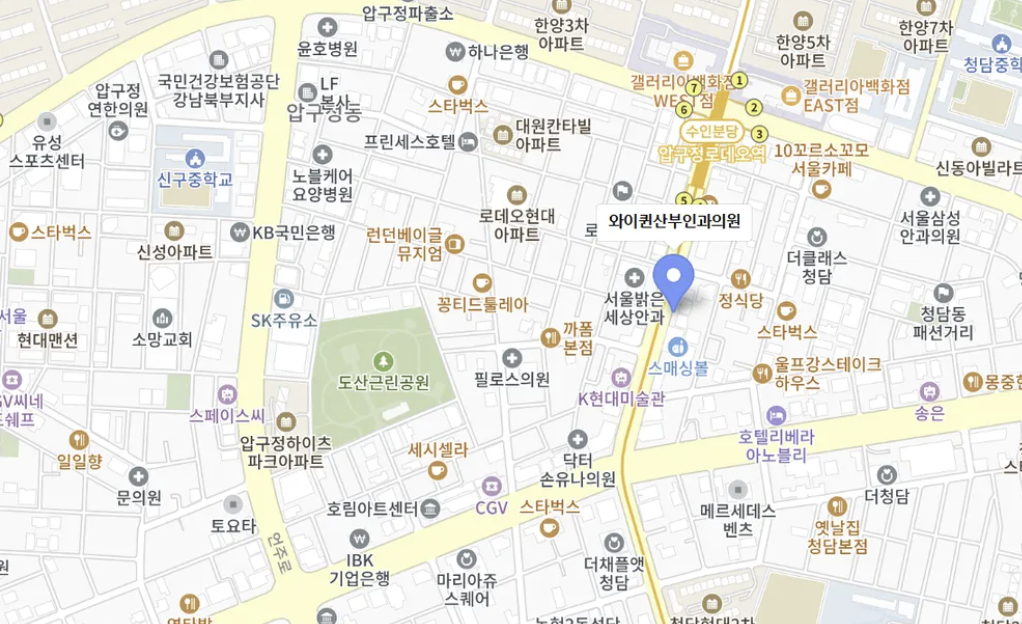
Y Queen Women's Clinic is located in Gangnam, Seoul, with convenient access near Apgujeong Rodeo Station.
The clinic is accessible for international patients living, working, studying, or staying in Gangnam, Cheongdam, Sinsa, Itaewon, Myeongdong, and other central Seoul neighborhoods.
Frequently Asked Questions
What is a Bartholin's cyst?
A Bartholin's cyst is a fluid-filled lump near the vaginal opening that develops
when the drainage duct of a Bartholin gland becomes blocked.
What is a Bartholin's abscess?
A Bartholin's abscess is an infected collection that typically causes significant pain, swelling, redness,
and tenderness near the vaginal opening.
Can foreigners get Bartholin's cyst treatment in Seoul?
Yes. Y Queen Women's Clinic welcomes international patients and provides English-speaking assistance for Bartholin cysts, abscesses, vulvar pain, and other gynecological concerns.
Does a Bartholin's cyst mean I have an STD?
No. A Bartholin cyst does not automatically indicate an STI. However, STI testing may be recommended based on symptoms, examination findings, and individual risk factors.
Will a Bartholin's cyst go away by itself?
Some small cysts may resolve or drain spontaneously. Large, painful, persistent, infected, or recurrent cysts should be evaluated by a gynecologist.
Does a Bartholin's abscess need to be drained?
Many painful Bartholin abscesses require drainage. Your doctor will determine whether drainage, catheter placement, marsupialization, antibiotics, or another treatment is appropriate.
What is a Word catheter?
A Word catheter is a small temporary catheter placed after drainage
to keep the opening patent and allow a new drainage tract to form.
What is marsupialization?
Marsupialization creates a lasting drainage opening by opening the cyst and suturing its edges to surrounding tissue. It may be considered for recurrent or persistent cysts or abscesses.
Do antibiotics cure a Bartholin's abscess?
Antibiotics may be appropriate in selected cases, but a significant abscess often requires drainage. Antibiotics alone may not adequately treat a large collection of pus.
Can a Bartholin's cyst come back?
Yes. Bartholin cysts and abscesses can recur. Repeated episodes may require Word catheter placement, marsupialization, or further specialist evaluation.
Should I worry about a Bartholin cyst after age 40?
A new Bartholin-area mass after approximately age 40 should be medically evaluated. Cancer is rare, but biopsy or additional evaluation may sometimes be recommended to exclude other causes.
Can I pop or drain a Bartholin's cyst myself?
No. Cutting, puncturing, or squeezing the cyst yourself can cause infection, bleeding, or tissue injury and should be avoided.
Does Y Queen Women's Clinic treat Bartholin's cysts and abscesses?
Y Queen Women's Clinic can provide gynecological evaluation, diagnosis, infection assessment, and treatment planning for Bartholin cysts and abscesses. Available procedures depend on the individual case, and specialized or hospital-based treatment can be coordinated when necessary.