HIFU Vaginal Rejuvenation in Seoul Gangnam Y Queen Women's Clinic
Y Queen Women's Clinic provides English-speaking HIFU vaginal rejuvenation consultations in Gangnam, Seoul for local and international patients. HIFU, or High-Intensity Focused Ultrasound, is a non-surgical energy-based treatment that delivers focused ultrasound energy to selected vaginal tissues with the goal of stimulating collagen remodeling and tissue contraction. It may be considered for selected concerns involving vaginal laxity, postpartum tissue changes, reduced elasticity, and certain intimate wellness symptoms. Because similar symptoms may result from pelvic floor dysfunction, hormonal changes, menopause, urinary conditions, childbirth injury, or pelvic organ prolapse, appropriate gynecological evaluation is important before treatment. HIFU does not guarantee permanent vaginal tightening, improved sexual sensation, or stronger orgasms, and the evidence for some intimate health indications remains developing. Y Queen Women's Clinic offers confidential, foreigner-friendly care focused on individualized assessment, treatment alternatives, healthy anatomy, and realistic expectations.
What Is HIFU Vaginal Rejuvenation?
HIFU vaginal rejuvenation is an energy-based treatment that uses focused ultrasound waves to create controlled thermal effects at selected depths within vaginal tissues.
The intended biological response may include:
- Collagen remodeling
- Tissue contraction
- Changes in tissue elasticity
- Gradual tissue renewal
- Improvement in selected vaginal laxity concerns
The procedure does not require abdominal incisions or surgical removal of tissue.
How Does Vaginal HIFU Work?
HIFU technology concentrates ultrasound energy at predetermined tissue depths.
Rather than heating only the surface, focused ultrasound is designed to deliver energy beneath the tissue surface.
This controlled thermal effect is intended to trigger a tissue-healing response involving collagen contraction and remodeling.
The exact:
- Energy level
- Treatment depth
- Number of treatment points
- Treatment duration
- Number of sessions
depends on the specific device and treatment protocol.
Why Do Women Consider HIFU Vaginal Rejuvenation?
Patients may seek consultation because of:
- Vaginal laxity
- Reduced vaginal elasticity
- Postpartum tissue changes
- Age-related vaginal changes
- Changes following childbirth
- Selected vaginal dryness concerns
- Mild urinary leakage concerns
- Changes in intimate comfort
- Interest in a non-surgical treatment option
Not every symptom is caused by changes in vaginal tissue, so treatment should follow appropriate evaluation.
HIFU for Vaginal Laxity
A sensation of vaginal looseness may occur after:
- Vaginal childbirth
- Multiple pregnancies
- Pelvic floor stretching
- Aging
- Hormonal changes
- Connective tissue changes
HIFU is marketed as a non-surgical option intended to stimulate tissue contraction and collagen remodeling.
However, vaginal laxity may also result from pelvic floor weakness, perineal injury, or pelvic organ prolapse.
These conditions may require different treatment.
HIFU Vaginal Rejuvenation After Childbirth
Pregnancy and vaginal childbirth can affect both vaginal tissues and the pelvic floor.
Postpartum symptoms may include:
- Vaginal laxity
- Pelvic floor weakness
- Urinary leakage
- Vaginal dryness
- Perineal discomfort
- Changes in sexual comfort
- Pelvic pressure
Some women consider HIFU for persistent tissue-related concerns after adequate postpartum recovery.
However, pelvic floor physical therapy, scar treatment, hormonal management, or surgical repair may be more appropriate when another condition is responsible for the symptoms.
HIFU Vaginal Rejuvenation and Menopause
Perimenopause and menopause can cause vaginal and urinary changes because estrogen levels decline.
Possible symptoms include:
- Vaginal dryness
- Burning
- Irritation
- Reduced elasticity
- Pain during intercourse
- Urinary urgency
- Changes in vaginal comfort
These symptoms may be part of genitourinary syndrome of menopause.
HIFU may be discussed as one possible treatment in selected patients, but established options such as moisturizers, lubricants, and hormonal or other medical therapy may be more appropriate depending on the cause.
Can HIFU Help Vaginal Dryness?
HIFU is sometimes promoted for vaginal dryness and tissue quality.
However, vaginal dryness can have several causes, including:
- Menopause
- Perimenopause
- Breastfeeding
- Low estrogen
- Certain medications
- Vulvar or vaginal disorders
- Previous medical treatment
Dryness should therefore be evaluated before choosing an energy-based procedure.
HIFU and Mild Urinary Leakage
Some vaginal HIFU treatments are marketed for selected symptoms of mild stress urinary incontinence.
Stress urinary incontinence typically causes leakage during activities such as:
- Coughing
- Sneezing
- Running
- Jumping
- Exercising
- Lifting
However, urinary leakage can have different causes and severities.
Established management may include:
- Pelvic floor exercises
- Pelvic floor physical therapy
- Lifestyle modification
- Specialist urinary evaluation
- Medical or surgical treatment when appropriate
HIFU should not replace proper evaluation of persistent urinary incontinence.
HIFU Vaginal Rejuvenation and Sexual Wellness
Some patients seek treatment because of changes in intimate comfort or sensation.
Sexual function depends on many factors, including:
- Pelvic floor function
- Hormonal health
- Vaginal lubrication
- Nerve function
- Pain conditions
- Medications
- Psychological factors
- Relationship factors
HIFU should not be presented as a guaranteed treatment for stronger orgasms, increased sensitivity, or improved sexual satisfaction.
Who May Consider HIFU Vaginal Rejuvenation?
A consultation may be appropriate for adult women experiencing:
- Vaginal laxity
- Reduced tissue elasticity
- Postpartum vaginal changes
- Age-related vaginal changes
- Selected menopause-related concerns
- Mild urinary symptoms
- Intimate discomfort
- Interest in non-surgical vaginal treatment
The physician should first determine whether another condition better explains the symptoms.
Who May Not Be Suitable for HIFU?
Treatment may need to be postponed or avoided in patients with:
- Pregnancy
- Active vaginal infection
- Active pelvic infection
- Unexplained vaginal bleeding
- Certain cervical abnormalities
- Significant untreated pelvic organ prolapse
- Recent childbirth before adequate healing
- Significant pelvic pain requiring further diagnosis
- Other contraindications related to the specific HIFU device
Suitability should be determined after medical evaluation.
What Happens During Your Consultation?
Your appointment may include:
- Confidential discussion of symptoms
- Medical and gynecological history
- Pregnancy and childbirth history
- Menstrual and menopause history
- Assessment of vaginal dryness
- Evaluation of urinary symptoms
- Pelvic examination when appropriate
- Pelvic floor assessment when indicated
- Evaluation for pelvic organ prolapse
- Discussion of HIFU and alternatives
- Explanation of benefits and limitations
- Personalized treatment planning
The goal is to identify the underlying cause of symptoms before recommending treatment.
What Happens During HIFU Vaginal Rejuvenation?
The exact procedure depends on the device being used.
A typical treatment may involve:
- Positioning similar to a routine gynecological procedure.
- Placement of a specially designed HIFU treatment applicator.
- Delivery of focused ultrasound energy at selected depths.
- Treatment of predetermined areas according to the protocol.
- Removal of the applicator.
- Brief post-treatment observation and aftercare instructions.
No abdominal incision is required.
How Long Does HIFU Vaginal Rejuvenation Take?
Treatment duration varies according to:
- Device
- Treatment settings
- Number of treatment points
- Treatment area
- Individual protocol
Many non-surgical vaginal energy procedures are relatively short compared with surgery.
Your physician can explain the expected appointment duration after determining your treatment plan.
Does HIFU Vaginal Rejuvenation Hurt?
Patient experience varies.
During treatment, some patients may notice:
- Warmth
- Pressure
- Tingling
- Temporary sensitivity
- Mild discomfort
Treatment should not cause severe uncontrolled pain.
Tell your physician immediately if you experience significant discomfort during the procedure.
Is Anesthesia Needed?
General anesthesia is usually not associated with non-surgical vaginal HIFU.
Whether topical or local pain control is used depends on:
- Device
- Energy settings
- Treatment protocol
- Individual sensitivity
Your physician will explain the pain-management approach before treatment.
Recovery After HIFU Vaginal Rejuvenation
One potential advantage of non-surgical treatment is limited downtime compared with surgery.
Temporary effects may include:
- Mild vaginal sensitivity
- Temporary discomfort
- Light spotting
- Mild discharge
- Sensation of warmth
Recovery varies, and your physician should provide procedure-specific aftercare instructions.
When Can I Return to Work?
Many patients can return to normal daily activities relatively quickly after an uncomplicated non-surgical HIFU procedure.
However, individual recovery depends on:
- Treatment settings
- Sensitivity
- Symptoms afterward
- Your physician's recommendations
If significant pain, bleeding, or other unusual symptoms develop, medical evaluation is appropriate.
When Can I Exercise?
Strenuous exercise may sometimes be temporarily restricted after treatment.
Depending on the protocol, your physician may advise avoiding activities such as:
- Running
- High-impact exercise
- Cycling
- Heavy lifting
- Intense gym workouts
Normal activity can usually be resumed according to individual aftercare guidance.
When Can I Have Sexual Intercourse?
Sexual intercourse may need to be temporarily avoided after vaginal HIFU.
The recommended interval depends on:
- Treatment intensity
- Sensitivity
- Spotting
- Vaginal irritation
- Individual healing
Follow the specific instructions provided by your treating physician.
How Many HIFU Sessions Are Needed?
There is no universal treatment schedule.
The number of sessions depends on:
- HIFU device
- Treatment protocol
- Degree of symptoms
- Treatment goals
- Tissue response
- Previous treatments
Some protocols may involve one session, while others may recommend additional or maintenance treatments.
When Will I Notice Results?
Changes related to collagen remodeling are not necessarily immediate.
Some patients may notice gradual changes over the following weeks or months.
Results vary, and patients should be cautious of promises of:
- Immediate permanent tightening
- Guaranteed improvement
- Guaranteed sexual enhancement
- Permanent results after one treatment
A realistic treatment plan should account for individual response.
How Long Do HIFU Results Last?
There is no single duration that applies to every patient.
Results may be influenced by:
- Aging
- Hormonal changes
- Menopause
- Pregnancy
- Future childbirth
- Pelvic floor function
- Individual tissue characteristics
Maintenance treatment may be discussed for selected patients, but should be based on reassessment rather than an automatic schedule.
HIFU vs. Radiofrequency Vaginal Rejuvenation
HIFU and radiofrequency use different forms of energy.
HIFU
Uses focused ultrasound energy.
Radiofrequency
Uses electromagnetic energy to create controlled tissue heating.
The technologies differ in:
- Energy delivery
- Treatment depth
- Device design
- Treatment protocol
- Evidence
- Possible risks
Neither option is universally better for every patient.
HIFU vs. Vaginal Laser
These treatments are also different.
HIFU
Uses focused ultrasound.
Vaginal Laser
Uses light-based energy.
The appropriate treatment, if any, depends on symptoms, anatomy, device characteristics, medical history, and the strength of available evidence.
HIFU vs. Vaginal Tightening Surgery
HIFU is non-surgical, while procedures such as vaginoplasty directly reconstruct vaginal tissues.
HIFU
- No surgical incision
- Limited downtime
- Energy-based tissue treatment
- Does not directly reconstruct damaged anatomy
Vaginoplasty
- Surgical procedure
- Direct tissue repair
- Longer recovery
- Greater surgical risk
- May be more appropriate for significant structural problems
A non-surgical procedure cannot reproduce every result achievable through reconstructive surgery.
HIFU vs. Pelvic Floor Therapy
These treatments target different tissues.
HIFU
Targets selected vaginal tissues using focused energy.
Pelvic Floor Therapy
Targets muscle strength, relaxation, coordination, and function.
For patients whose symptoms are primarily caused by pelvic floor dysfunction, physical therapy may be the more appropriate treatment.
HIFU vs. PRP Vaginal Treatment
These are different approaches.
HIFU
Uses focused ultrasound energy.
PRP
Uses platelet-rich plasma prepared from the patient's own blood and injected into selected tissues.
Both may be marketed for intimate wellness, but the mechanisms, protocols, risks, and evidence are different.
Does HIFU Tighten the Vagina Permanently?
No permanent result can be guaranteed.
HIFU is intended to stimulate tissue remodeling, but vaginal and pelvic tissues continue to change because of:
- Aging
- Hormones
- Pregnancy
- Childbirth
- Menopause
- Pelvic floor changes
Any improvement may change over time.
Can HIFU Replace Pelvic Floor Exercises?
No.
Pelvic floor exercises target muscle function, while HIFU targets tissue using focused ultrasound energy.
If pelvic floor weakness is the primary cause of symptoms, muscle rehabilitation may be more appropriate.
Some patients may benefit from more than one type of treatment.
Can HIFU Treat Pelvic Organ Prolapse?
HIFU should not be considered a replacement for appropriate prolapse treatment.
Pelvic organ prolapse may cause:
- Vaginal pressure
- Pelvic heaviness
- Vaginal bulging
- Urinary symptoms
- Bowel symptoms
Treatment may involve:
- Pelvic floor therapy
- Pessary use
- Specialized pelvic reconstructive surgery
The appropriate treatment depends on the degree and type of prolapse.
Risks and Possible Side Effects
Potential side effects and complications may include:
- Temporary pain
- Vaginal irritation
- Spotting or bleeding
- Swelling
- Changes in sensation
- Infection
- Persistent discomfort
- Thermal tissue injury in uncommon cases
- Unsatisfactory results
The risk profile depends on the specific device, energy settings, operator technique, and patient characteristics.
Is HIFU Vaginal Rejuvenation Safe?
Safety depends on:
- Appropriate patient selection
- Exact HIFU device
- Treatment depth
- Energy settings
- Provider training
- Medical history
- Proper follow-up
The term "HIFU vaginal rejuvenation" does not mean that every device or treatment protocol has the same evidence or safety profile.
Patients should ask about the exact device and treatment being proposed.
How Strong Is the Evidence?
Energy-based vaginal treatments remain an area of ongoing research.
Some studies report improvements in selected symptoms, but important limitations may include:
- Small study populations
- Different devices
- Different treatment protocols
- Short follow-up periods
- Lack of standardized outcome measures
Patients should understand that evidence for some vaginal rejuvenation indications remains less established than for many conventional gynecological treatments.
How Should I Prepare for a Consultation?
Before your appointment:
- Identify your main symptom
- Note when symptoms began
- Mention pregnancies and childbirth
- Tell your doctor about perineal tears or episiotomy
- Describe urinary leakage
- Mention vaginal dryness
- Discuss pain during intercourse
- List medications and hormone therapy
- Mention previous vaginal procedures
- Discuss future pregnancy plans
You do not need to choose a procedure before being evaluated.
HIFU Vaginal Rejuvenation Cost in Seoul
At Y Queen Women's Clinic:
- Consultation fees depend on the evaluation required.
- Treatment costs depend on the specific HIFU device and protocol.
- Pricing may vary according to the number of treatment points or sessions.
- Additional costs may apply for gynecological examination, pelvic ultrasound, laboratory testing, medication, or other treatments.
Current pricing and an individualized treatment plan can be discussed after consultation.
Why Choose Y Queen Women's Clinic?
International patients choose Y Queen because of its:
- English-speaking medical support
- Female-focused gynecological care
- Confidential vaginal health consultations
- Postpartum gynecological assessment
- Menopause-related women's healthcare
- Evaluation of vaginal laxity
- Assessment of vaginal dryness
- Pelvic floor evaluation when indicated
- Urinary symptom assessment
- Individualized treatment planning
- Discussion of HIFU and alternative treatments
- Comfortable, private consultation environment
- Convenient Gangnam location
- Foreigner-friendly appointment process
- Follow-up women's healthcare
Our approach emphasizes identifying the underlying cause of symptoms and recommending treatment based on anatomy, function, medical evidence, and realistic expectations.
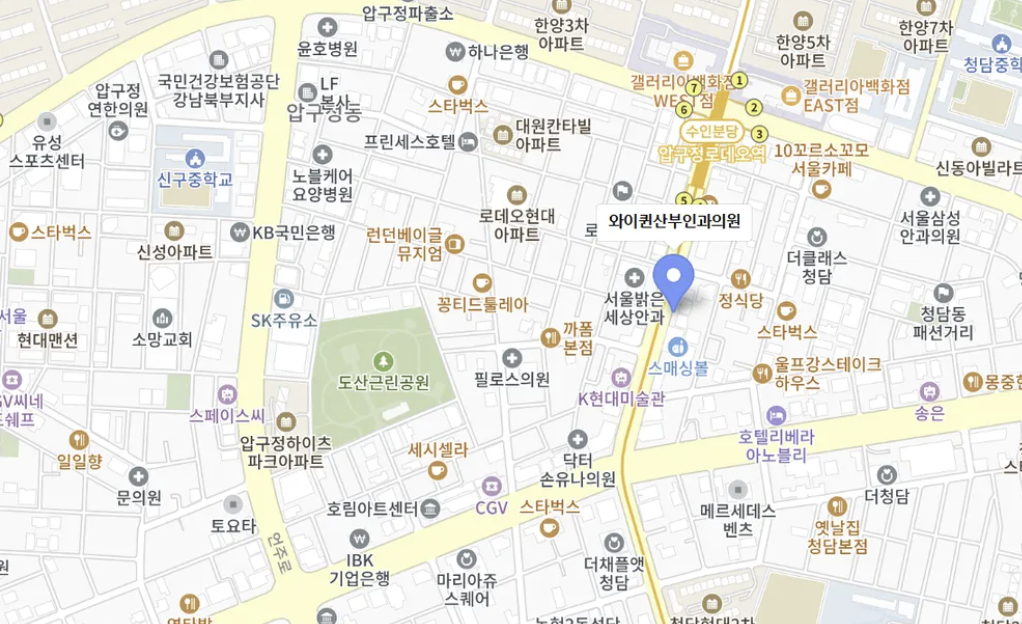
Convenient Location in Gangnam
Y Queen Women's Clinic is located in Gangnam, Seoul, with convenient access near Apgujeong Rodeo Station.
The clinic is accessible for international patients living, working, studying, or staying in Gangnam, Cheongdam, Apgujeong, Sinsa, Itaewon, Myeongdong, and other central Seoul neighborhoods.
Frequently Asked Questions
What is HIFU vaginal rejuvenation?
HIFU vaginal rejuvenation is a non-surgical energy-based treatment that uses focused ultrasound to create controlled thermal effects within selected vaginal tissues with the aim of stimulating collagen remodeling.
What does HIFU stand for?
HIFU stands for High-Intensity Focused Ultrasound.
Is HIFU vaginal rejuvenation surgery?
No. HIFU does not involve surgical incisions or direct tissue removal.
Can foreigners get HIFU vaginal rejuvenation in Seoul?
Yes. Y Queen Women's Clinic welcomes international patients and provides English-speaking assistance for confidential vaginal health and intimate wellness consultations.
Can HIFU tighten the vagina?
HIFU is marketed for vaginal laxity and tissue elasticity concerns, but results vary. Significant pelvic floor weakness, childbirth injury, or prolapse may require different treatment.
Can HIFU help after childbirth?
It may be considered for selected persistent postpartum tissue concerns after adequate healing. However, pelvic floor therapy or another treatment may be more appropriate depending on the cause.
Can HIFU help vaginal dryness?
HIFU is sometimes promoted for vaginal dryness, but dryness frequently has hormonal or medical causes that may respond better to established medical treatment.
Can HIFU help urinary leakage?
Some HIFU treatments are marketed for mild stress urinary symptoms, but persistent urinary incontinence should be properly evaluated before treatment.
Does HIFU improve sexual sensation?
Improvement cannot be guaranteed. Sexual response depends on many factors beyond vaginal tissue elasticity.
Does HIFU improve orgasm?
No treatment should guarantee improved orgasm. Hormonal, neurological, pelvic floor, medication-related, psychological, and relationship factors can all influence orgasm.
Is HIFU painful?
Some patients may experience warmth, pressure, sensitivity, or temporary discomfort. The experience varies depending on device settings and individual sensitivity.
How many HIFU sessions do I need?
The number of treatments depends on the device, symptoms, treatment protocol, and individual response. There is no universal schedule.
How long do HIFU results last?
Results vary. Aging, hormonal changes, menopause, pregnancy, childbirth, and pelvic floor function can influence how long any improvement lasts.
What are the risks of vaginal HIFU?
Potential risks include temporary pain, irritation, spotting, swelling, changes in sensation, infection, persistent discomfort, and uncommon thermal injury.
Is HIFU better than laser or radiofrequency?
Not necessarily. HIFU, laser, and radiofrequency use different forms of energy and have different treatment protocols, evidence, and risk profiles. The most appropriate option depends on the patient's condition.
Does Y Queen Women's Clinic provide HIFU vaginal rejuvenation?
Y Queen Women's Clinic can provide confidential gynecological evaluation for vaginal laxity, postpartum changes, dryness, urinary symptoms, menopause-related concerns, and patients interested in HIFU vaginal rejuvenation. The current availability, exact HIFU device, treatment protocol, suitability, and pricing should be confirmed during an individual consultation.