Contraception Counseling in Seoul Gangnam Y Queen Women's Clinic
Y Queen Women's Clinic provides English-speaking contraception counseling in Gangnam, Seoul for local and international patients. Contraception counseling helps patients compare birth control pills, hormonal and copper IUDs, Nexplanon and other contraceptive implants, injections, patches, vaginal rings, condoms, emergency contraception, and permanent birth control options. The best method depends on medical history, menstrual preferences, medication use, migraine and blood clot risk, smoking status, lifestyle, and future pregnancy plans. Long-acting methods such as IUDs and implants provide highly effective reversible contraception, while condoms also help reduce sexually transmitted infection risk. Y Queen Women's Clinic offers confidential, foreigner-friendly family planning and reproductive healthcare with individualized recommendations based on each patient's health and goals.
What Is Contraception Counseling?
Contraception counseling is a personalized medical consultation focused on preventing pregnancy and helping you choose a birth control method that suits your individual needs.
During counseling, your OB-GYN may discuss:
- Pregnancy prevention goals
- Future pregnancy plans
- Menstrual cycle preferences
- Medical history
- Current medications
- Previous contraception experiences
- Side effects you want to avoid
- Hormonal and non-hormonal options
- Long-acting contraception
- Emergency contraception
- STI prevention
The goal is informed choice rather than recommending the same method to every patient.
What Birth Control Options Are Available?
Depending on medical suitability and local availability, contraceptive options may include:
- Combined birth control pills
- Progestin-only pills
- Hormonal IUDs
- Copper IUDs
- Contraceptive implants such as Nexplanon
- Injectable contraception
- Contraceptive patches
- Vaginal rings
- Condoms
- Other barrier methods
- Permanent contraception
- Emergency contraception
Different methods vary in effectiveness, convenience, hormones, bleeding patterns, and side effects.
How Effective Are Different Birth Control Methods?
Effectiveness varies significantly by method.
Long-acting reversible contraceptives such as IUDs and contraceptive implants are among the most effective reversible methods because they do not depend on daily or repeated user action.
Methods that require regular use, such as pills or condoms, can also be effective but depend more heavily on consistent and correct use.
Your doctor can help compare methods based on both typical use and ideal use.
Birth Control Pills
Birth control pills are a commonly used reversible contraceptive option.
Depending on the formulation, they may contain:
- Estrogen and progestin
- Progestin only
Potential benefits may include:
- Pregnancy prevention
- More predictable periods
- Lighter menstrual bleeding
- Reduced menstrual cramps
- Improvement in acne for some patients
- Management of selected hormonal symptoms
Pills require regular use and are not suitable for every patient.
Combined Birth Control Pills
Combined oral contraceptive pills contain both estrogen and progestin.
They may be appropriate for many patients, but estrogen-containing contraception may not be recommended in certain situations.
Important considerations can include:
- Smoking
- Age
- Migraine with aura
- Blood clot history
- Certain cardiovascular conditions
- Certain liver conditions
- Other medical risk factors
Your doctor will review your health history before prescribing.
Progestin-Only Pills
Progestin-only pills do not contain estrogen.
They may be considered for selected patients who cannot or prefer not to use estrogen-containing contraception.
Correct timing and daily use remain important.
Your physician can explain how the specific pill should be taken and what to do after missed doses.
IUDs
An intrauterine device, or IUD, is placed inside the uterus and provides long-term reversible contraception.
The two main categories are:
- Hormonal IUDs
- Copper IUDs
Hormonal IUDs may reduce menstrual bleeding and cramping in selected patients.
Copper IUDs are hormone-free but may make periods heavier or more painful, particularly at first.
Nexplanon and Contraceptive Implants
Nexplanon is a small hormonal implant placed beneath the skin of the upper arm.
It provides highly effective long-term contraception and does not contain estrogen.
Possible bleeding patterns include:
- Irregular spotting
- Infrequent periods
- Prolonged bleeding
- Lighter periods
- No periods
Your doctor can discuss whether an implant is suitable based on your medical history and preferences.
Contraceptive Injection
Injectable contraception uses a progestin administered at scheduled intervals.
It may be convenient for patients who do not want a daily pill or implanted device.
Possible considerations include:
- Changes in menstrual bleeding
- Weight changes in some users
- Delayed return to fertility after discontinuation compared with some other methods
- Bone health considerations with prolonged use in selected patients
Your OB-GYN can explain the benefits and limitations.
Contraceptive Patch
The contraceptive patch delivers hormones through the skin.
It is usually changed according to a regular schedule rather than taken daily.
Like combined birth control pills, many patches contain estrogen and progestin, so similar medical contraindications may apply.
Vaginal Contraceptive Ring
The vaginal ring releases contraceptive hormones and is placed inside the vagina according to a prescribed schedule.
It may appeal to patients who want a method requiring less frequent attention than a daily pill.
Your physician can explain available products and how they are used.
Condoms
Condoms are a barrier contraceptive method.
Unlike hormonal contraception and IUDs, condoms also help reduce the risk of many sexually transmitted infections.
Condoms can be used:
- Alone
- With hormonal contraception
- With an IUD or implant
- As temporary backup contraception
Using condoms together with another reliable contraceptive method can provide both pregnancy prevention and STI risk reduction.
Emergency Contraception
Emergency contraception may help reduce the risk of pregnancy after:
- Unprotected intercourse
- Condom breakage
- Missed contraception
- Sexual activity when regular contraception was not used
- Certain contraceptive errors
Options depend on timing, medical history, and local availability.
Because emergency contraception is more time-sensitive than routine contraception, patients should seek medical advice promptly.
Is Emergency Contraception the Same as Abortion?
No.
Emergency contraception is used to prevent pregnancy after unprotected intercourse.
It does not terminate an established pregnancy.
Patients who already have a positive pregnancy test or suspected pregnancy need a different type of medical evaluation.
Contraception After Unprotected Sex
If you recently had unprotected intercourse, your doctor may discuss:
- Emergency contraception
- Pregnancy testing
- Timing of follow-up pregnancy testing
- STI testing when appropriate
- Starting a regular contraceptive method
- Temporary backup contraception
The best option depends on how much time has passed and what contraception, if any, was already being used.
Contraception After Abortion
Fertility can return relatively soon after an abortion.
Patients who do not want another pregnancy can discuss contraception during post-abortion care.
Depending on the method and individual circumstances, options may include:
- Birth control pills
- IUD
- Nexplanon
- Injectable contraception
- Condoms
- Other methods
The appropriate timing varies by contraceptive method.
Contraception After Childbirth
Postpartum contraception should consider:
- Breastfeeding
- Time since delivery
- Blood clot risk
- Future pregnancy timing
- Medical history
- Personal preference
Options may include:
- Progestin-only contraception
- IUDs
- Contraceptive implants
- Condoms
- Other methods when medically appropriate
Your OB-GYN can help determine the safest timing after delivery.
Contraception While Breastfeeding
Many contraceptive methods can be used while breastfeeding, but timing and hormone type matter.
Progestin-only methods are often considered in breastfeeding patients.
Estrogen-containing methods may require additional consideration depending on postpartum timing and individual risk factors.
Discuss breastfeeding status with your doctor before starting contraception.
Contraception for Heavy Periods
Some hormonal contraceptives can reduce menstrual bleeding.
Options that may be considered include:
- Certain birth control pills
- Hormonal IUDs
- Other hormonal methods
However, unexplained heavy bleeding should be evaluated first because it may be associated with conditions such as:
- Fibroids
- Adenomyosis
- Polyps
- Hormonal disorders
- Other gynecological conditions
Contraception for Painful Periods
Hormonal contraception may help reduce menstrual cramps in selected patients.
However, severe period pain can sometimes be associated with:
- Endometriosis
- Adenomyosis
- Fibroids
- Other pelvic conditions
Persistent or severe pain deserves appropriate gynecological evaluation.
Contraception for PCOS
Hormonal contraception may be used as part of PCOS management in patients who are not currently trying to become pregnant.
Depending on the treatment plan, contraception may help with:
- Irregular periods
- Endometrial protection
- Acne
- Hormonal symptoms
Treatment should be individualized based on metabolic health, symptoms, and fertility plans.
Contraception and Acne
Certain combined hormonal contraceptives may improve acne in some patients.
Other methods may have little effect or can affect acne differently.
If acne is an important concern, mention it during your contraception consultation so your physician can consider it when discussing options.
Contraception and Weight Gain
Weight concerns are common when choosing birth control.
Different methods have different side effect profiles, and individual responses vary.
Not every hormonal contraceptive causes clinically significant weight gain.
If weight change is a major concern, your doctor can compare available methods and discuss what is known about each one.
Contraception and Mood
Some patients report mood changes while using hormonal contraception.
Mood can also be influenced by:
- Stress
- Sleep
- Mental health conditions
- Other medications
- Hormonal changes
- Life circumstances
If you have experienced significant mood changes with previous contraception, tell your doctor before choosing another method.
Birth Control and Migraines
Migraine history is important when selecting contraception.
In particular, migraine with aura can affect whether estrogen-containing contraception is appropriate.
Tell your doctor if you experience:
- Visual aura
- Neurological symptoms before headaches
- Severe recurrent migraines
- Changes in migraine pattern
This information can influence contraceptive recommendations.
Birth Control and Blood Clot Risk
Estrogen-containing contraception can increase blood clot risk in some patients.
Important risk factors may include:
- Previous blood clot
- Certain inherited clotting disorders
- Smoking
- Age
- Certain medical conditions
- Recent surgery or prolonged immobility
Your doctor will review these factors before prescribing an estrogen-containing method.
Birth Control for Smokers
Smoking can affect contraceptive safety, particularly with estrogen-containing methods.
Age and smoking intensity are relevant.
Patients who smoke should tell their doctor honestly so a safer contraceptive option can be selected.
Contraception and Medication Interactions
Certain medications may reduce the effectiveness of some hormonal contraceptives.
Important examples can include selected:
- Seizure medications
- Tuberculosis medications
- HIV medications
- Other enzyme-inducing drugs
- Herbal supplements
Bring a complete medication list to your contraception appointment.
Which Birth Control Has No Hormones?
Hormone-free options may include:
- Copper IUD
- Condoms
- Other barrier methods
- Permanent contraception in appropriate patients
Patients who want to avoid hormones can discuss the advantages and disadvantages of these options.
Which Birth Control Is Best for Long-Term Use?
Long-acting reversible contraception may be appropriate for patients who want reliable pregnancy prevention without daily action.
Common options include:
- Hormonal IUD
- Copper IUD
- Contraceptive implant
The best option depends on bleeding preferences, hormones, anatomy, and medical history.
Which Birth Control Is Best if I Want Pregnancy Soon?
If you may want pregnancy relatively soon, reversible methods with rapid return to fertility may be attractive.
Possible options include:
- Condoms
- Pills
- IUDs
- Contraceptive implant
Different methods have different practical considerations.
Your doctor can help choose an option based on your timeline.
Permanent Contraception
Patients who are certain they do not want future pregnancies may ask about permanent contraception.
Options can include:
- Tubal sterilization
- Bilateral salpingectomy
- Partner vasectomy
Permanent contraception requires careful counseling because reversal may be difficult, impossible, or unsuccessful.
Contraception and STI Prevention
Most contraceptive methods prevent pregnancy but do not protect against sexually transmitted infections.
Condoms can help reduce STI risk.
Depending on your sexual history, your doctor may also recommend screening for infections such as:
- Chlamydia
- Gonorrhea
- HIV
- Syphilis
- Other STIs when appropriate
What Happens During Your Contraception Consultation?
Your appointment may include:
- Medical history review
- Menstrual history
- Pregnancy history
- Future pregnancy planning
- Review of previous contraception
- Medication review
- Migraine history
- Smoking history
- Blood clot risk assessment
- Discussion of menstrual symptoms
- Pregnancy testing when indicated
- STI testing when appropriate
- Comparison of available methods
- Personalized recommendation
Some methods can be started or placed during the same visit when medically appropriate and available.
Do I Need a Pelvic Exam for Birth Control?
Not every contraceptive method requires a pelvic examination.
For example, many patients can start certain pills or other hormonal methods without a pelvic exam when no separate gynecological concern requires one.
Procedures such as IUD placement require appropriate pelvic assessment.
Your doctor will recommend only the examination necessary for the method being considered and your symptoms.
Do I Need a Pap Smear Before Starting Birth Control?
A Pap smear is not automatically required simply to start every contraceptive method.
Cervical cancer screening should follow appropriate screening guidelines based on age and medical history.
If you are due for screening, it may be discussed during your women's health visit.
How Should I Prepare for a Contraception Appointment?
Before your visit:
- Know the first day of your last menstrual period
- List all current medications and supplements
- Note previous contraception and side effects
- Tell your doctor about migraines
- Mention smoking or nicotine use
- Mention blood clot history
- Discuss recent unprotected sex
- Consider how soon you may want pregnancy
- Think about whether lighter periods are important to you
- Prepare questions about effectiveness and side effects
This information helps your doctor narrow down suitable options.
Contraception Counseling Cost in Seoul
At Y Queen Women's Clinic:
- Consultation fees vary depending on the evaluation required.
- Additional costs depend on the contraceptive method selected.
- IUDs, Nexplanon, prescriptions, pregnancy testing, STI testing, or pelvic ultrasound may involve separate fees.
- Device and medication availability can vary.
Current options and pricing can be discussed during consultation.
Why Choose Y Queen Women's Clinic?
International patients choose Y Queen because of its:
- English-speaking medical support
- Confidential contraception counseling
- Birth control pill consultation
- Hormonal and copper IUD counseling
- Nexplanon consultation
- Emergency contraception guidance
- Menstrual health evaluation
- PCOS and hormonal health care
- Postpartum contraception counseling
- Post-abortion contraception counseling
- Pregnancy planning support
- STI testing when appropriate
- Personalized contraceptive recommendations
- Comfortable, private consultation environment
- Convenient Gangnam location
- Foreigner-friendly appointment process
Our approach focuses on helping patients choose contraception based on health, lifestyle, bleeding preferences, reproductive goals, and informed personal choice.
Convenient Location in Gangnam
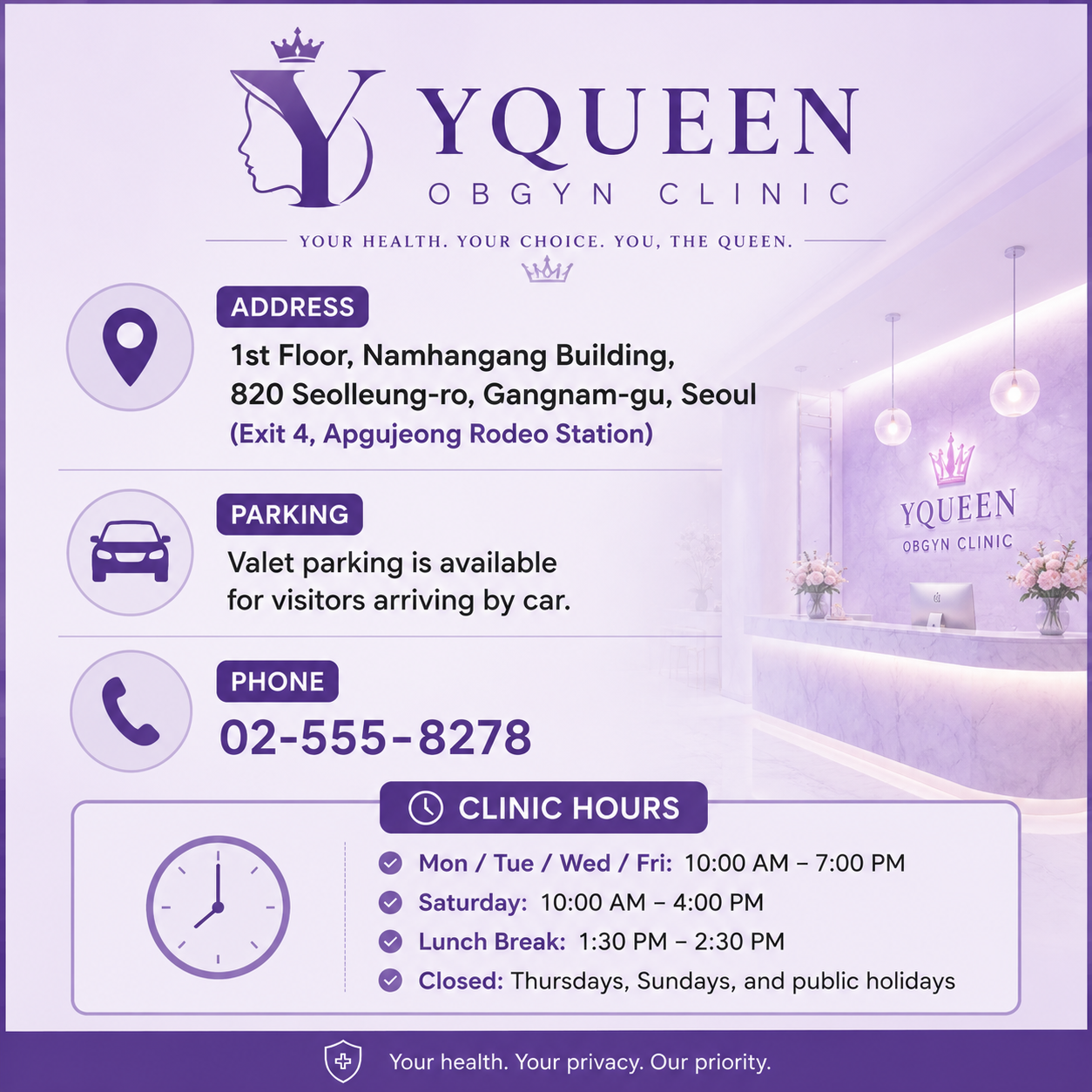
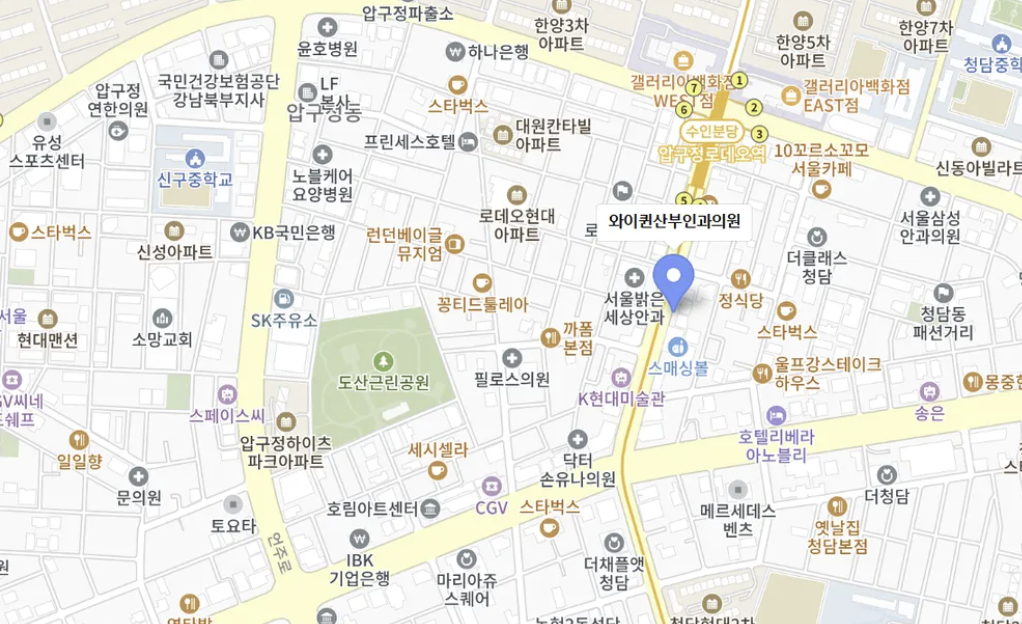
Y Queen Women's Clinic is located in Gangnam, Seoul, with convenient access near Apgujeong Rodeo Station.
The clinic is convenient for international patients living, working, studying, or staying in Gangnam, Cheongdam, Apgujeong, Sinsa, Itaewon, Myeongdong, and other central Seoul neighborhoods.
Frequently Asked Questions
What happens during contraception counseling?
Your doctor reviews your medical history, menstrual cycle, previous contraception, medications, side effect concerns, and pregnancy plans before comparing appropriate birth control options.
What is the most effective reversible contraception?
IUDs and contraceptive implants are among the most effective reversible methods because they provide long-term contraception without requiring daily action.
Can foreigners get birth control in Seoul?
Yes. Y Queen Women's Clinic welcomes international patients and provides English-speaking contraception counseling and women's health care.
Which birth control method is best?
There is no single best method for everyone. The right option depends on your health, menstrual preferences, lifestyle, medication use, and pregnancy plans.
Can I get birth control pills in Seoul?
Patients can consult an OB-GYN about birth control pills
and whether a combined or progestin-only formulation is medically appropriate.
Can I get an IUD in Seoul?
Yes. Y Queen Women's Clinic can provide IUD counseling and evaluate patients seeking placement, removal, or replacement. Current device availability should be confirmed during consultation.
Can I get Nexplanon in Seoul?
Y Queen Women's Clinic can provide contraceptive implant counseling and assess suitability for Nexplanon. Current product availability and pricing should be confirmed with the clinic.
Which contraception has no hormones?
Copper IUDs, condoms, and certain other barrier methods are hormone-free. Permanent contraception is another non-hormonal option for patients who are certain they do not want future pregnancy.
Which birth control can make periods lighter?
Certain hormonal contraceptives, including some hormonal IUDs and birth control pills, can reduce menstrual bleeding in selected patients.
Can birth control help painful periods?
Yes, some hormonal contraceptives can reduce menstrual cramps. Severe or persistent pain should still be evaluated for conditions such as endometriosis or adenomyosis.
Does birth control cause weight gain?
Weight responses vary by method and individual. Not every contraceptive causes significant weight gain.
Can birth control affect mood?
Some patients report mood changes with hormonal contraception. Previous experiences and mental health history should be discussed during counseling.
Do birth control pills protect against STDs?
No. Hormonal contraception, IUDs, and implants do not protect against sexually transmitted infections.
Condoms can help reduce STI risk.
Can I get contraception after an abortion?
Yes. Fertility can return quickly after abortion, and many contraceptive options can be discussed as part of post-abortion care.
Can I use birth control while breastfeeding?
Many methods are compatible with breastfeeding, but timing and hormone type matter. Your OB-GYN can recommend appropriate postpartum contraception.
Can I start contraception immediately?
Often yes, depending on the method and whether pregnancy can reasonably be excluded. Some methods may require temporary backup contraception after starting.
Does Y Queen Women's Clinic provide contraception counseling?
Yes. Y Queen Women's Clinic can provide confidential contraception counseling for birth control pills, hormonal and copper IUDs, Nexplanon, emergency contraception, postpartum contraception, post-abortion contraception, barrier methods, and permanent contraception options. Specific medications and devices are selected according to medical suitability and current availability.