Myomectomy Consultation in Seoul Gangnam Y Queen Women's Clinic
Y Queen Women's Clinic provides English-speaking myomectomy consultations and uterine fibroid evaluations in Gangnam, Seoul for local and international patients. Myomectomy removes uterine fibroids while preserving the uterus and may be considered for women experiencing heavy menstrual bleeding, pelvic pain or pressure, anemia, or certain fibroid-related fertility concerns. Our OB-GYN specialists evaluate fibroid size, number, and location using pelvic ultrasound and individualized clinical assessment while discussing hysteroscopic, laparoscopic, robotic, or abdominal surgical options when appropriate. Patients also receive counseling about fertility, non-surgical fibroid treatments, and alternative procedures. When hospital-based surgery is required, referral to an appropriate gynecologic surgeon or medical center can be coordinated.
A myomectomy is a surgical procedure that removes uterine fibroids while preserving the uterus. It may be considered for women whose fibroids cause heavy menstrual bleeding, pelvic pain or pressure, reproductive concerns, or other significant symptoms. Unlike a hysterectomy, a myomectomy leaves the uterus in place and may therefore be an important treatment option for women who wish to preserve their uterus or future fertility.
At Y Queen Women's Clinic in Gangnam, Seoul, we provide comprehensive uterine fibroid evaluation and myomectomy consultations in a comfortable and private environment. Our English-speaking women's health team welcomes Korean residents, expats, international students, business travelers, and medical tourists seeking professional gynecological care in Korea.
Our OB-GYN specialists evaluate fibroid size, number, location, symptoms, and reproductive goals to determine whether monitoring, medication, myomectomy, or another treatment approach may be appropriate. When hospital-based surgery is required, referral to an appropriate gynecologic surgeon or medical center can be coordinated.
What Is a Myomectomy?
A myomectomy is an operation that removes uterine fibroids, also known as leiomyomas or myomas, without removing the uterus.
The procedure is designed to:
- Remove symptomatic fibroids
- Preserve the uterus
- Reduce heavy menstrual bleeding
- Relieve pelvic pressure or pain
- Address certain fibroid-related fertility concerns
- Improve symptoms affecting quality of life
The type of myomectomy recommended depends primarily on the size, number, and location of the fibroids.
Who May Need a Myomectomy?
Myomectomy may be considered for women who:
- Have heavy or prolonged menstrual bleeding
- Experience significant pelvic pain
- Have pelvic pressure or abdominal fullness
- Have fibroids affecting the uterine cavity
- Experience bladder or bowel pressure from fibroids
- Have anemia related to heavy menstrual bleeding
- Have certain fertility problems associated with fibroids
- Wish to preserve their uterus
- Have symptoms that have not responded adequately to conservative treatment
Not every uterine fibroid requires surgery. Many asymptomatic or mildly symptomatic fibroids can be monitored.
How Are Fibroids Evaluated Before Myomectomy?
A thorough evaluation is important before deciding whether surgery is appropriate.
Your assessment may include:
- Medical history review
- Menstrual history
- Symptom evaluation
- Pelvic examination
- Pelvic ultrasound
- Blood tests when indicated
- Review of previous imaging
- Fertility and pregnancy planning discussion
MRI or other specialized imaging may be recommended in selected cases, particularly when detailed surgical planning is required.
Types of Myomectomy
Different surgical approaches can be used depending on the characteristics of the fibroids.
Hysteroscopic Myomectomy
A hysteroscopic myomectomy removes selected fibroids that project into the uterine cavity.
The procedure is performed through the vagina and cervix, so no abdominal incision is required.
Laparoscopic Myomectomy
Laparoscopic myomectomy uses small abdominal incisions and minimally invasive surgical instruments to remove suitable fibroids.
It may offer a shorter recovery than traditional open surgery in appropriately selected patients.
Robotic Myomectomy
Robotic-assisted surgery is another minimally invasive approach available at some hospitals. Suitability depends on fibroid characteristics, patient factors, surgeon expertise, and facility availability.
Open Abdominal Myomectomy
An abdominal myomectomy uses a larger abdominal incision and may be recommended for particularly large, numerous, or complex fibroids.
Your surgeon will determine which approach is most appropriate for your condition.
Myomectomy and Fertility
Preserving fertility is an important reason some women consider myomectomy.
Fibroids may affect fertility when they:
- Distort the uterine cavity
- Interfere with implantation
- Significantly alter uterine anatomy
- Affect the fallopian tube openings
- Contribute to certain pregnancy complications
However, not every fibroid causes infertility, and removing fibroids does not guarantee pregnancy.
Your doctor will evaluate whether the location and characteristics of your fibroids are likely to affect your reproductive goals.
Myomectomy vs. Hysterectomy
Both procedures may be used to treat symptomatic uterine fibroids, but there is an important difference.
Myomectomy
Removes fibroids while preserving the uterus.
Hysterectomy
Removes the uterus and permanently eliminates the possibility of carrying a pregnancy.
For women who want to preserve their uterus or future fertility, myomectomy may be considered when clinically appropriate.
Myomectomy vs. Uterine Fibroid Embolization
Uterine fibroid embolization (UFE) is a minimally invasive procedure that reduces blood flow to fibroids so they gradually shrink.
Myomectomy physically removes fibroids.
The appropriate option depends on:
- Fibroid size
- Fibroid number
- Fibroid location
- Severity of symptoms
- Age
- Medical history
- Future pregnancy plans
Women planning pregnancy should discuss the reproductive implications of each treatment carefully with their physician.
What Happens During Your Consultation?
Your appointment may include:
- Detailed medical history
- Menstrual and bleeding assessment
- Review of pelvic pain or pressure
- Pelvic examination
- Pelvic ultrasound
- Review of previous scans
- Discussion of fertility goals
- Review of non-surgical treatment options
- Discussion of possible surgical approaches
- Referral for myomectomy when appropriate
The goal is to determine whether surgery is necessary and, if so, which surgical approach may be most appropriate.
Are There Risks?
As with any surgery, myomectomy has potential risks.
These may include:
- Bleeding
- Infection
- Anesthesia-related complications
- Scar tissue formation
- Injury to surrounding organs
- Need for additional treatment
- Recurrence or development of new fibroids
In some situations, significant bleeding during surgery can require additional intervention. Your surgeon will explain your individual risks before the procedure.
Can Fibroids Return After Myomectomy?
Myomectomy removes existing fibroids but does not prevent new fibroids from developing.
Recurrence risk depends on factors such as:
- Age
- Number of fibroids
- Family history
- Time until menopause
- Individual biological factors
Regular gynecological follow-up and pelvic ultrasound may be recommended after treatment.
Recovery After Myomectomy
Recovery depends on the surgical approach.
In general:
- Hysteroscopic procedures usually have a shorter recovery.
- Laparoscopic procedures generally require less recovery time than open abdominal surgery.
- Abdominal myomectomy typically requires a longer healing period.
Your treating surgeon will provide specific instructions regarding exercise, work, sexual activity, and pregnancy planning.
How Should I Prepare for a Myomectomy Consultation?
Before your appointment:
- Track your menstrual bleeding
- Record pelvic pain or pressure symptoms
- Bring previous ultrasound or MRI reports
- List your medications and supplements
- Bring previous gynecological or surgical records if available
- Consider your future pregnancy plans
This information can help your doctor determine the most appropriate treatment strategy.
Myomectomy Consultation Cost in Seoul
At Y Queen Women's Clinic:
- Consultation fees vary depending on the evaluation required.
- Additional costs may apply for pelvic ultrasound, blood tests, or other diagnostic examinations.
- If surgery is recommended, hospital and surgical costs depend on the procedure, anesthesia, hospitalization, and treating facility.
Your treatment options and expected costs can be discussed before referral or treatment.
Why Choose Y Queen Women's Clinic?
International patients choose Y Queen because of its:
- English-speaking medical support
- Experienced OB-GYN specialists
- Comprehensive uterine fibroid evaluation
- Pelvic ultrasound available onsite
- Personalized fibroid management
- Fertility-focused counseling
- Discussion of surgical and non-surgical options
- Comfortable, private consultation rooms
- Convenient Gangnam location
- Foreigner-friendly appointment process
- Surgical referral coordination when needed
We provide individualized fibroid care designed to help patients understand their treatment options and make informed decisions about their reproductive health.
Convenient Location in Gangnam
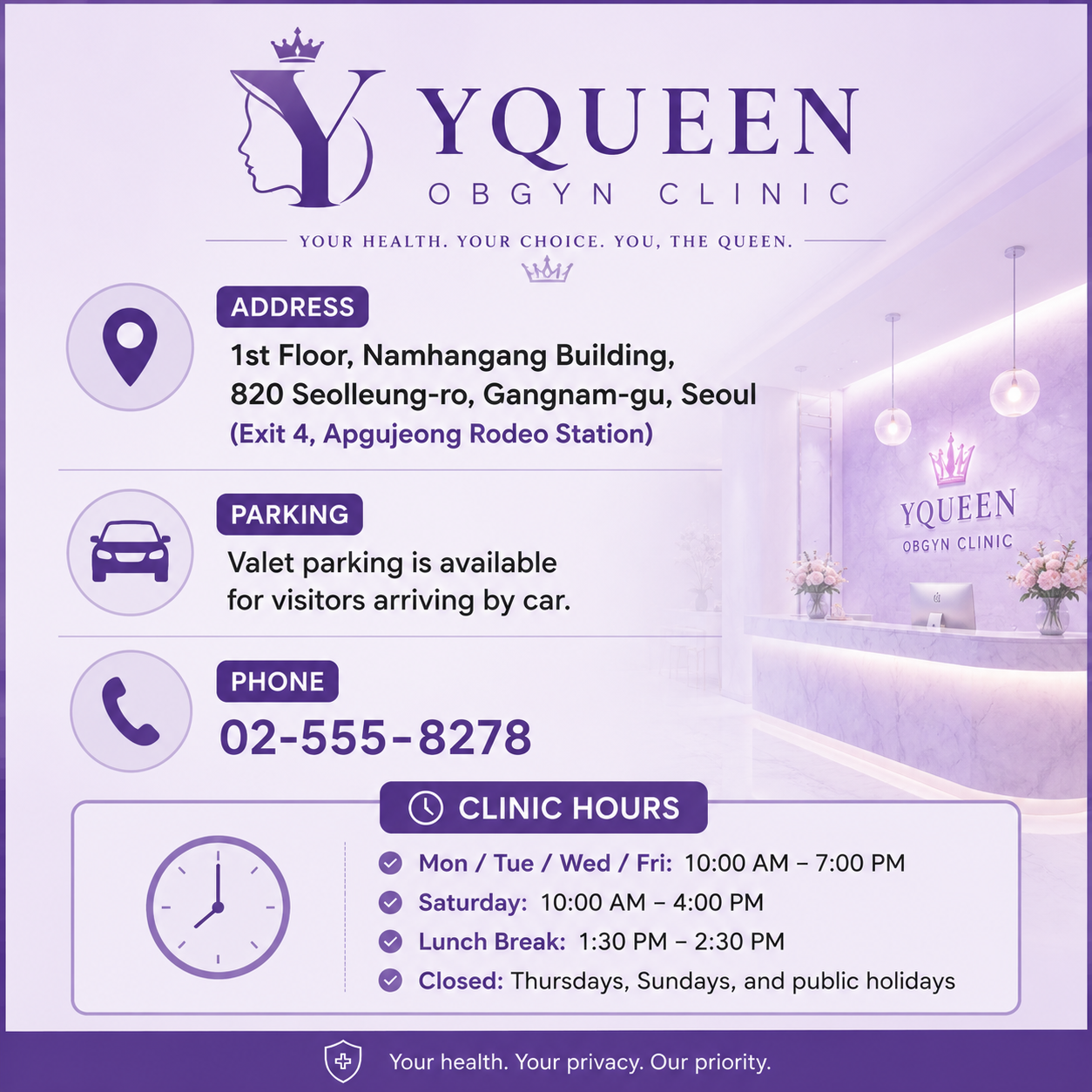
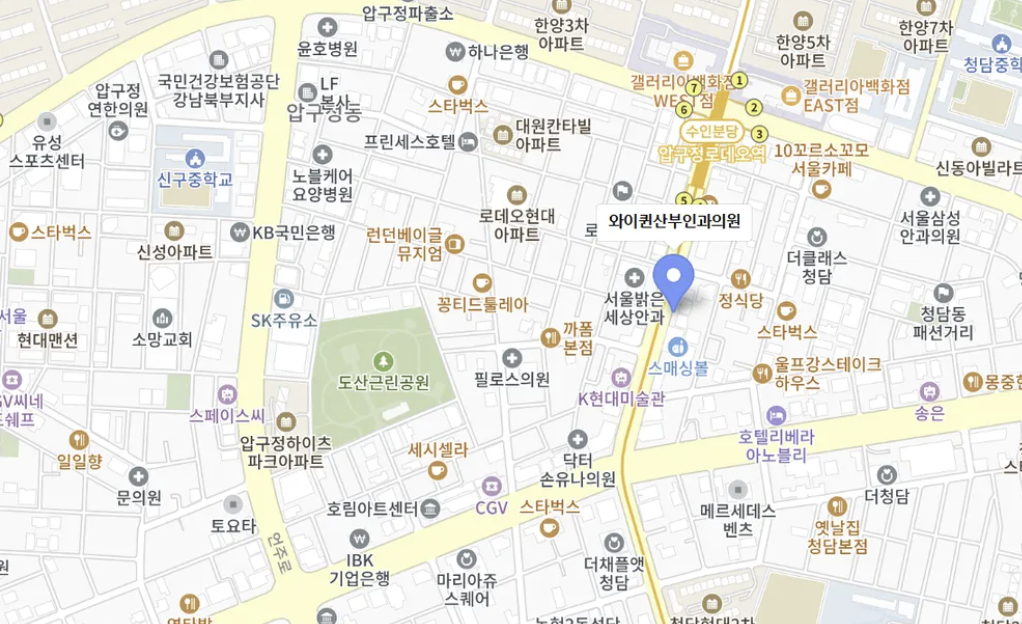
Y Queen Women's Clinic is located in Gangnam, Seoul, with convenient access near Apgujeong Rodeo Station.
The clinic is accessible for international patients living, working, studying, or staying in Gangnam, Cheongdam, Sinsa, Itaewon, Myeongdong, and other central Seoul neighborhoods.
Frequently Asked Questions
What is a myomectomy?
A myomectomy is a surgical procedure that removes uterine fibroids while leaving the uterus in place. It may be considered for women with significant fibroid symptoms or certain fertility concerns.
Is myomectomy the same as hysterectomy?
No. Myomectomy removes fibroids while preserving the uterus. Hysterectomy removes the uterus itself.
Can foreigners get a myomectomy consultation in Seoul?
Yes. Y Queen Women's Clinic welcomes international patients and provides English-speaking gynecological consultations and fibroid evaluations.
Can I become pregnant after a myomectomy?
Pregnancy may be possible after myomectomy because the uterus remains in place. However, fertility outcomes depend on many factors, including age, fibroid characteristics, and other reproductive health conditions.
Will I need an ultrasound before myomectomy?
Pelvic ultrasound is commonly used to evaluate the size, number, and location of uterine fibroids. MRI may also be recommended in selected cases for surgical planning.
Do all fibroids need surgery?
No. Fibroids that cause no symptoms or only mild symptoms may simply require monitoring. Medication or other treatments may also be appropriate depending on your condition.
Can fibroids grow back after myomectomy?
The fibroids removed during surgery do not grow back, but new fibroids can develop later.
How long does recovery take?
Recovery varies significantly according to the surgical method. Hysteroscopic and laparoscopic procedures generally have shorter recovery periods than open abdominal myomectomy.
Does Y Queen Women's Clinic perform myomectomy surgery?
Y Queen Women's Clinic can provide uterine fibroid evaluation, pelvic ultrasound, treatment counseling, and assessment for myomectomy. When hospital-based surgery is required, referral to an appropriate gynecologic surgeon or medical center can be coordinated.