Chronic Pelvic Pain Treatment in Seoul Gangnam Y Queen Women's Clinic
Y Queen Women's Clinic provides English-speaking evaluation and treatment for chronic pelvic pain in Gangnam, Seoul for both local and international patients. Our OB-GYN specialists diagnose chronic pelvic pain using pelvic examinations, ultrasound imaging, laboratory testing, and individualized clinical assessment to identify conditions such as endometriosis, adenomyosis, uterine fibroids, ovarian cysts, pelvic inflammatory disease, and menstrual disorders. We offer personalized treatment plans focused on relieving pain, improving quality of life, and supporting long-term reproductive health in a comfortable, private, and foreigner-friendly environment.
Chronic Pelvic Pain Treatment in Seoul at Gangnam Y Queen Women's Clinic
Chronic pelvic pain is persistent pain in the lower abdomen or pelvic region that lasts for six months or longer. It can significantly affect daily activities, work, relationships, and overall quality of life. Because chronic pelvic pain may have multiple causes, including gynecological, urinary, gastrointestinal, or musculoskeletal conditions, a comprehensive medical evaluation is essential for accurate diagnosis and effective treatment.
At Y Queen Women's Clinic in Gangnam, Seoul, we provide comprehensive evaluation and personalized treatment for chronic pelvic pain. Our English-speaking women's health team welcomes Korean residents, expats, international students, business travelers, and medical tourists seeking expert gynecological care in Korea.
Using advanced diagnostic tools, including pelvic ultrasound and individualized treatment plans, our OB-GYN specialists work to identify the underlying cause of pelvic pain and provide long-term symptom management.
What Is Chronic Pelvic Pain?
Chronic pelvic pain is ongoing or recurring pain felt below the belly button that persists for at least six months.
The pain may be:
- Constant or intermittent
- Mild to severe
- Sharp, dull, or aching
- Related to menstruation
- Triggered by sexual intercourse
- Associated with urination or bowel movements
Because many different conditions can cause chronic pelvic pain, evaluation by a gynecologist is recommended when symptoms persist.
Common Causes of Chronic Pelvic Pain
Chronic pelvic pain may result from:
- Endometriosis
- Adenomyosis
- Uterine fibroids
- Ovarian cysts
- Pelvic inflammatory disease (PID)
- Pelvic adhesions
- Chronic vaginal or cervical infections
- Interstitial cystitis (painful bladder syndrome)
- Irritable bowel syndrome (IBS)
- Pelvic floor muscle dysfunction
- Previous pelvic surgery
- Menstrual disorders
Some patients have more than one contributing condition.
Common Symptoms
In addition to persistent pelvic pain, symptoms may include:
- Painful menstrual periods
- Pain during sexual intercourse
- Lower back pain
- Pelvic pressure
- Heavy menstrual bleeding
- Irregular vaginal bleeding
- Pain during urination
- Pain during bowel movements
- Abdominal bloating
- Fatigue
The location, timing, and severity of symptoms can help identify the underlying cause.
Who Should Seek Evaluation?
You should visit a gynecologist if you experience:
- Pelvic pain lasting longer than six months
- Recurrent pelvic pain
- Pain that interferes with daily activities
- Severe menstrual cramps
- Pain during sexual intercourse
- Heavy or irregular menstrual bleeding
- Difficulty becoming pregnant
- Chronic pelvic discomfort with no clear cause
Early diagnosis may help prevent worsening symptoms and improve long-term outcomes.
What Happens During Your Visit?
Your appointment may include:
- Medical history review
- Detailed symptom assessment
- Menstrual history evaluation
- Physical examination
- Pelvic examination
- Pelvic ultrasound
- Pregnancy testing if appropriate
- Laboratory testing
- STD screening when indicated
- Discussion of diagnosis and treatment options
Additional imaging or referral may be recommended depending on your symptoms.
Treatment Options
Treatment depends on the underlying cause of your chronic pelvic pain.
Management options may include:
- Pain management medications
- Hormonal therapy
- Treatment for endometriosis
- Management of adenomyosis
- Ovarian cyst monitoring or treatment
- Fibroid management
- Antibiotics for pelvic infections
- Pelvic floor rehabilitation referral
- Lifestyle recommendations
- Referral for minimally invasive surgery when appropriate
Your doctor will develop an individualized treatment plan based on your diagnosis and health goals.
How Should I Prepare?
Before your appointment:
- Keep a record of your pain, including when it occurs and its severity
- Track your menstrual cycle
- Note any associated symptoms
- Bring previous ultrasound reports or medical records if available
- List your current medications
A symptom diary can help your doctor better understand your condition.
Chronic Pelvic Pain Diagnosis
Your doctor may recommend one or more diagnostic tests.
Pelvic Ultrasound
Evaluates the uterus, ovaries, and surrounding pelvic organs for abnormalities.
Pelvic Examination
Assesses for tenderness, masses, or other gynecological conditions.
Laboratory Testing
May include blood tests, urine tests, pregnancy testing, or infection screening.
STD Testing
Recommended when symptoms or medical history suggest a sexually transmitted infection.
Additional Imaging or Referral
MRI or referral for laparoscopy may be recommended if further evaluation is necessary.
Chronic Pelvic Pain Treatment Cost in Seoul
At Y Queen Women's Clinic:
- Consultation fees vary depending on the evaluation required.
- Additional costs depend on pelvic ultrasound, laboratory testing, or further imaging if recommended.
- Treatment recommendations and estimated costs will be explained during your consultation.
Why Choose Y Queen Women's Clinic?
International patients choose Y Queen because of its:
- English-speaking medical support
- Experienced OB-GYN specialists
- Comprehensive pelvic pain evaluation
- Pelvic ultrasound available onsite
- Personalized treatment plans
- Modern diagnostic equipment
- Comfortable, private consultation rooms
- Convenient Gangnam location
- Foreigner-friendly appointment process
- Comprehensive women's healthcare
We are committed to helping women identify the cause of chronic pelvic pain and receive compassionate, evidence-based treatment.
Convenient Location in Gangnam
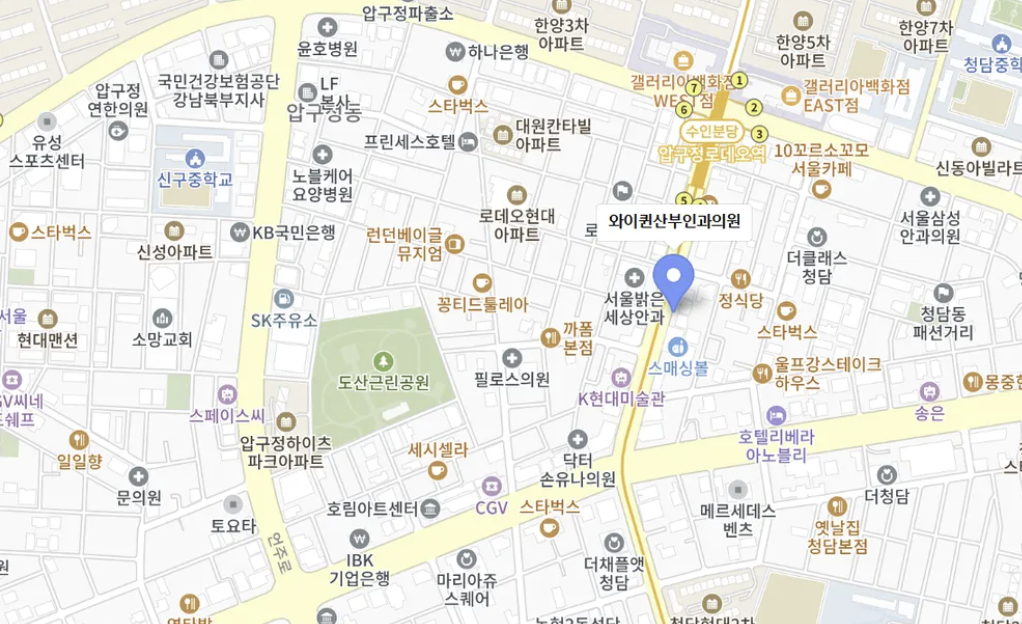
Y Queen Women's Clinic is located in Gangnam, Seoul, with convenient access near Apgujeong Rodeo Station, making it easy for international visitors staying in Gangnam, Cheongdam, Sinsa, Itaewon, Myeongdong, or other central Seoul neighborhoods to visit.
Frequently Asked Questions
What is chronic pelvic pain?
Chronic pelvic pain is pain in the lower abdomen or pelvic area that lasts for six months or longer. It may be constant or intermittent and can have many different causes.
What causes chronic pelvic pain?
Common causes include endometriosis, adenomyosis, uterine fibroids, ovarian cysts, pelvic inflammatory disease, bladder disorders, and pelvic floor dysfunction.
Can chronic pelvic pain affect fertility?
Yes. Some underlying conditions, such as endometriosis or pelvic inflammatory disease, may affect fertility if left untreated.
Can foreigners receive treatment in Seoul?
Yes. Y Queen Women's Clinic welcomes international patients and provides English-speaking assistance.
Will I need an ultrasound?
Pelvic ultrasound is commonly recommended to evaluate the uterus, ovaries, and other pelvic organs as part of the diagnostic process.
How long does the appointment take?
Most consultations are completed within 30–60 minutes,
depending on whether additional examinations or diagnostic tests are required.
Will treatment begin on the same day?
Many patients can begin treatment immediately after their evaluation, depending on the diagnosis and recommended care plan.
Is chronic pelvic pain always caused by a gynecological condition?
No. Chronic pelvic pain may also result from urinary, gastrointestinal, musculoskeletal, or neurological conditions. A comprehensive evaluation helps determine the underlying cause.