Oophorectomy Consultation in Seoul Gangnam Y Queen Women's Clinic
Y Queen Women's Clinic provides English-speaking oophorectomy consultations and comprehensive ovarian evaluations in Gangnam, Seoul for local and international patients. Oophorectomy is the surgical removal of one or both ovaries and may be considered for suspicious ovarian masses, certain complex ovarian cysts, severe ovarian damage, ovarian torsion, selected cases of endometriosis, gynecologic cancer, or hereditary cancer-risk management. Our OB-GYN specialists evaluate ovarian conditions using pelvic ultrasound and individualized clinical assessment while discussing ovarian preservation, fertility implications, surgical menopause, hormone therapy, and alternatives such as ovarian cystectomy when appropriate. When hospital-based surgery is required, referral to an appropriate gynecologic surgeon or medical center can be coordinated.
What Is an Oophorectomy?
An oophorectomy is surgery to remove an ovary.
There are two primary types:
Unilateral Oophorectomy
One ovary is removed while the other remains.
Bilateral Oophorectomy
Both ovaries are removed.
The effects on fertility and hormone production differ significantly depending on whether one or both ovaries are removed.
Why Is an Oophorectomy Performed?
Oophorectomy may be considered for conditions including:
- Suspicious ovarian masses
- Certain large or complex ovarian cysts
- Severe ovarian damage
- Ovarian torsion when the ovary cannot be preserved
- Severe endometriosis in selected cases
- Ovarian cancer
- Certain other gynecologic cancers
- Persistent ovarian conditions requiring definitive surgery
- Risk reduction in selected patients with a high hereditary risk of ovarian cancer
Whenever medically appropriate, ovarian preservation may be considered, particularly for premenopausal women.
Who May Need an Oophorectomy?
Your doctor may consider surgery if you have:
- A persistent ovarian mass with concerning features
- An ovary that has been severely damaged
- An ovarian cyst that cannot safely be treated with cystectomy alone
- Ovarian torsion with nonviable ovarian tissue
- Severe ovarian endometriosis
- A suspected or confirmed ovarian malignancy
- A documented hereditary cancer risk requiring specialist management
The decision depends on your diagnosis, age, symptoms, imaging findings, medical history, and reproductive goals.
How Are Ovarian Conditions Evaluated?
Before considering surgery, evaluation may include:
- Medical history review
- Menstrual history
- Pregnancy and fertility history
- Pelvic examination
- Pelvic or transvaginal ultrasound
- Pregnancy testing when appropriate
- Blood tests
- Tumor marker testing when clinically indicated
- MRI or other imaging in selected cases
- Review of previous imaging
- Family cancer history assessment
If malignancy is suspected, evaluation by an appropriate gynecologic oncology specialist may be recommended.
What Happens During Your Consultation?
Your appointment may include:
- Detailed symptom assessment
- Medical and surgical history
- Menstrual and reproductive history
- Pelvic examination when appropriate
- Pelvic ultrasound
- Review of previous scans
- Assessment of ovarian cysts or masses
- Discussion of ovarian preservation
- Fertility counseling
- Discussion of hormonal effects
- Review of surgical alternatives
- Referral for surgery when appropriate
Your doctor will explain why removal of the ovary may or may not be necessary.
Oophorectomy vs. Ovarian Cystectomy
These procedures are different.
Ovarian Cystectomy
Removes an ovarian cyst while preserving as much healthy ovarian tissue as possible.
Oophorectomy
Removes the entire ovary.
For many benign ovarian cysts, ovarian cystectomy may be preferred when preservation of the ovary is medically possible.
Oophorectomy may become necessary when the ovary is severely damaged, a mass cannot safely be separated from healthy ovarian tissue, or there are other significant medical concerns.
Oophorectomy vs. Salpingo-Oophorectomy
An oophorectomy removes an ovary.
A salpingo-oophorectomy removes an ovary together with its corresponding fallopian tube.
Whether the fallopian tube should also be removed depends on the underlying condition, surgical plan, cancer risk, and individual circumstances.
Unilateral Oophorectomy and Fertility
Removing one ovary does not necessarily prevent natural pregnancy.
If the remaining ovary and reproductive system are healthy:
- Ovulation may continue
- Menstrual cycles may continue normally
- Natural pregnancy may remain possible
- Normal ovarian hormone production may be sufficient
However, fertility depends on many additional factors, including age, ovarian reserve, fallopian tube health, and other reproductive conditions.
Bilateral Oophorectomy and Fertility
Removing both ovaries has major reproductive consequences.
After bilateral oophorectomy:
- Natural ovulation stops
- Menstrual periods cease if the patient is premenopausal
- Natural conception using the patient's own eggs is no longer possible
- Surgical menopause occurs before natural menopause
Patients who may want biological children in the future should discuss fertility preservation before planned bilateral oophorectomy whenever circumstances allow.
Does Oophorectomy Cause Menopause?
It depends on whether one or both ovaries are removed.
One Ovary Removed
Immediate menopause generally does not occur if the remaining ovary continues to function.
Both Ovaries Removed
Removal of both functioning ovaries before natural menopause causes surgical menopause because ovarian estrogen and progesterone production decreases abruptly.
What Is Surgical Menopause?
Surgical menopause occurs when both ovaries are removed before natural menopause.
Symptoms may include:
- Hot flashes
- Night sweats
- Vaginal dryness
- Sleep disturbances
- Mood changes
- Changes in sexual function
Loss of ovarian hormones at a younger age can also have implications for bone and cardiovascular health.
Long-term care should therefore be individualized.
Hormone Therapy After Oophorectomy
Hormone replacement therapy may be considered for some women who undergo bilateral oophorectomy before the usual age of natural menopause.
Whether hormone therapy is appropriate depends on factors including:
- Age
- Reason for ovarian removal
- Personal medical history
- Cancer history
- Breast cancer risk
- Cardiovascular health
- Blood-clot risk
Your doctor will discuss the potential benefits and risks based on your individual situation.
Oophorectomy and Ovarian Cancer Risk
For women at very high inherited risk of ovarian and related cancers, risk-reducing surgery involving removal of the ovaries and fallopian tubes may be recommended after specialist assessment.
This can include selected patients with pathogenic variants such as:
- BRCA1
- BRCA2
- Certain other hereditary cancer-associated genes
Preventive ovarian surgery is a significant decision because it affects fertility and hormone production.
Genetic counseling and specialist evaluation are important before risk-reducing surgery.
How Is an Oophorectomy Performed?
Depending on the diagnosis, surgery may be performed using:
- Laparoscopic surgery
- Robotic-assisted surgery at selected facilities
- Open abdominal surgery
Laparoscopic surgery uses small abdominal incisions and may offer a shorter recovery for appropriately selected patients.
Open surgery may be necessary for certain large, complex, or suspicious ovarian masses.
Risks and Possible Complications
As with any surgery, oophorectomy has potential risks.
These may include:
- Bleeding
- Infection
- Blood clots
- Anesthesia-related complications
- Injury to surrounding organs or blood vessels
- Pelvic adhesions
- Fertility changes
- Hormonal changes
- Surgical menopause after bilateral oophorectomy
Your surgeon will explain the risks specific to your condition and planned procedure.
Recovery After Oophorectomy
Recovery depends on whether surgery is minimally invasive or open and whether other procedures are performed at the same time.
After surgery, you may experience:
- Abdominal or pelvic discomfort
- Fatigue
- Temporary bloating
- Incision discomfort
- Light vaginal spotting in some cases
Your surgeon will provide individualized guidance about:
- Returning to work
- Exercise
- Heavy lifting
- Driving
- Sexual intercourse
- Medication
- Follow-up appointments
Minimally invasive procedures generally have a shorter recovery period than open abdominal surgery.
How Should I Prepare for an Oophorectomy Consultation?
Before your appointment:
- Bring previous ultrasound, CT, or MRI reports if available
- Bring relevant laboratory results
- List your medications and supplements
- Bring records of previous pelvic surgery
- Record pelvic pain or other symptoms
- Consider your future fertility goals
- Provide relevant family history of breast or ovarian cancer
- Prepare questions about ovarian preservation and hormonal health
This information helps your doctor develop an individualized treatment plan.
Oophorectomy Consultation Cost in Seoul
At Y Queen Women's Clinic:
- Consultation fees vary depending on the evaluation required.
- Additional costs may apply for pelvic ultrasound, laboratory testing, or other diagnostic examinations.
- If surgery is recommended, hospital and surgical costs depend on the procedure, anesthesia, hospitalization, pathology testing, and treating facility.
Your recommended evaluation and treatment options can be discussed before surgical referral.
Why Choose Y Queen Women's Clinic?
International patients choose Y Queen because of its:
- English-speaking medical support
- Experienced OB-GYN specialists
- Comprehensive ovarian evaluation
- Pelvic ultrasound available
- Ovarian cyst and mass assessment
- Endometriosis evaluation
- Fertility-conscious counseling
- Ovarian preservation discussions
- Menopause and hormone counseling
- Personalized treatment planning
- Comfortable, private consultation rooms
- Convenient Gangnam location
- Foreigner-friendly appointment process
- Surgical referral coordination when required
We provide individualized gynecological care focused on accurate diagnosis, appropriate treatment, and careful consideration of fertility and hormonal health.
Convenient Location in Gangnam
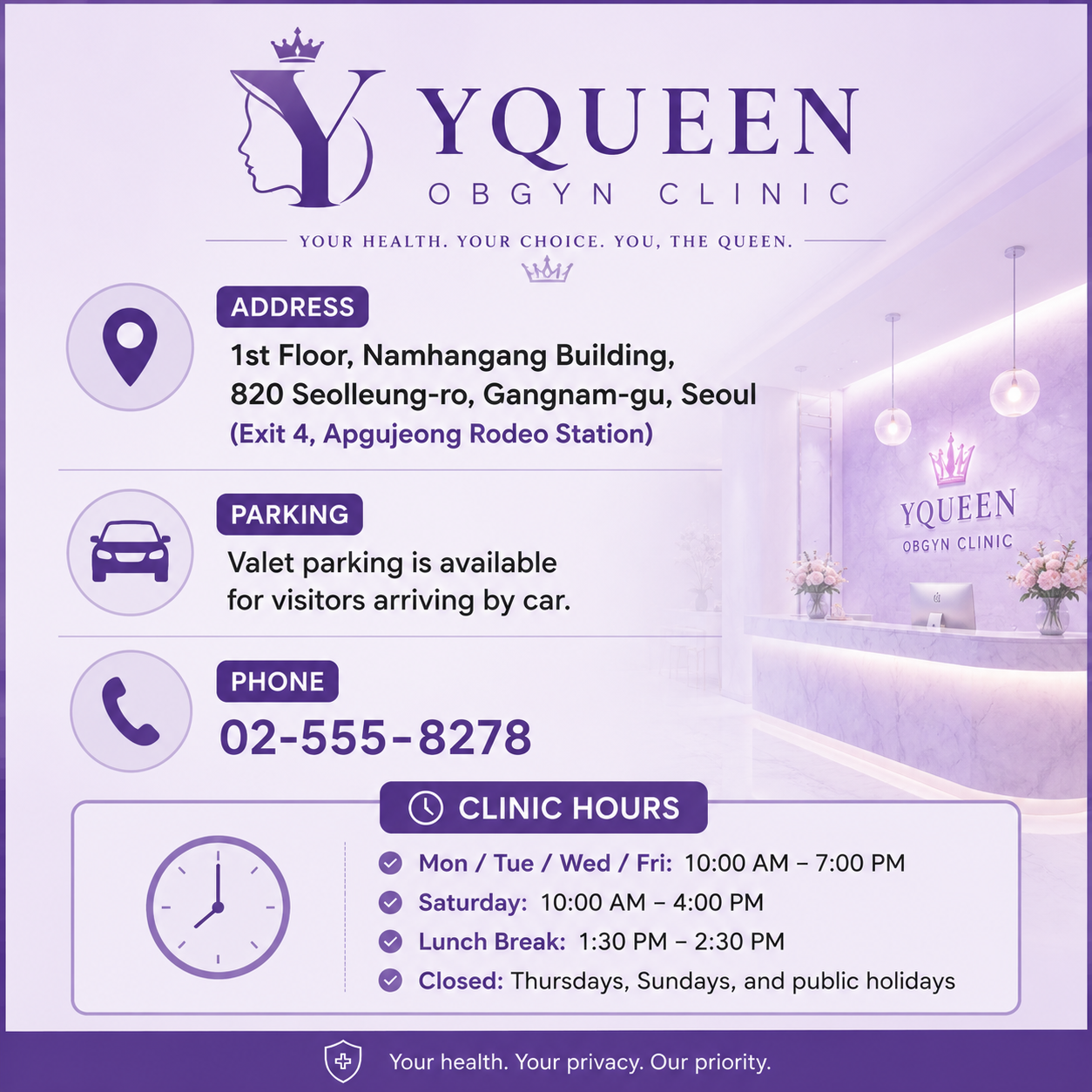
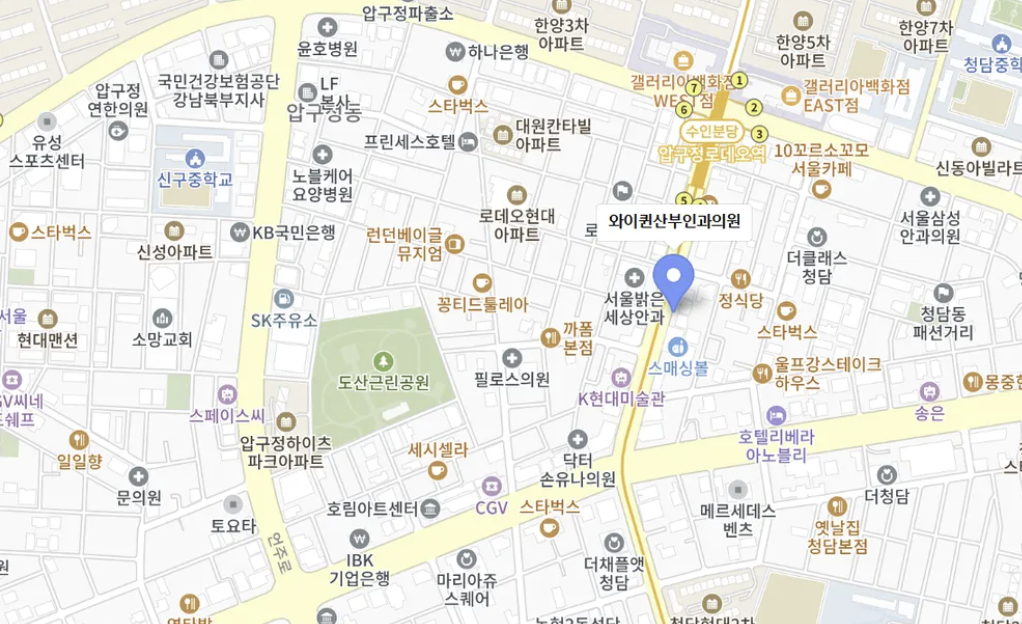
Y Queen Women's Clinic is located in Gangnam, Seoul, with convenient access near Apgujeong Rodeo Station.
The clinic is accessible for international patients living, working, studying, or staying in Gangnam, Cheongdam, Sinsa, Itaewon, Myeongdong, and other central Seoul neighborhoods.
Frequently Asked Questions
What is an oophorectomy?
An oophorectomy is a surgical procedure that removes one or both ovaries.
What is the difference between unilateral and bilateral oophorectomy?
Unilateral oophorectomy removes one ovary. Bilateral oophorectomy removes both ovaries and causes surgical menopause in women who have not already reached menopause.
Can foreigners get an oophorectomy consultation in Seoul?
Yes. Y Queen Women's Clinic welcomes international patients and provides English-speaking gynecological consultations.
Will I need an ultrasound before surgery?
Pelvic or transvaginal ultrasound is commonly used to evaluate ovarian cysts and masses. Additional imaging or laboratory testing may be recommended depending on the findings.
Can I become pregnant with one ovary?
Yes. Natural pregnancy may still be possible if the remaining ovary and other reproductive structures are healthy.
Will removing one ovary cause menopause?
Usually not. If the remaining ovary functions normally, it can continue producing reproductive hormones.
What happens if both ovaries are removed?
Removing both functioning ovaries before natural menopause causes surgical menopause and permanently stops natural ovulation.
Is oophorectomy necessary for every ovarian cyst?
No. Many ovarian cysts require only monitoring, and some that require surgery can be treated with ovarian cystectomy while preserving the ovary.
Can oophorectomy reduce ovarian cancer risk?
Removal of the ovaries and fallopian tubes can substantially reduce ovarian and related cancer risk in selected high-risk patients, but preventive surgery requires individualized specialist and genetic counseling.
Does Y Queen Women's Clinic perform oophorectomy surgery?
Y Queen Women's Clinic can provide ovarian evaluation, pelvic ultrasound, treatment counseling, and assessment for conditions that may require oophorectomy. When hospital-based surgery is necessary, referral to an appropriate gynecologic surgeon or medical center can be coordinated.