Bilateral Salpingectomy Consultation
in Seoul
Gangnam Y Queen Women's Clinic
Y Queen Women's Clinic provides English-speaking bilateral salpingectomy consultations in Gangnam, Seoul for local and international patients. Bilateral salpingectomy is the complete surgical removal of both fallopian tubes and may be considered for permanent contraception or certain gynecological conditions. Unlike removal of the ovaries, salpingectomy generally does not cause menopause or stop menstrual periods. Our OB-GYN specialists provide confidential counseling about permanent contraception, fertility implications, tubal ligation alternatives, surgical risks, and potential ovarian cancer risk reduction. When surgery is appropriate, referral to a qualified hospital or gynecologic surgeon can be coordinated while patients receive personalized, private, and foreigner-friendly women's healthcare in Seoul.
Bilateral Salpingectomy Consultation in Seoul at Gangnam Y Queen Women's Clinic
A bilateral salpingectomy is a surgical procedure that removes both fallopian tubes. It may be performed as a permanent form of contraception or recommended for certain gynecological conditions. Because both fallopian tubes are removed, natural conception afterward is generally not possible, making careful counseling especially important before choosing the procedure for permanent birth control. At Y Queen Women's Clinic in Gangnam, Seoul, we provide confidential consultations and gynecological evaluations for women considering bilateral salpingectomy. Our English-speaking women's health team welcomes Korean residents, expats, international residents, business travelers, and medical tourists seeking professional reproductive healthcare in Korea. Our OB-GYN specialists can discuss the procedure, expected benefits, potential risks, effects on fertility, and alternative contraception options. When surgery is appropriate, referral to a hospital or qualified gynecologic surgeon can be coordinated.
What Is a Bilateral Salpingectomy?
A bilateral salpingectomy is the surgical removal of both fallopian tubes.
The fallopian tubes normally transport eggs from the ovaries toward the uterus. Removing both tubes prevents sperm and egg from meeting naturally and therefore provides permanent contraception.
Importantly, bilateral salpingectomy does not normally involve removing:
- The ovaries
- The uterus
- The cervix
Because the ovaries usually remain in place, they continue producing reproductive hormones.
Why Is Bilateral Salpingectomy Performed?
A bilateral salpingectomy may be considered for:
- Permanent contraception
- Certain fallopian tube abnormalities
- Severely damaged fallopian tubes
- Some cases involving ectopic pregnancy
- Selected patients undergoing another pelvic surgery
- Reduction of future risk for certain ovarian, fallopian tube, and peritoneal cancers in appropriate patients
The reason for surgery and your individual medical history will determine whether bilateral salpingectomy is appropriate.
Bilateral Salpingectomy
for Permanent Birth Control
For women who are certain they do not want future pregnancies, bilateral salpingectomy can provide highly effective permanent contraception.
Unlike traditional tubal ligation, which generally blocks, seals, or interrupts the fallopian tubes, bilateral salpingectomy removes both tubes.
Potential advantages may include:
- Highly effective permanent contraception
- No need for ongoing birth control
- No contraceptive hormones required
- Potential reduction in the risk of certain ovarian cancers
Because the procedure is intended to be permanent, patients should carefully consider their future reproductive goals before surgery.
Bilateral Salpingectomy vs. Tubal Ligation
Both procedures are used for permanent female contraception, but they are different.
Tubal Ligation
The fallopian tubes are blocked, sealed, cut, or partially removed.
Bilateral Salpingectomy
Both fallopian tubes are completely removed.
Salpingectomy may provide an additional benefit of reducing the risk of certain ovarian cancers believed to originate in the fallopian tubes. Your doctor can explain which option may be appropriate for your circumstances.
Who May Consider Bilateral Salpingectomy?
The procedure may be considered by women who:
- Are certain they do not want future pregnancies
- Have completed their desired family size
- Want permanent contraception
- Prefer an alternative to ongoing hormonal contraception
- Are undergoing another appropriate pelvic or abdominal surgery
- Have a medical condition affecting the fallopian tubes
- Have discussed permanent sterilization with a qualified physician
Not every patient is an appropriate candidate for surgery.
What Happens During Your Consultation?
Your appointment may include:
- Medical history review
- Pregnancy and reproductive history
- Discussion of future pregnancy plans
- Review of current contraception
- Gynecological assessment
- Explanation of bilateral salpingectomy
- Discussion of surgical risks and benefits
- Comparison with tubal ligation
- Discussion of reversible contraception
- Referral for surgery when appropriate
The goal is to ensure you understand the permanent nature of the procedure before making a decision.
How Is Bilateral Salpingectomy Performed?
Bilateral salpingectomy is commonly performed using minimally invasive laparoscopic surgery when clinically appropriate.
During surgery:
- Small abdominal incisions are made.
- A laparoscope and surgical instruments are inserted.
- Both fallopian tubes are identified.
- The tubes are carefully separated from surrounding structures.
- Both fallopian tubes are removed.
The procedure is typically performed under anesthesia in a hospital or surgical facility.
The exact surgical technique and recovery plan depend on your individual circumstances and the treating surgeon.
Does Bilateral Salpingectomy Affect Hormones?
In most cases, bilateral salpingectomy does not directly cause menopause because the ovaries are not removed.
After surgery:
- The ovaries generally continue producing hormones.
- Menstrual cycles usually continue.
- The uterus remains in place.
- Menopause does not occur simply because the fallopian tubes were removed.
Removing the ovaries is a different procedure and has substantially different hormonal effects.
Will I Still Have Periods?
Yes. If your uterus and ovaries remain in place, you will generally continue having menstrual periods after bilateral salpingectomy.
If you were previously using hormonal contraception and stop it around the time of surgery, your menstrual pattern may change because of discontinuing the contraception rather than because of removal of the fallopian tubes.
Can I Get Pregnant After Bilateral Salpingectomy?
Natural conception is generally not possible after both fallopian tubes have been completely removed because there is no pathway for the egg and sperm to meet.
However, pregnancy may still potentially be possible through in vitro fertilization (IVF) if the uterus and ovaries remain functional.
Anyone considering bilateral salpingectomy should therefore discuss future fertility plans carefully before surgery.
Can Bilateral Salpingectomy Be Reversed?
Bilateral salpingectomy should be considered permanent and non-reversible.
Unlike some forms of tubal ligation, complete removal of both fallopian tubes cannot simply be reversed by reconnecting them.
If pregnancy is desired afterward, IVF may be an option for some patients.
Does Salpingectomy Reduce Ovarian Cancer Risk?
Research indicates that many high-grade serous cancers traditionally classified as ovarian cancer may originate in the fallopian tubes.
For this reason, removal of the fallopian tubes during appropriate pelvic surgery may reduce the future risk of certain ovarian cancers.
However:
- Salpingectomy does not eliminate ovarian cancer risk.
- It is not appropriate for every patient.
- Individual cancer risk and family history should be considered.
Women with a strong family history of ovarian or breast cancer may require specialized genetic and gynecologic counseling.
Risks and Considerations
As with any surgical procedure, bilateral salpingectomy has potential risks.
These may include:
- Bleeding
- Infection
- Anesthesia-related complications
- Injury to nearby organs or blood vessels
- Postoperative pain
- Surgical complications requiring additional treatment
Your surgeon will explain the risks associated with your individual procedure before surgery.
How Should I Prepare for a Consultation?
Before your appointment:
- Consider your long-term reproductive goals
- Bring information about previous pregnancies
- Bring records of previous abdominal or pelvic surgery if available
- List your medications and supplements
- Tell your doctor about any medical conditions
- Prepare questions about permanent and reversible contraception
You do not need to make a final decision before attending your consultation.
Bilateral Salpingectomy Consultation Cost in Seoul
At Y Queen Women's Clinic:
- Consultation fees vary depending on the evaluation required.
- Additional examinations may involve separate costs if medically indicated.
- If surgery is recommended, hospital and surgical costs depend on the facility, anesthesia, and procedure performed.
Treatment options, referrals, and expected costs can be discussed during your consultation.
Why Choose Y Queen Women's Clinic?
International patients choose Y Queen because of its:
- English-speaking medical support
- Experienced OB-GYN specialists
- Confidential contraception counseling
- Comprehensive gynecological evaluation
- Permanent contraception counseling
- Fertility-focused discussions
- Personalized treatment planning
- Comfortable, private consultation rooms
- Convenient Gangnam location
- Foreigner-friendly appointment process
- Surgical referral coordination when needed
We provide individualized counseling to help women make informed decisions about permanent contraception and future reproductive health.
Convenient Location in Gangnam
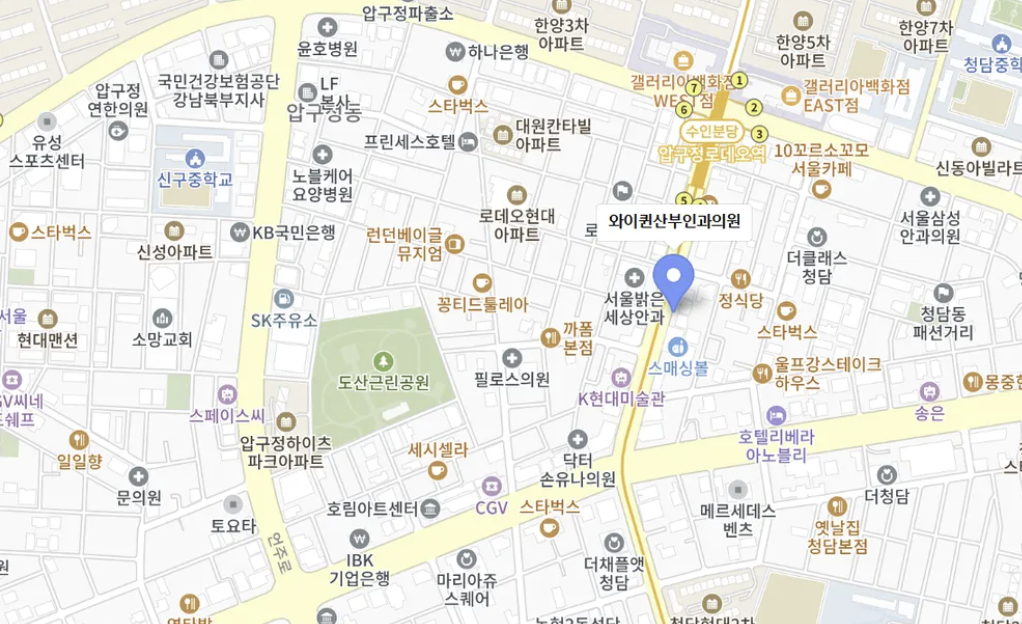
Y Queen Women's Clinic is located in Gangnam, Seoul, with convenient access near Apgujeong Rodeo Station. The location is accessible for international patients living or staying in Gangnam, Cheongdam, Sinsa, Itaewon, Myeongdong, and other central Seoul neighborhoods.
Frequently Asked Questions
What is a bilateral salpingectomy?
A bilateral salpingectomy is a surgical procedure that completely removes both fallopian tubes. It may be performed for permanent contraception or certain gynecological conditions.
Is bilateral salpingectomy permanent?
Yes. Complete removal of both fallopian tubes should be considered permanent and irreversible.
Is bilateral salpingectomy the same as tubal ligation?
No. Tubal ligation usually blocks, cuts, seals, or partially removes the fallopian tubes, while bilateral salpingectomy removes both tubes completely.
Can foreigners get a bilateral salpingectomy consultation in Seoul?
Yes. Y Queen Women's Clinic welcomes international patients
and provides English-speaking gynecological and contraception consultations.
Does bilateral salpingectomy cause early menopause?
Removing only the fallopian tubes does not normally cause menopause
because the ovaries remain in place and continue producing hormones.
Will I still have periods after bilateral salpingectomy?
Yes. If your uterus and ovaries remain intact, menstrual periods generally continue after surgery.
Can I become pregnant after bilateral salpingectomy?
Natural conception is generally not possible after complete removal of both fallopian tubes. IVF may still be an option for some women if the ovaries and uterus remain functional.
Does bilateral salpingectomy prevent ovarian cancer?
It may reduce the risk of certain ovarian cancers, but it does not completely eliminate the possibility of developing ovarian cancer.
Does Y Queen Women's Clinic perform bilateral salpingectomy surgery?
Y Queen Women's Clinic can provide gynecological evaluation and counseling for patients considering bilateral salpingectomy. When hospital-based surgery is required, referral to an appropriate hospital or gynecologic surgeon can be coordinated.