Menstrual Irregularity Treatment in Seoul Gangnam Y Queen Women's Clinic
Y Queen Women's Clinic provides English-speaking evaluation and treatment for menstrual irregularities in Gangnam, Seoul. Our OB-GYN specialists diagnose conditions such as hormonal imbalance, PCOS, thyroid disorders, ovarian cysts, and abnormal uterine bleeding using pelvic ultrasound, laboratory testing, and comprehensive gynecological examinations. We offer personalized treatment plans for Korean residents and international patients in a comfortable, foreigner-friendly environment.
Menstrual Irregularity Treatment in Seoul at Gangnam Y Queen Women's Clinic
Irregular menstrual cycles are one of the most common reasons women visit a gynecologist. Changes in cycle length, missed periods, unusually heavy bleeding, or frequent spotting may be caused by hormonal imbalances, stress, polycystic ovary syndrome (PCOS), thyroid disorders, pregnancy, or other gynecological conditions.
At Y Queen Women's Clinic in Gangnam, Seoul, we provide comprehensive evaluation and personalized treatment for menstrual irregularities. Our English-speaking women's health team welcomes Korean residents, expats, international students, business travelers, and medical tourists seeking professional gynecological care in Korea.
Using modern diagnostic testing and individualized treatment plans, we help patients identify the underlying cause of irregular periods and restore healthy menstrual cycles whenever possible.
What Is Menstrual Irregularity?
A menstrual cycle is considered irregular when periods occur unpredictably or differ significantly from your normal pattern.
Examples include:
- Missed periods (amenorrhea)
- Infrequent periods
- Frequent periods
- Heavy menstrual bleeding
- Light menstrual bleeding
- Irregular spotting between periods
- Menstrual cycles shorter than 21 days
- Menstrual cycles longer than 35 days
Occasional changes may be normal, but persistent irregularities should be evaluated by a gynecologist.
Common Causes of Irregular Periods
Menstrual irregularities may result from:
- Hormonal imbalance
- Polycystic ovary syndrome (PCOS)
- Thyroid disorders
- Stress
- Sudden weight changes
- Excessive exercise
- Perimenopause
- Pregnancy
- Certain medications
- Uterine fibroids
- Endometrial polyps
- Ovarian cysts
Proper diagnosis is essential because treatment depends on the underlying cause.
Who Should Seek Evaluation?
You should consider visiting a gynecologist if you experience:
- Missed periods without pregnancy
- Cycles that are consistently irregular
- Heavy menstrual bleeding
- Bleeding between periods
- Severe menstrual pain
- Difficulty becoming pregnant
- Symptoms of PCOS
- Menstrual changes after age 40
- New menstrual abnormalities
Early evaluation can help identify treatable conditions before complications develop.
Symptoms That May Accompany Menstrual Irregularities
Additional symptoms may include:
- Pelvic pain
- Acne
- Excess facial or body hair
- Weight gain
- Hair thinning
- Fatigue
- Mood changes
- Hot flashes
- Vaginal bleeding after intercourse
These symptoms may provide important clues about the underlying condition.
What Happens During Your Visit?
Your appointment may include:
- Medical history review
- Menstrual history assessment
- Physical examination
- Pelvic examination
- Pelvic ultrasound
- Hormone blood tests
- Pregnancy testing if appropriate
- Thyroid evaluation
- Discussion of treatment options
Your doctor will recommend further testing only if necessary.
Treatment Options
Treatment depends on the diagnosis and your reproductive goals.
Options may include:
- Hormonal therapy
- Birth control pills
- Progesterone treatment
- PCOS management
- Thyroid disorder treatment
- Lifestyle recommendations
- Weight management guidance
- Ovulation treatment for fertility planning
- Surgical treatment when appropriate
Our goal is to restore healthy menstrual cycles while addressing the underlying cause.
How Should I Prepare?
Before your appointment:
- Record your recent menstrual cycles
- Note any abnormal bleeding
- Bring previous medical records if available
- List current medications
- Prepare questions about your symptoms
This information helps your doctor make an accurate diagnosis.
Diagnosis of Menstrual Irregularities
Depending on your symptoms, your doctor may recommend:
Pelvic Ultrasound
Evaluates the uterus, ovaries, fibroids, cysts, and endometrial thickness.
Hormone Testing
Measures hormone levels that affect menstrual cycles.
Pregnancy Test
Rules out pregnancy when periods are delayed.
Additional Gynecological Testing
May include Pap smear, HPV testing, or other examinations when appropriate.
Menstrual Irregularity Treatment Cost in Seoul
At Y Queen Women's Clinic:
- Consultation fees vary depending on the evaluation required.
- Additional costs depend on examinations such as ultrasound, hormone testing, or laboratory studies.
- A personalized treatment plan and estimated costs will be discussed during your visit.
Why Choose Y Queen Women's Clinic?
International patients choose Y Queen because of its:
- English-speaking medical support
- Female-focused healthcare
- Comprehensive gynecological evaluations
- Pelvic ultrasound available onsite
- Hormone testing
- PCOS evaluation and treatment
- Personalized care plans
- Modern diagnostic equipment
- Convenient Gangnam location
- Foreigner-friendly appointment process
We provide compassionate, individualized care for women at every stage of life.
Convenient Location in Gangnam
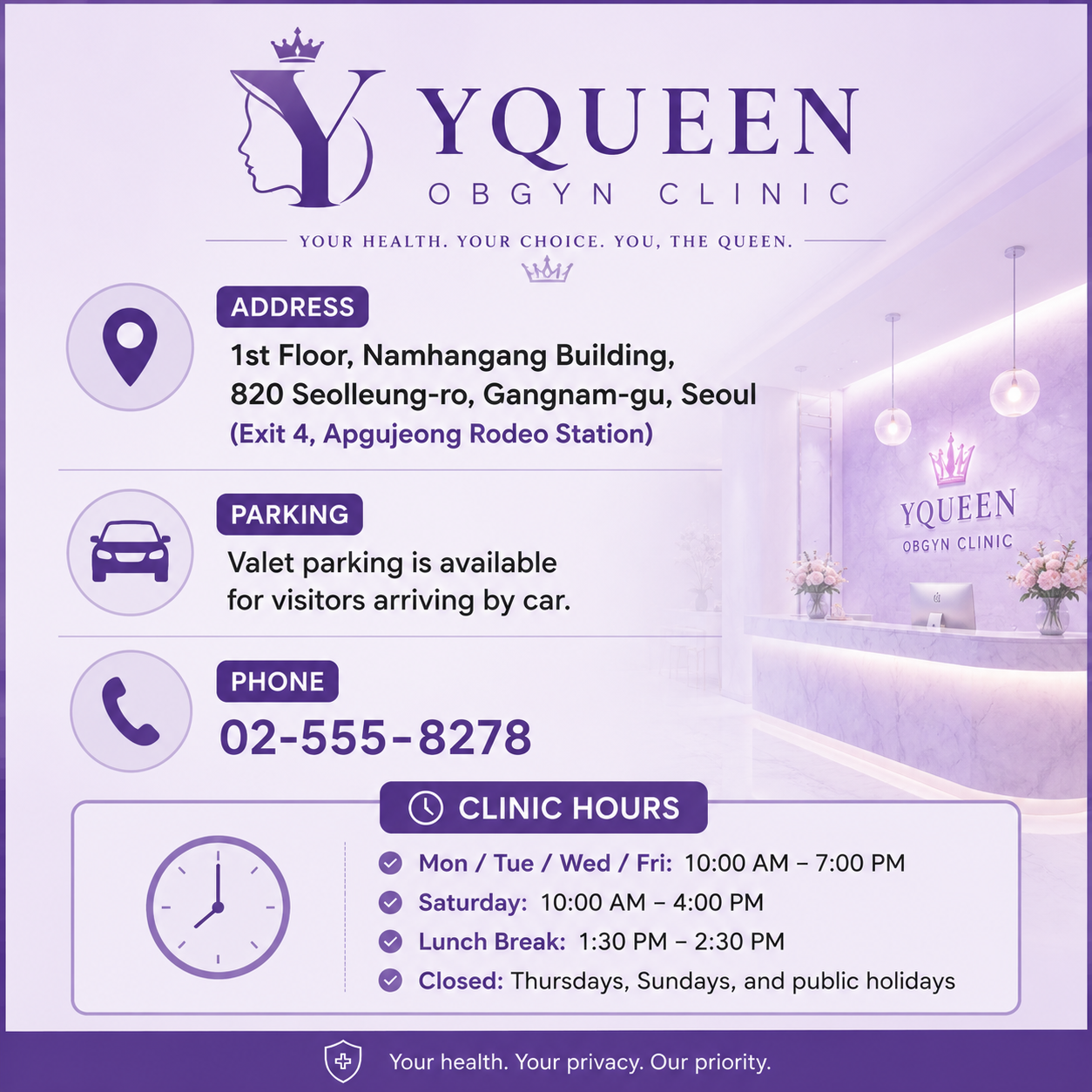
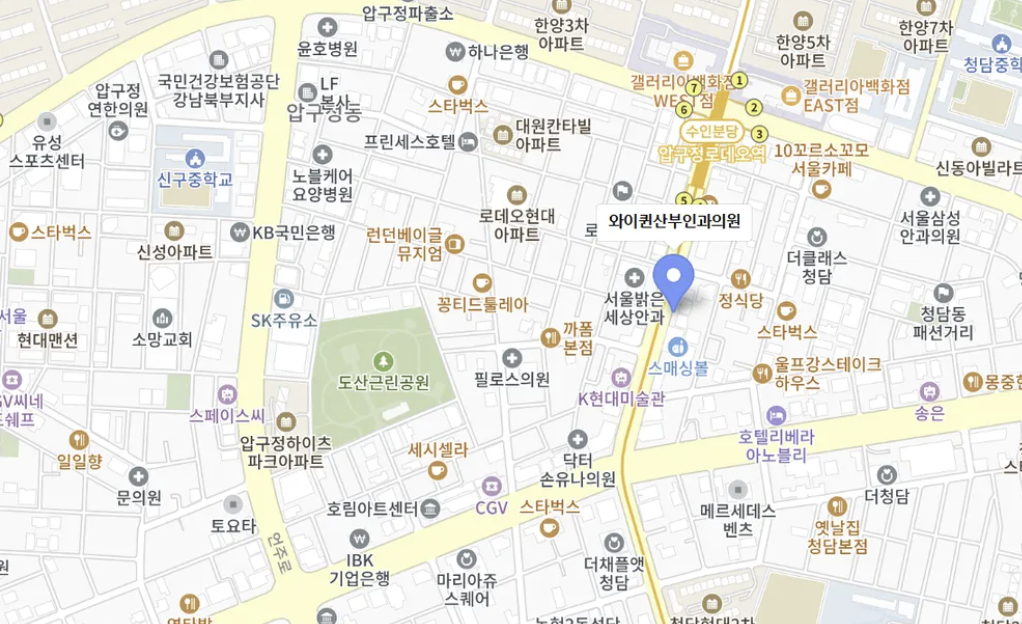
Y Queen Women's Clinic is located in Gangnam, Seoul, with convenient access near Apgujeong Rodeo Station, making it easy for international visitors staying in Gangnam, Cheongdam, Sinsa, Itaewon, Myeongdong, or other central Seoul neighborhoods to visit.
Frequently Asked Questions
What causes irregular periods?
Common causes include hormonal imbalance, PCOS, thyroid disorders, stress, pregnancy, weight changes, and perimenopause.
Do I need an ultrasound?
Many patients benefit from a pelvic ultrasound to evaluate the uterus and ovaries, although recommendations depend on individual symptoms.
Can foreigners receive treatment?
Yes. Y Queen Women's Clinic welcomes international patients and provides English-speaking assistance.
Will hormone tests be necessary?
Hormone testing may be recommended depending on your symptoms and medical history.
Can irregular periods affect fertility?
Yes. Some causes of irregular menstruation can interfere with ovulation and fertility, making evaluation important for women planning pregnancy.
How long does the appointment take?
Most consultations are completed within 30–60 minutes, depending on the examinations performed.
Is treatment available on the same day?
Many patients can begin treatment immediately after their evaluation, depending on the diagnosis.
Should I seek treatment even if my symptoms are mild?
Yes. Persistent menstrual irregularities should be evaluated to identify any underlying medical conditions.