Vaginal Tightening in Seoul
Gangnam Y Queen Women's Clinic
Y Queen Women's Clinic provides English-speaking vaginal tightening consultations in Gangnam, Seoul for local and international patients. Vaginal tightening is a broad term covering treatments for vaginal laxity, postpartum tissue changes, reduced pelvic support, and related concerns. Depending on the underlying cause, options may include pelvic floor exercises or physical therapy, focused ultrasound or radiofrequency-based treatments, and surgical vaginal or perineal repair for selected structural problems. Because vaginal laxity can also be associated with pelvic floor dysfunction, pelvic organ prolapse, hormonal changes, or childbirth injuries, appropriate gynecological evaluation is important before choosing treatment. No procedure can guarantee improved sexual satisfaction or orgasm, and treatment should prioritize healthy anatomy, comfort, function, and realistic outcomes. Y Queen Women's Clinic offers confidential, foreigner-friendly women's healthcare with individualized assessment and treatment planning.
What Is Vaginal Tightening?
"Vaginal tightening" is not one specific medical procedure.
Instead, it is commonly used to describe several treatments intended to address concerns involving vaginal laxity, tissue support, or pelvic floor function.
Treatment options may include:
- Pelvic floor exercises
- Pelvic floor physical therapy
- Non-surgical energy-based treatments
- Radiofrequency treatments
- Focused ultrasound treatments
- Surgical vaginal repair
- Perineal repair in selected patients
- Treatment of associated hormonal or gynecological conditions
The appropriate option depends on what is actually causing the symptoms.
What Is Vaginal Laxity?
Vaginal laxity is a subjective sensation of looseness, reduced tightness, or reduced support within or around the vagina.
Some women notice changes following:
- Pregnancy
- Vaginal childbirth
- Multiple deliveries
- Pelvic floor injury
- Aging
- Menopause
- Hormonal changes
- Pelvic surgery
However, vaginal laxity is not always caused by the vaginal tissue itself.
Pelvic floor weakness, perineal injury, or pelvic organ prolapse may produce similar sensations.
What Causes Vaginal Laxity?
Possible contributing factors include:
- Vaginal childbirth
- Stretching of vaginal tissues
- Pelvic floor muscle weakness
- Perineal tears
- Episiotomy-related changes
- Connective tissue differences
- Aging
- Menopause
- Hormonal changes
- Pelvic organ prolapse
Because different conditions can produce similar symptoms, appropriate evaluation is important before treatment.
Vaginal Changes After Childbirth
Pregnancy and vaginal delivery can affect the pelvic floor, vaginal tissues, and perineum.
Postpartum changes may include:
- Sensation of vaginal laxity
- Reduced pelvic support
- Pelvic floor weakness
- Urinary leakage
- Perineal discomfort
- Scar-related symptoms
- Vaginal dryness
- Changes in sexual comfort
- Pelvic pressure
Many postpartum changes improve naturally over time.
For persistent symptoms, an OB-GYN evaluation can help determine whether pelvic floor rehabilitation, treatment of scar tissue, hormonal management, non-surgical therapy, or surgical repair is appropriate.
Signs You Should Visit a Gynecologist
Consider a gynecological evaluation if you experience:
- Persistent vaginal laxity
- Pelvic pressure
- Vaginal bulging
- Urinary leakage
- Difficulty controlling bowel movements
- Pain during intercourse
- Persistent postpartum discomfort
- Vaginal dryness
- Recurrent vaginal irritation
- Significant changes following childbirth
- Symptoms interfering with exercise or daily life
A sensation of looseness accompanied by pressure or bulging can sometimes indicate pelvic organ prolapse and should be properly evaluated.
How Is Vaginal Laxity Evaluated?
Your doctor may assess:
- Medical history
- Pregnancy and childbirth history
- Number and type of deliveries
- Previous episiotomy or perineal tears
- Pelvic floor symptoms
- Urinary symptoms
- Bowel symptoms
- Sexual discomfort
- Menopause and hormonal symptoms
- Previous pelvic procedures
A pelvic examination may be recommended to evaluate vaginal tissues, pelvic floor support, the perineum, and possible prolapse.
What Happens During Your Consultation?
A vaginal tightening consultation may include:
- Confidential discussion of your symptoms
- Medical and gynecological history
- Pregnancy and childbirth history
- Assessment of vaginal laxity
- Evaluation of urinary symptoms
- Pelvic examination when appropriate
- Pelvic floor assessment
- Evaluation for pelvic organ prolapse
- Assessment of vaginal dryness or tissue changes
- Discussion of non-surgical options
- Discussion of surgical options when appropriate
- Personalized treatment planning
The goal is to identify the cause of your symptoms before choosing a treatment.
Non-Surgical Vaginal Tightening
Some patients prefer to explore non-surgical treatment before considering surgery.
Depending on the diagnosis, options may include:
- Pelvic floor rehabilitation
- Focused ultrasound treatments
- Radiofrequency-based treatments
- Other energy-based procedures
- Treatment of vaginal dryness or hormonal changes
These approaches work differently and should not be considered interchangeable.
Pelvic Floor Exercises
Pelvic floor exercises, commonly called Kegel exercises, strengthen the muscles supporting the:
- Bladder
- Uterus
- Vagina
- Rectum
They may help selected patients with pelvic floor weakness and some forms of urinary leakage.
Correct technique matters. Some patients actually have overly tense or poorly coordinated pelvic floor muscles rather than weakness, so repeatedly performing Kegel exercises without assessment is not appropriate for every pelvic floor problem.
Pelvic Floor Physical Therapy
Pelvic floor physical therapy provides individualized assessment and rehabilitation.
Treatment may focus on:
- Muscle strength
- Coordination
- Relaxation
- Pelvic support
- Scar mobility
- Urinary control
- Pain during intercourse
- Postpartum recovery
For patients whose primary problem is pelvic floor dysfunction, physical therapy may be more appropriate than a vaginal procedure.
Energy-Based Vaginal Tightening
Energy-based treatments use controlled energy within selected vaginal tissues rather than surgically removing or reconstructing tissue.
Technologies marketed for vaginal tightening may include:
- Focused ultrasound
- Radiofrequency
- Laser-based systems
The proposed goal is typically controlled tissue heating followed by collagen remodeling.
These procedures differ in energy type, treatment depth, protocol, evidence, and potential risks.
HIFU Vaginal Tightening
HIFU stands for High-Intensity Focused Ultrasound.
Vaginal HIFU devices use focused ultrasound energy to deliver controlled thermal effects at selected tissue depths.
They may be marketed for:
- Vaginal laxity
- Reduced tissue elasticity
- Postpartum tissue changes
- Selected intimate wellness concerns
Treatment protocols and device specifications vary, and results cannot be guaranteed.
Radiofrequency Vaginal Tightening
Radiofrequency, or RF, treatments use electromagnetic energy to generate controlled tissue heating.
They may be offered for selected vaginal and vulvar concerns.
RF treatment is different from HIFU because the mechanism and distribution of energy are different.
The suitability of either treatment depends on symptoms, anatomy, device specifications, and clinical assessment.
Laser Vaginal Tightening
Vaginal laser procedures use light-based energy to create controlled effects within vaginal tissue.
Laser is different from both radiofrequency and focused ultrasound.
Patients considering vaginal laser should understand:
- The exact device being used
- Intended indication
- Expected benefit
- Alternative treatments
- Potential risks
- Limitations of available evidence
Energy-based vaginal procedures should not be presented as risk-free or as guaranteed alternatives to surgery.
Surgical Vaginal Tightening
Surgical treatment may be considered when examination identifies a significant structural problem that is unlikely to respond adequately to conservative treatment.
Depending on the diagnosis, surgery may involve:
- Vaginal tissue repair
- Repair of damaged supporting tissue
- Perineal reconstruction
- Scar revision
- Other pelvic reconstructive procedures
Surgical treatment provides direct anatomical repair but involves greater recovery and surgical risk than non-surgical treatment.
Vaginal Tightening vs. Vaginoplasty
The terms are sometimes used interchangeably in marketing, but they do not necessarily mean the same thing.
Vaginal Tightening
A broad term covering non-surgical and surgical approaches to vaginal laxity or support concerns.
Vaginoplasty
A surgical procedure involving repair or reconstruction of vaginal tissues.
Not every patient seeking vaginal tightening needs vaginoplasty.
Vaginal Tightening vs. Perineoplasty
Perineoplasty focuses primarily on the perineum and tissues around the vaginal opening.
It may be considered when childbirth has resulted in:
- Perineal stretching
- Scar-related problems
- Structural changes at the vaginal entrance
Vaginal laxity originating deeper within the vaginal canal or pelvic floor requires a different assessment.
Vaginal Tightening vs. Labiaplasty
These treatments address different anatomical areas.
Vaginal Tightening
Addresses vaginal or pelvic support concerns.
Labiaplasty
Reshapes the external labia, most commonly the labia minora.
Labiaplasty does not tighten the vaginal canal.
Vaginal Tightening vs. Pelvic Floor Therapy
Pelvic floor therapy changes muscle function, while vaginal tightening procedures generally target tissue structure or remodeling.
For example:
Pelvic Floor Therapy
May improve strength, coordination, relaxation, and urinary control.
Energy-Based Treatment
Targets vaginal tissue using controlled energy.
Surgical Treatment
Directly repairs or reconstructs selected anatomical structures.
Some patients may benefit from a combination of approaches.
Vaginal Tightening and Sexual Wellness
Some patients seek treatment because they have noticed changes in sexual comfort or sensation.
Sexual function, however, is complex and depends on factors including:
- Pelvic floor function
- Vaginal lubrication
- Hormones
- Nerve function
- Pain
- Medications
- Psychological health
- Relationship factors
No vaginal tightening procedure can guarantee increased sexual pleasure, stronger orgasms, or improved sexual satisfaction.
Vaginal Tightening for Pain During Intercourse
Pain during intercourse should be medically evaluated rather than assumed to result from vaginal laxity.
Possible causes include:
- Vaginal dryness
- Pelvic floor muscle dysfunction
- Vulvar conditions
- Infection
- Endometriosis
- Scar tissue
- Hormonal changes
- Other pelvic conditions
In some patients, making the vaginal opening tighter could actually worsen pain.
Treatment should therefore address the underlying cause.
Vaginal Tightening and Menopause
Menopause can cause vaginal tissue changes because of declining estrogen levels.
Symptoms may include:
- Vaginal dryness
- Burning
- Irritation
- Pain during intercourse
- Urinary symptoms
- Reduced tissue elasticity
These symptoms are often associated with genitourinary syndrome of menopause.
Treatment options may include vaginal moisturizers, lubricants, hormonal or non-hormonal medical therapy when appropriate, and other individualized treatments.
A tightening procedure is not automatically the best treatment for menopause-related symptoms.
Vaginal Tightening for Urinary Incontinence
Some vaginal tightening treatments are marketed for urinary leakage.
However, urinary incontinence has several possible causes.
These include:
- Stress urinary incontinence
- Overactive bladder
- Pelvic floor weakness
- Pelvic organ prolapse
- Neurological conditions
Treatment should be selected after determining the type and severity of urinary incontinence.
Pelvic floor rehabilitation or established urinary incontinence treatments may be more appropriate than a vaginal tightening procedure.
Can Vaginal Tightening Treat Pelvic Organ Prolapse?
Vaginal tightening should not be considered a general treatment for pelvic organ prolapse.
Prolapse occurs when one or more pelvic organs descend because supporting tissues have weakened.
Symptoms may include:
- Pelvic pressure
- Vaginal heaviness
- Vaginal bulging
- Urinary problems
- Bowel symptoms
Treatment may involve pelvic floor therapy, a pessary, or specialized pelvic reconstructive surgery depending on severity.
Who May Consider Vaginal Tightening?
A consultation may be appropriate for adult women who experience:
- Persistent vaginal laxity
- Postpartum vaginal changes
- Reduced pelvic support
- Perineal changes after childbirth
- Pelvic floor weakness
- Selected urinary symptoms
- Intimate discomfort associated with structural changes
The most appropriate treatment depends on the underlying diagnosis.
Who May Not Be Suitable for Treatment?
Depending on the procedure, treatment may need to be postponed or avoided in patients with:
- Pregnancy
- Active vaginal infection
- Active pelvic infection
- Unexplained vaginal bleeding
- Certain cervical abnormalities
- Significant untreated pelvic organ prolapse
- Recent childbirth before adequate recovery
- Certain medical conditions affecting healing
- Other contraindications related to the specific device or surgery
A medical assessment is necessary before treatment.
Does Vaginal Tightening Hurt?
The experience depends on the treatment.
Non-surgical energy-based treatments may cause:
- Warmth
- Pressure
- Temporary sensitivity
- Mild discomfort
Surgical procedures require appropriate anesthesia and typically involve more postoperative soreness, swelling, and recovery.
Your physician can explain what to expect based on the recommended procedure.
Recovery After Non-Surgical Vaginal Tightening
Recovery varies according to the technology and treatment settings.
Temporary symptoms may include:
- Vaginal sensitivity
- Mild discomfort
- Light spotting
- Temporary discharge
- A sensation of warmth
Patients should follow the aftercare instructions for the specific device used.
Recovery After Surgical Vaginal Tightening
Surgical recovery is longer than recovery after non-surgical treatment.
Temporary symptoms may include:
- Swelling
- Vaginal soreness
- Pelvic discomfort
- Light bleeding
- Tightness
- Incision-related tenderness
Patients may need temporary restrictions on intercourse, tampon use, strenuous exercise, and heavy lifting.
When Can I Have Sex After Vaginal Tightening?
The appropriate timing depends heavily on the treatment performed.
After non-surgical procedures, restrictions may be relatively brief.
After surgery, vaginal intercourse generally needs to be avoided until tissues have adequately healed.
Always follow the instructions provided by the treating physician rather than using a universal recovery timeline.
How Many Vaginal Tightening Sessions Are Needed?
There is no single treatment schedule.
The number of sessions depends on:
- Treatment technology
- Severity of symptoms
- Treatment goals
- Tissue characteristics
- Individual response
- Previous procedures
Surgery is generally performed according to a different treatment and follow-up schedule than energy-based procedures.
How Long Do Results Last?
Results vary according to treatment.
Factors that may influence results over time include:
- Aging
- Menopause
- Hormonal changes
- Pregnancy
- Future childbirth
- Pelvic floor function
- Individual tissue characteristics
Non-surgical treatments may require reassessment or maintenance in some patients.
Surgical repair may provide longer-lasting anatomical changes, but future pregnancy, childbirth, aging, and tissue changes can still affect results.
Risks and Possible Side Effects
Risks depend on the treatment used.
Potential risks of non-surgical energy-based procedures may include:
- Pain
- Irritation
- Swelling
- Bleeding or spotting
- Changes in sensation
- Infection
- Thermal injury
- Persistent discomfort
Potential surgical risks may include:
- Bleeding
- Infection
- Wound complications
- Scar formation
- Pain during intercourse
- Excessive narrowing
- Changes in sensation
- Injury to surrounding structures
- Need for additional surgery
Your physician should discuss procedure-specific risks before treatment.
Can Vaginal Tightening Make the Vagina Too Tight?
Excessive tightening is possible, particularly with surgery.
This may cause:
- Pain during intercourse
- Difficulty with penetration
- Scar-related discomfort
- Difficulty with gynecological examinations
The goal should be restoration of appropriate function and anatomy rather than achieving maximum tightness.
Vaginal Tightening and Future Pregnancy
Future pregnancy and vaginal childbirth can affect treatment results.
Patients planning pregnancy should discuss timing before undergoing elective vaginal tightening procedures.
For some patients, delaying surgical treatment until after planned pregnancies may be reasonable.
How Should I Prepare for a Consultation?
Before your appointment:
- Identify your main symptoms
- Note when the changes began
- Mention previous pregnancies and deliveries
- Tell your doctor about significant perineal tears or episiotomy
- Describe urinary or bowel symptoms
- Mention pain during intercourse
- Discuss vaginal dryness
- List previous pelvic procedures
- Tell your doctor about future pregnancy plans
- Prepare questions about treatment alternatives
You do not need to decide which procedure you want before being evaluated.
Vaginal Tightening Cost in Seoul
At Y Queen Women's Clinic:
- Consultation fees depend on the evaluation required.
- Treatment costs vary according to the procedure or technology selected.
- Non-surgical treatment pricing may depend on the device, treatment protocol, and number of sessions.
- Surgical costs depend on anatomy, procedure complexity, anesthesia, and treatment setting.
- Additional costs may apply for examinations, laboratory testing, imaging, medication, or follow-up treatment.
Current pricing and an individualized treatment plan can be discussed after consultation.
Why Choose Y Queen Women's Clinic?
International patients choose Y Queen because of its:
- English-speaking medical support
- Female-focused gynecological care
- Confidential vaginal health consultations
- Postpartum gynecological assessment
- Pelvic floor evaluation when indicated
- Assessment of vaginal laxity
- Evaluation of urinary symptoms
- Menopause-related women's healthcare
- Surgical and non-surgical treatment discussions
- Individualized treatment planning
- Attention to vaginal function and healthy anatomy
- Comfortable, private consultation environment
- Convenient Gangnam location
- Foreigner-friendly appointment process
- Follow-up gynecological care
The goal is to identify why symptoms are occurring and recommend an appropriate treatment rather than automatically performing a tightening procedure.
Convenient Location in Gangnam
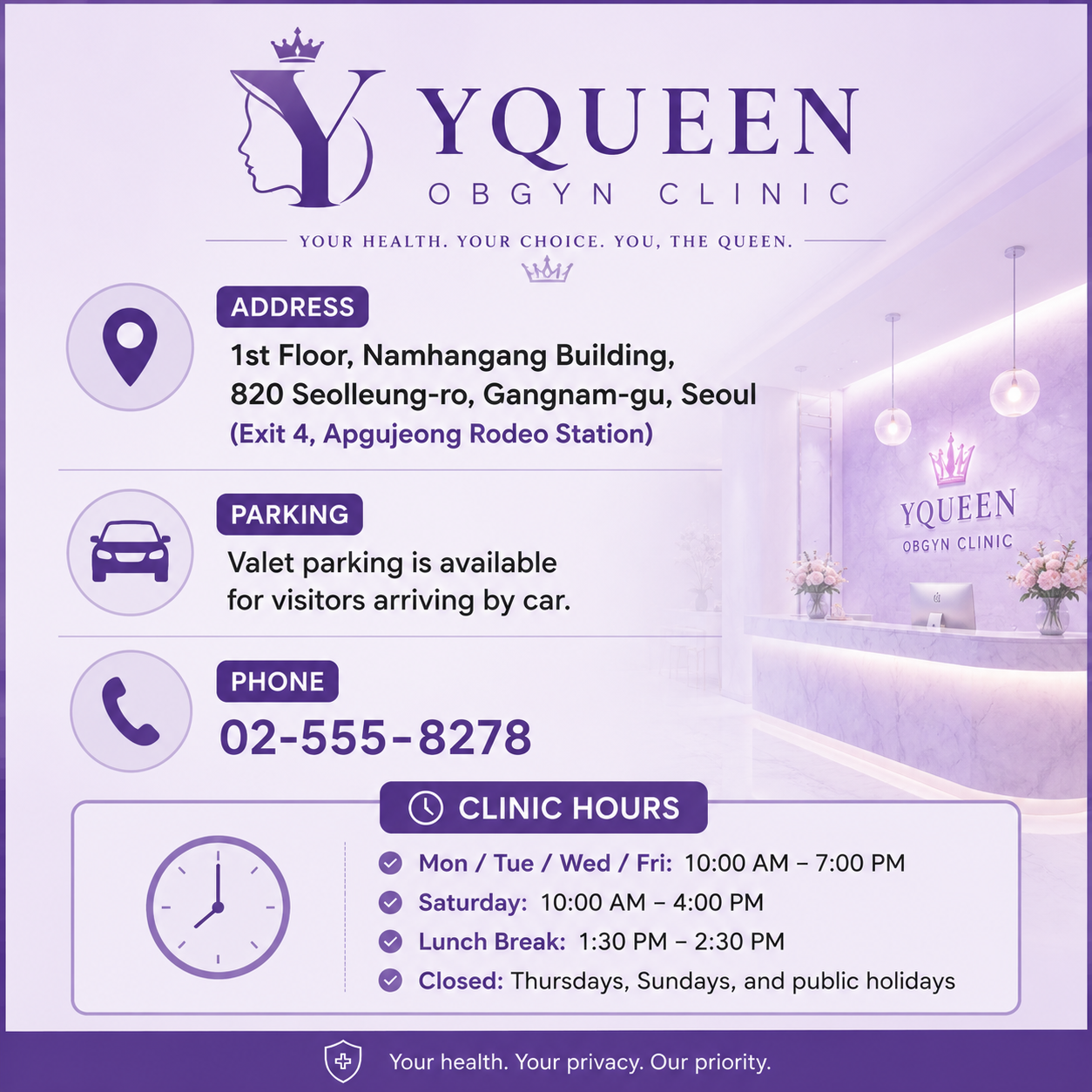
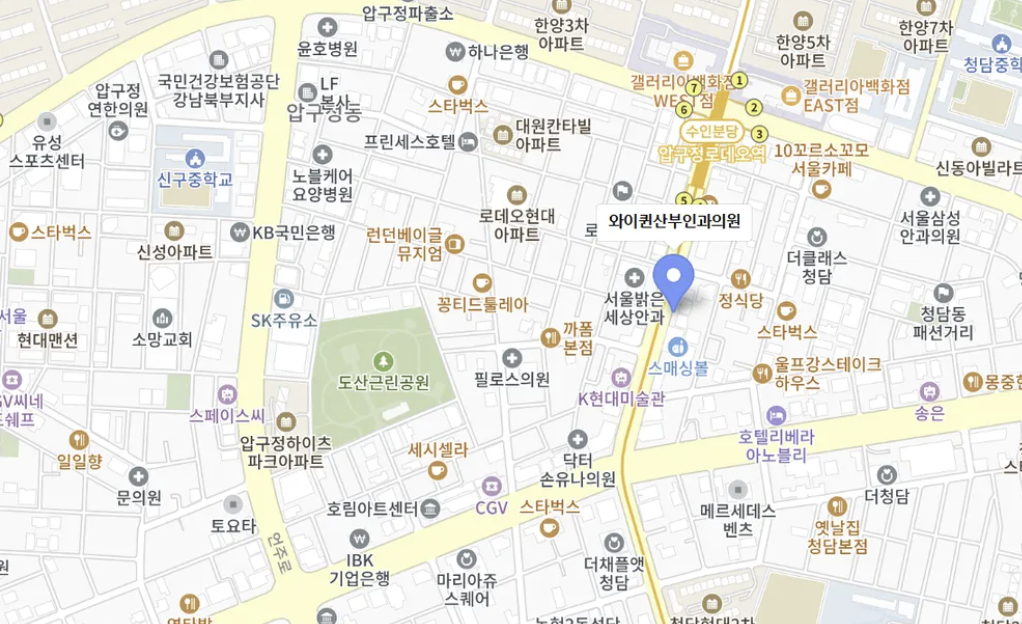
Y Queen Women's Clinic is located in Gangnam, Seoul, with convenient access near Apgujeong Rodeo Station.
The location is convenient for international patients living, working, studying, or staying in Gangnam, Cheongdam, Apgujeong, Sinsa, Itaewon, Myeongdong, and other central Seoul neighborhoods.
Frequently Asked Questions
What is vaginal tightening?
Vaginal tightening is a broad term for treatments intended to address vaginal laxity, reduced tissue support, or related functional concerns. Options can include pelvic floor therapy, non-surgical energy-based procedures, and surgical repair.
What causes vaginal looseness?
Possible causes include pregnancy, vaginal childbirth, pelvic floor weakness, perineal injury, aging, hormonal changes, connective tissue differences, and pelvic organ prolapse.
Can foreigners get vaginal tightening treatment in Seoul?
Yes. Y Queen Women's Clinic welcomes international patients and provides English-speaking assistance for confidential vaginal health and postpartum gynecological consultations.
What is the best vaginal tightening treatment?
There is no single best treatment for every patient. Pelvic floor weakness may respond to rehabilitation, while a significant structural problem may require a different approach. Treatment should be based on examination and diagnosis.
Can vaginal tightening help after childbirth?
Selected treatments may help address persistent postpartum concerns, but many postpartum changes improve naturally or respond to pelvic floor rehabilitation without a procedure.
Is non-surgical vaginal tightening possible?
Energy-based procedures using technologies such as focused ultrasound or radiofrequency are marketed as non-surgical options. Their suitability, evidence, risks, and expected results depend on the device and the condition being treated.
Is vaginal tightening the same as vaginoplasty?
No. Vaginal tightening is a broad term that may include non-surgical treatments. Vaginoplasty involves surgical repair or reconstruction of vaginal tissues.
Does vaginal tightening improve orgasms?
Improved orgasm cannot be guaranteed. Sexual response depends on many factors beyond vaginal tissue tightness, including nerve function, pelvic floor function, hormones, lubrication, medications, pain, and psychological factors.
Can vaginal tightening help urinary leakage?
Some patients with pelvic floor weakness and stress urinary leakage may benefit from pelvic floor rehabilitation or other targeted treatments. Urinary incontinence should be properly evaluated before choosing a vaginal procedure.
Can vaginal tightening treat vaginal dryness?
Vaginal dryness is frequently related to hormonal or other medical factors. A tightening procedure may not address the underlying cause, so appropriate gynecological evaluation is recommended.
Is vaginal tightening painful?
It depends on the treatment. Non-surgical procedures may cause temporary warmth, pressure, or sensitivity. Surgery requires anesthesia and involves a longer recovery.
How many vaginal tightening sessions do I need?
The number depends on the treatment selected, severity of symptoms, device protocol, and individual response. Surgical and non-surgical treatments have different treatment schedules.
Can vaginal tightening make intercourse painful?
Excessive narrowing, scarring, irritation, or other complications can cause pain during intercourse. Conservative treatment planning and proper evaluation are important.
Does Y Queen Women's Clinic provide vaginal tightening?
Y Queen Women's Clinic can provide confidential gynecological evaluation for vaginal laxity, postpartum changes, pelvic floor symptoms, urinary concerns, and patients interested in vaginal tightening. The availability and suitability of specific energy-based or surgical treatments should be confirmed during an individual consultation.