Perineoplasty in Seoul
Gangnam Y Queen Women's Clinic
Y Queen Women's Clinic provides English-speaking perineoplasty consultations in Gangnam, Seoul for local and international patients. Perineoplasty is a reconstructive procedure involving the perineum and may be considered for selected patients with persistent childbirth-related tissue changes, painful episiotomy scars, poorly healed perineal tears, structural weakness, or functional discomfort around the vaginal opening. Our OB-GYN team provides confidential assessment of perineal anatomy, scar tissue, pelvic floor symptoms, childbirth history, and other possible causes of discomfort while discussing conservative treatment, pelvic floor rehabilitation, and surgery when appropriate. Treatment is individualized according to symptoms, anatomy, future pregnancy plans, and expected benefits and risks.
What Is Perineoplasty?
Perineoplasty is a surgical procedure that repairs or reconstructs the perineal tissues around the vaginal opening.
Depending on the patient's condition, the procedure may involve:
- Removing problematic scar tissue
- Repairing separated or weakened perineal tissue
- Reconstructing the perineal body
- Correcting selected childbirth-related tissue changes
- Revising a painful or irregular episiotomy scar
- Restoring more functional anatomy at the vaginal opening
The exact procedure depends on the patient's anatomy, symptoms, previous injuries, and treatment goals.
What Is the Perineum?
The perineum is the area between the vaginal opening and anus.
The perineal body contains muscles and connective tissues that contribute to pelvic floor support.
This area can be affected by:
- Pregnancy
- Vaginal childbirth
- Perineal tearing
- Episiotomy
- Previous surgery
- Trauma
- Scar formation
Changes in the perineum do not automatically require surgical treatment.
Why Is Perineoplasty Performed?
Perineoplasty may be considered for selected patients with:
- Persistent pain from perineal scar tissue
- Significant changes after childbirth
- Poorly healed perineal tears
- Episiotomy-related problems
- Structural weakness of the perineal body
- Discomfort associated with altered anatomy
- Functional problems at the vaginal opening
- Selected complications from previous surgery or trauma
A physical examination is important because similar symptoms can have several different causes.
Perineoplasty After Childbirth
Childbirth is one of the most common reasons women seek evaluation of the perineal area.
During vaginal delivery, the perineum can stretch significantly. Some women may experience:
- First-, second-, third-, or fourth-degree tears
- Episiotomy
- Scar formation
- Persistent tenderness
- Changes in the vaginal opening
- Pelvic floor muscle injury
Many postpartum symptoms improve naturally during recovery.
Persistent problems should be evaluated to determine whether pelvic floor rehabilitation, scar treatment, or surgery is most appropriate.
Perineoplasty After Episiotomy
An episiotomy is a surgical incision made in the perineum during selected vaginal deliveries.
Most episiotomies heal without significant long-term problems. However, some patients may develop:
- Painful scar tissue
- Tenderness
- Tissue irregularity
- Discomfort during intercourse
- Persistent pulling or tightness
When a symptomatic scar does not improve with conservative treatment, surgical revision may sometimes be considered.
Perineoplasty for Perineal Tears
Perineal tears vary in severity.
Minor tears usually heal without reconstructive surgery. More significant injuries may involve deeper pelvic floor structures.
Patients with a history of severe obstetric tears may require specialized evaluation, particularly when symptoms include:
- Persistent pelvic or perineal pain
- Bowel-control problems
- Significant pelvic floor dysfunction
- Pain during intercourse
- Structural abnormalities
Complex injuries involving the anal sphincter require specialist assessment.
Symptoms That May Require Evaluation
Consider a gynecological evaluation if you experience:
- Persistent perineal pain
- Painful scar tissue
- Pain during sexual intercourse
- Discomfort when sitting
- Pulling or tightness around an old scar
- Persistent symptoms following childbirth
- Concerns about healing after an episiotomy
- Changes affecting daily activities
- Pelvic floor symptoms
These symptoms do not necessarily mean that surgery is required.
What Happens During Your Consultation?
Your appointment may include:
- Confidential discussion of symptoms
- Medical and gynecological history
- Pregnancy and childbirth history
- Review of previous episiotomy or perineal tears
- Assessment of pain or functional concerns
- External genital examination when appropriate
- Pelvic examination
- Assessment of scar tissue
- Pelvic floor evaluation when indicated
- Discussion of conservative treatment
- Discussion of surgical options
- Recovery planning
The goal is to identify the cause of symptoms and determine whether perineoplasty is likely to provide meaningful benefit.
How Is Perineoplasty Performed?
The procedure is individualized according to the problem being treated.
In general, surgery may involve:
- Appropriate anesthesia or pain control.
- Examination of the affected perineal tissue.
- Removal or revision of problematic scar tissue when necessary.
- Repair or reconstruction of deeper supportive tissue when appropriate.
- Careful closure of the repaired area.
The extent of surgery varies significantly between patients.
Perineoplasty vs. Vaginoplasty
Perineoplasty and vaginoplasty are not necessarily the same procedure.
Perineoplasty
Primarily repairs the perineum and tissues around the vaginal opening.
Vaginoplasty
Can refer to procedures involving the vaginal canal itself.
Some patients have concerns involving both areas, but treatment should be based on the actual anatomical problem rather than automatically combining procedures.
Perineoplasty vs. Labiaplasty
These procedures treat different anatomical structures.
Perineoplasty
Focuses on the tissue between the vaginal opening and anus.
Labiaplasty
Usually reshapes or reduces the labia minora or, depending on the procedure, other labial tissue.
A consultation can determine which anatomical area is responsible for symptoms.
Perineoplasty and Pelvic Floor Therapy
Not every postpartum or perineal problem requires surgery.
Pelvic floor physical therapy may be appropriate for symptoms related to:
- Pelvic floor muscle weakness
- Muscle overactivity
- Painful muscle tension
- Certain types of painful intercourse
- Postpartum rehabilitation
- Some urinary or bowel symptoms
For some patients, pelvic floor therapy may be recommended before considering surgery.
Can Perineoplasty Help Painful Intercourse?
Perineoplasty may help selected patients when pain during intercourse is caused by:
- Painful perineal scar tissue
- Poorly healed childbirth injury
- Structural abnormalities around the vaginal opening
- Selected complications from previous perineal surgery
However, painful intercourse can also be caused by:
- Pelvic floor muscle dysfunction
- Vaginal dryness
- Vulvodynia
- Infection
- Endometriosis
- Hormonal changes
- Other gynecological conditions
Identifying the cause of pain is essential before recommending surgery.
Does Perineoplasty "Tighten" the Vagina?
Perineoplasty primarily repairs the perineal area and vaginal opening, rather than the entire vaginal canal.
Reconstructing weakened or separated perineal tissue can change support around the vaginal entrance in appropriately selected patients.
It should not be presented as a guaranteed way to improve sexual satisfaction or sexual performance.
Does Perineoplasty Improve Sexual Function?
Improvement in sexual function cannot be guaranteed.
Sexual comfort and function depend on many factors, including:
- Pelvic floor function
- Nerve function
- Vaginal lubrication
- Hormonal health
- Scar tissue
- Pain conditions
- Medications
- Psychological and relationship factors
When sexual discomfort is the main concern, comprehensive evaluation is important before considering surgery.
Does Perineoplasty Hurt?
Appropriate anesthesia or pain control is used during the procedure.
During recovery, temporary symptoms may include:
- Perineal soreness
- Swelling
- Bruising
- Tightness
- Mild vaginal spotting
- Discomfort when sitting or walking
Your physician will provide individualized pain-management and aftercare instructions.
Recovery After Perineoplasty
Recovery depends on the extent of repair and individual healing.
During the early recovery period, patients may need to avoid:
- Strenuous exercise
- Heavy lifting
- Cycling
- Activities creating significant perineal pressure
- Tampon use
- Vaginal intercourse
Your surgeon will provide instructions based on your procedure and healing progress.
When Can I Have Sexual Intercourse After Perineoplasty?
Vaginal intercourse should generally be avoided until the repaired tissue has adequately healed.
The appropriate timing depends on:
- Extent of surgery
- Wound healing
- Pain or tenderness
- Presence of sutures
- Follow-up examination
Your physician should confirm when intercourse can safely resume.
Will There Be Scarring?
Any surgical procedure can create scar tissue.
When perineoplasty is performed for an existing problematic scar, one goal may be to remove or revise that scar and create a more functional repair.
However, a new surgical scar will still form.
Final scar appearance depends on:
- Surgical technique
- Individual healing
- Tissue quality
- Infection or wound complications
- Postoperative care
Can I Have Another Vaginal Birth After Perineoplasty?
Future pregnancy is generally possible because perineoplasty does not involve the ovaries, fallopian tubes, or uterus.
However, another vaginal delivery can stretch or injure previously repaired perineal tissues and may affect the surgical result.
Patients planning additional pregnancies should discuss the timing of perineoplasty and future delivery considerations with their OB-GYN.
Risks and Possible Complications
Potential risks of perineoplasty include:
- Bleeding
- Infection
- Swelling
- Pain
- Delayed wound healing
- Scar formation
- Persistent tenderness
- Changes in sensation
- Pain during intercourse
- Excessive tightness
- Wound separation
- Asymmetry
- Need for additional treatment
Your physician will discuss risks based on the extent of the planned repair.
How Should I Prepare for a Consultation?
Before your appointment:
- Bring relevant childbirth records if available
- Tell your doctor about previous episiotomy or perineal tears
- Describe when pain or discomfort occurs
- List medications and supplements
- Mention previous pelvic or vaginal procedures
- Note any urinary or bowel symptoms
- Consider future pregnancy plans
- Prepare questions about recovery and pelvic floor treatment
This information helps determine whether the symptoms are caused by a structural perineal problem.
Perineoplasty Cost in Seoul
At Y Queen Women's Clinic:
- Consultation fees vary depending on the evaluation required.
- Procedure costs depend on the extent and complexity of repair.
- Additional costs may apply for anesthesia, medication, laboratory testing, or follow-up care when required.
An individualized treatment plan and current pricing can be discussed after examination.
Why Choose Y Queen Women's Clinic?
International patients choose Y Queen because of its:
- English-speaking medical support
- Female-focused gynecological care
- Confidential intimate health consultations
- Postpartum gynecological evaluation
- Assessment of episiotomy and perineal scars
- Pelvic floor evaluation when indicated
- Personalized treatment planning
- Discussion of conservative and surgical options
- Comfortable, private consultation environment
- Convenient Gangnam location
- Foreigner-friendly appointment process
- Follow-up gynecological care
- Specialist referral coordination when required
We provide individualized care focused on identifying the underlying cause of symptoms and selecting treatment based on anatomy, function, comfort, and future reproductive plans.
Convenient Location in Gangnam
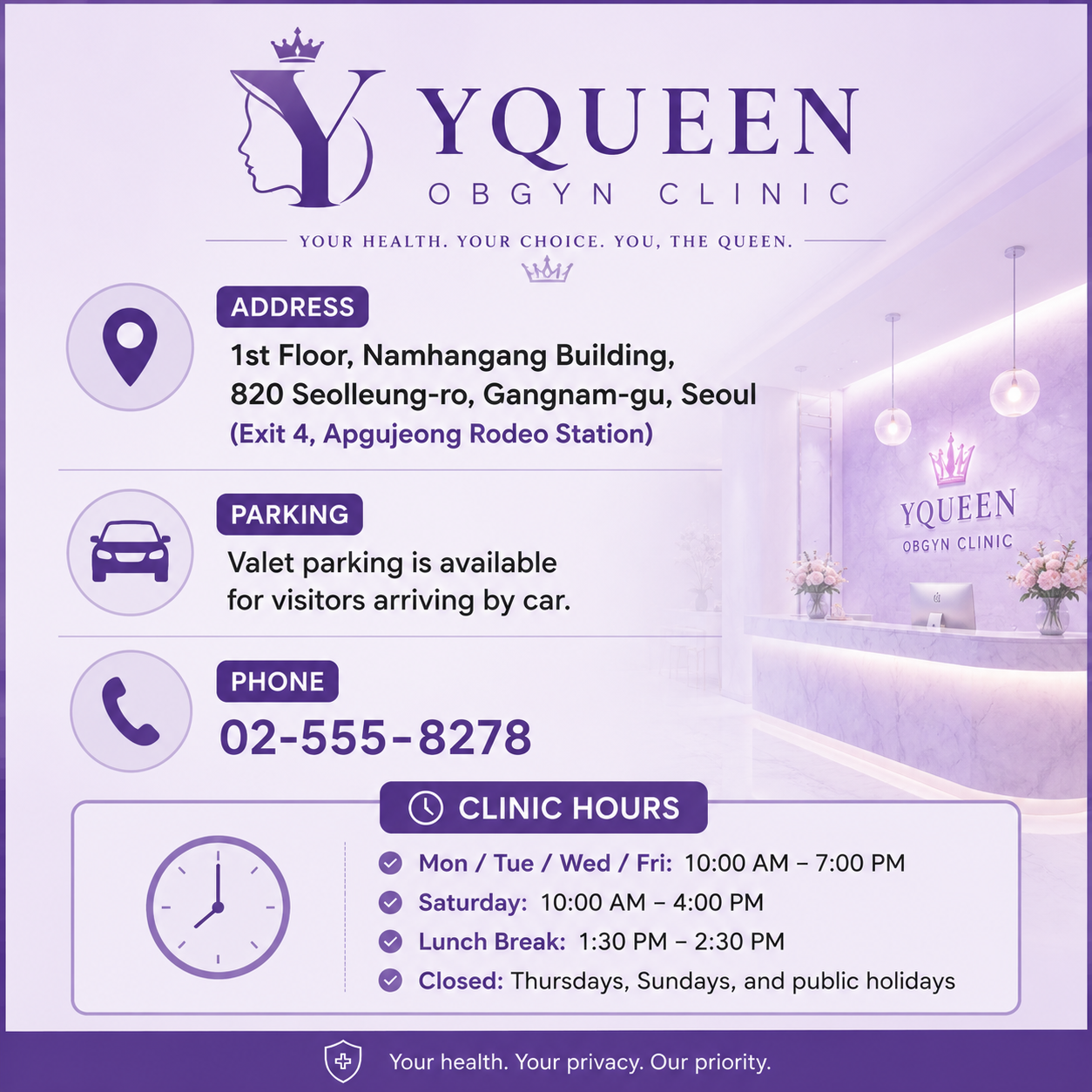
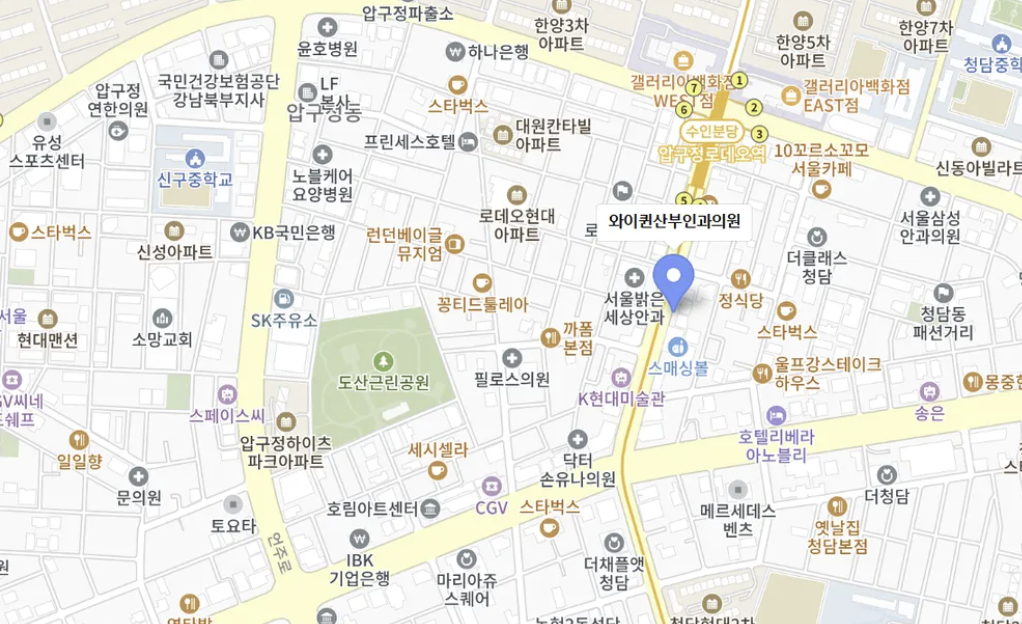
Y Queen Women's Clinic is located in Gangnam, Seoul, with convenient access near Apgujeong Rodeo Station.
The clinic is accessible for international patients living, working, studying, or staying in Gangnam, Cheongdam, Sinsa, Itaewon, Myeongdong, and other central Seoul neighborhoods.
Frequently Asked Questions
What is perineoplasty?
Perineoplasty is a surgical procedure that repairs or reconstructs the perineal tissues between the vaginal opening and anus.
Why is perineoplasty performed?
It may be considered for persistent perineal scar pain, poorly healed childbirth injuries, episiotomy-related problems, structural weakness, or selected functional problems involving the vaginal opening.
Is perineoplasty the same as vaginoplasty?
No. Perineoplasty primarily treats the perineum and tissues around the vaginal entrance, while vaginoplasty generally involves the vaginal canal.
Can foreigners get a perineoplasty consultation in Seoul?
Yes. Y Queen Women's Clinic welcomes international patients and provides English-speaking assistance for confidential postpartum, perineal, and gynecological consultations.
Can perineoplasty repair an episiotomy scar?
It may be an option when an episiotomy scar causes persistent pain or a structural problem that has not improved adequately with conservative management.
Can perineoplasty help after childbirth?
Yes, selected childbirth-related structural problems may be treated with perineal reconstruction. However, many postpartum symptoms improve naturally or respond to pelvic floor rehabilitation without surgery.
Can perineoplasty help painful intercourse?
It may help when painful intercourse is caused by symptomatic scar tissue or another correctable structural problem involving the perineum. Other causes should be evaluated before surgery.
Does perineoplasty tighten the vagina?
Perineoplasty primarily repairs the perineal body and vaginal opening rather than the entire vaginal canal. Reconstructive repair may change support at the vaginal entrance when weakened tissue is present.
Will perineoplasty improve sexual satisfaction?
Improved sexual satisfaction cannot be guaranteed. Sexual function is influenced by pelvic floor health, sensation, lubrication, hormones, pain, medications, and psychological and relationship factors.
Can I have children after perineoplasty?
Yes. Perineoplasty does not directly affect the uterus, ovaries, or fallopian tubes. However, future vaginal childbirth may affect previously repaired perineal tissue.
How long does recovery take?
Recovery varies depending on the extent of repair and individual healing. Your physician will provide personalized guidance about returning to work, exercise, tampon use, and sexual activity.
Does Y Queen Women's Clinic provide perineoplasty?
Y Queen Women's Clinic can provide confidential evaluation and consultation for perineal concerns, postpartum changes, episiotomy scars, and childbirth-related symptoms. The availability and appropriate setting of a specific perineoplasty procedure should be confirmed after examination. When specialized reconstructive treatment is required, referral can be coordinated.