Nexplanon in Seoul
Gangnam Y Queen Women's Clinic
Y Queen Women's Clinic provides English-speaking Nexplanon consultations in Gangnam, Seoul for local and international patients. Nexplanon is a single-rod, estrogen-free contraceptive implant containing 68 mg of etonogestrel that is placed beneath the skin of the upper arm. Etonogestrel implants are among the most effective reversible contraceptive methods, with fewer than one pregnancy per 100 users during the first year of typical use. Nexplanon may cause irregular, lighter, less frequent, prolonged, or absent menstrual bleeding, and certain medications can reduce its contraceptive effectiveness. The implant can be removed when pregnancy is desired or another contraceptive method is preferred, with fertility returning relatively quickly afterward. Y Queen Women's Clinic offers confidential contraception counseling, implant insertion and removal assessment, bleeding evaluation, medication review, and individualized family-planning support for international patients in Seoul.
What Is Nexplanon?
Nexplanon is a small contraceptive implant containing 68 mg of etonogestrel.
It consists of a single flexible rod that is inserted just beneath the skin of the upper arm by a trained healthcare professional.
Once inserted, the implant slowly releases etonogestrel into the bloodstream.
Nexplanon is:
- Long acting
- Reversible
- Highly effective
- Estrogen-free
- Convenient
- Removable when pregnancy is desired or contraception is no longer needed
How Does Nexplanon Work?
Nexplanon primarily prevents pregnancy by suppressing ovulation.
It also:
- Thickens cervical mucus, making it harder for sperm to reach an egg
- Produces changes in the endometrium, the lining of the uterus
Because the implant works continuously, you do not need to remember to take contraception every day.
How Effective Is Nexplanon?
The etonogestrel contraceptive implant is one of the most effective reversible birth control methods available.
According to CDC guidance, fewer than one implant user out of 100 becomes pregnant during the first year of typical use.
Its effectiveness is not dependent on:
- Remembering a daily pill
- Using contraception before intercourse
- Monthly administration
Certain medications, however, can interact with etonogestrel and potentially reduce contraceptive effectiveness.
Who May Consider Nexplanon?
Nexplanon may be appropriate for women who:
- Want highly effective contraception
- Prefer long-term birth control
- Want a reversible method
- Do not want to take a daily pill
- Prefer estrogen-free contraception
- Want contraception after childbirth when medically appropriate
- Want a method that can be removed when pregnancy is desired
Contraceptive choice should be individualized according to medical history, medications, bleeding preferences, and reproductive goals.
Is Nexplanon Estrogen-Free?
Yes.
Nexplanon contains the progestin etonogestrel and does not contain estrogen.
This can make it an option for some patients who cannot or prefer not to use estrogen-containing contraceptive methods.
However, being estrogen-free does not automatically mean Nexplanon is appropriate for every patient.
Your doctor should review your medical history before insertion.
Who May Not Be Suitable for Nexplanon?
Certain medical circumstances may require additional evaluation or make the implant inappropriate.
These can include selected cases involving:
- Current or previous hormone-sensitive cancer
- Certain liver conditions
- Unexplained vaginal bleeding requiring assessment
- Allergy to implant components
- Certain medications that significantly interact with etonogestrel
- Other medical conditions identified during consultation
CDC guidance classifies implant suitability according to individual medical conditions and medication use.
What Happens Before Nexplanon Insertion?
Before insertion, your appointment may include:
- Medical history review
- Menstrual history
- Pregnancy risk assessment
- Review of current contraception
- Medication review
- Discussion of bleeding patterns
- Contraceptive counseling
- Pregnancy testing when indicated
- Discussion of alternatives
- Explanation of insertion and removal
Your provider needs to be reasonably certain that you are not pregnant before placement.
Nexplanon Insertion
Nexplanon is inserted under the skin of the upper arm.
The procedure is generally performed during an outpatient appointment.
A typical insertion involves:
- Identifying the appropriate area of the upper arm.
- Cleaning the skin.
- Administering local anesthetic.
- Inserting the implant beneath the skin using a specially designed applicator.
- Confirming that the implant can be felt under the skin.
- Applying a small dressing and pressure bandage.
The insertion itself is usually brief.
Does Nexplanon Insertion Hurt?
Local anesthetic is typically used to numb the insertion area.
You may feel:
- A small injection during local anesthesia
- Pressure during placement
- Mild soreness afterward
After insertion, temporary effects may include:
- Bruising
- Tenderness
- Mild swelling
- Minor discomfort at the insertion site
These symptoms generally improve as the area heals.
How Long Does Nexplanon Insertion Take?
The insertion procedure itself generally takes only a few minutes.
The overall appointment is longer because it may include:
- Contraception consultation
- Pregnancy assessment
- Medication review
- Local anesthesia
- Insertion
- Aftercare instructions
When Does Nexplanon Start Working?
Timing depends on when the implant is inserted.
CDC guidance states that when an etonogestrel implant is placed within the first 5 days after menstrual bleeding begins, additional contraceptive protection is generally not needed.
If it is inserted more than 5 days after menstrual bleeding began, patients are generally advised to abstain from intercourse or use a barrier method such as condoms for the next 7 days.
Your doctor will advise whether backup contraception is required in your specific situation.
Can Nexplanon Be Inserted at Any Time in My Cycle?
Yes, the implant can generally be inserted at any point in the menstrual cycle when the healthcare provider can be reasonably certain that you are not pregnant.
The timing determines whether temporary backup contraception is necessary.
Nexplanon After Childbirth
The etonogestrel implant can be considered after childbirth in many patients.
Timing depends on factors such as:
- Whether you are breastfeeding
- Time since delivery
- Pregnancy risk
- Medical history
- Other contraceptive use
CDC guidance allows postpartum implant placement when pregnancy can reasonably be excluded, with specific medical eligibility considerations based on postpartum timing.
Nexplanon While Breastfeeding
Progestin-only contraceptive implants can be considered during breastfeeding for many patients.
The appropriate timing depends on how recently you delivered and your individual medical circumstances.
Your OB-GYN can discuss postpartum contraception and determine when insertion is appropriate.
What Happens to My Period With Nexplanon?
Changes in bleeding are common with contraceptive implants.
Possible patterns include:
- Irregular spotting
- Unpredictable bleeding
- Longer bleeding episodes
- Shorter periods
- Lighter periods
- Infrequent periods
- No menstrual bleeding
- Occasionally bothersome or frequent bleeding
There is no reliable way to predict exactly how an individual's bleeding pattern will change before insertion.
Is Irregular Bleeding Normal With Nexplanon?
Yes.
Irregular or unpredictable bleeding is one of the most common experiences with etonogestrel implants.
Bleeding changes do not necessarily mean that the implant is not working.
However, new heavy bleeding, significant pelvic pain, or other unusual symptoms may require evaluation to exclude:
- Pregnancy
- Infection
- Cervical problems
- Fibroids
- Polyps
- Other gynecological conditions
Can Nexplanon Stop My Period?
Yes.
Some users experience very infrequent periods or no menstrual bleeding while using the implant.
Amenorrhea, meaning absence of periods, is not inherently dangerous when it is caused by hormonal contraception and pregnancy has been appropriately excluded.
Can Nexplanon Cause Heavy Bleeding?
Some patients experience prolonged or more frequent bleeding.
If bleeding becomes bothersome, your doctor may evaluate:
- Pregnancy risk
- Other gynecological causes
- Medication options for temporary bleeding management
- Whether continuing Nexplanon is appropriate
- Alternative contraception
You do not have to keep the implant if bleeding side effects are unacceptable to you.
Common Nexplanon Side Effects
Possible side effects can include:
- Irregular bleeding
- Headache
- Breast tenderness
- Acne
- Mood changes
- Changes in menstrual patterns
- Local insertion-site symptoms
Individual experiences vary.
Talk to your doctor if symptoms are persistent or significantly affect your quality of life.
Does Nexplanon Cause Weight Gain?
Some patients report weight changes while using hormonal contraception.
However, body weight is influenced by many factors, and an individual response cannot be predicted.
If significant or unexplained weight change occurs, discuss it with your doctor rather than assuming the implant is necessarily the cause.
Nexplanon and Acne
Acne may improve, worsen, or remain unchanged while using progestin-only contraception.
If acne becomes significant, your OB-GYN can discuss whether continuing the implant or changing contraception is appropriate.
Nexplanon and Mood Changes
Some users report changes in mood while using hormonal contraception.
Mood symptoms can also be influenced by:
- Stress
- Sleep
- Other medications
- Hormonal changes
- Mental health conditions
- Life circumstances
Significant or persistent mood changes should be discussed with a healthcare professional.
Nexplanon and Medication Interactions
Certain medications can lower etonogestrel levels and potentially reduce implant effectiveness.
Drug interactions are particularly important with some medications that strongly induce liver enzymes.
CDC guidance notes clinically relevant interactions with certain drugs, including efavirenz, which can reduce etonogestrel effectiveness.
Tell your doctor about:
- Prescription medications
- Over-the-counter medication
- Herbal products
- Seizure medications
- HIV medications
- Tuberculosis medications
- Other long-term treatments
before choosing an implant.
Does Nexplanon Protect Against STDs?
No.
Nexplanon prevents pregnancy but does not protect against sexually transmitted infections, including HIV.
Condoms can help reduce the risk of many STIs.
STD testing may be appropriate depending on symptoms and sexual history.
Can I Feel Nexplanon in My Arm?
Yes.
The implant is normally placed just under the skin and should usually be palpable.
After insertion, your healthcare provider should confirm its presence, and you may also be shown how to gently feel it yourself.
Do not repeatedly press, manipulate, or attempt to move the implant.
What If I Cannot Feel My Nexplanon Implant?
If an implant that was previously palpable can no longer be felt, contact a healthcare professional.
Evaluation may involve:
- Physical examination
- Review of the insertion site
- Imaging to locate the implant when necessary
Do not attempt to locate or remove it yourself.
Can Nexplanon Move in My Arm?
Minor changes in position may occur, but significant migration is uncommon.
If you notice:
- A major change in implant position
- Persistent arm pain
- Numbness
- Tingling
- Inability to feel the implant
- Other unusual symptoms
seek medical evaluation.
Nexplanon Removal in Seoul
Nexplanon can be removed when:
- You want to become pregnant
- You want to change contraception
- You experience unacceptable side effects
- The recommended replacement time has been reached
- Your doctor recommends removal
- You simply no longer want the implant
You do not have to wait until the end of the approved contraceptive period to request removal.
How Is Nexplanon Removed?
Routine Nexplanon removal generally involves:
- Locating the implant beneath the skin.
- Cleaning the area.
- Injecting local anesthetic.
- Making a very small skin incision.
- Gently removing the implant.
- Closing or dressing the small incision.
The removed implant should be checked to confirm that it is intact.
Does Nexplanon Removal Hurt?
Local anesthesia is normally used.
You may feel:
- The anesthetic injection
- Pressure
- Pulling
- Mild soreness afterward
Routine removal is usually relatively quick when the implant is superficial and easy to locate.
Difficult Nexplanon Removal
Removal may be more complex if the implant:
- Is deeply inserted
- Cannot be felt
- Has changed position
- Is surrounded by scar tissue
- Is close to important nerves or blood vessels
Imaging or referral to a clinician experienced in difficult implant removal may be necessary in selected cases.
Can Nexplanon Be Removed and Replaced at the Same Appointment?
Often, yes.
If you want to continue using Nexplanon and there is no medical reason to delay, an old implant can often be removed and a new implant placed during the same visit.
Your doctor can confirm whether same-day replacement is appropriate.
How Quickly Does Fertility Return After Nexplanon Removal?
Nexplanon is reversible.
Ovulation and fertility can return relatively quickly after removal.
If you do not want pregnancy after removal, another contraceptive method should be started at the appropriate time.
If you do want pregnancy, your doctor can also discuss preconception health.
Nexplanon vs. Birth Control Pills
Both are hormonal contraceptive methods, but they work differently in daily life.
Nexplanon
- Long acting
- No daily pill
- Progestin-only
- Highly effective
- Irregular bleeding can occur
Birth Control Pills
- Require regular dosing
- Different hormone formulations are available
- Can offer more predictable bleeding with certain regimens
- Effectiveness is more dependent on correct daily use
The better option depends on your preferences and medical history.
Nexplanon vs. IUD
Both are highly effective long-acting reversible contraceptives.
Nexplanon
- Placed under the skin of the upper arm
- Contains etonogestrel
- Does not require placement inside the uterus
Hormonal IUD
- Placed inside the uterus
- Releases a progestin locally
- Often reduces menstrual bleeding
Copper IUD
- Hormone-free
- Placed inside the uterus
Your OB-GYN can help compare the options based on your bleeding preferences, medical history, and reproductive goals.
Nexplanon vs. Contraceptive Injection
Both are progestin-only methods.
Nexplanon
Provides long-term contraception from a single implant.
Contraceptive Injection
Requires repeat injections on a regular schedule.
The two methods also have different bleeding patterns, side effects, and return-to-fertility considerations.
Nexplanon and Future Pregnancy
Nexplanon does not permanently reduce fertility.
If you want to become pregnant, the implant can be removed.
A preconception consultation may include discussion of:
- Folic acid
- Medications
- Vaccination history
- Menstrual cycles
- Fertility concerns
- General pregnancy health
When Should I Contact a Doctor?
Seek medical advice if you experience:
- Severe pain around the implant
- Significant redness or swelling
- Pus or signs of infection
- Persistent numbness or tingling in the arm
- Inability to feel the implant
- Suspected pregnancy
- Severe or unusual pelvic pain
- Very heavy or concerning bleeding
- Significant new symptoms after insertion
A positive pregnancy test while using an implant requires medical assessment.
How Should I Prepare for a Nexplanon Appointment?
Before your appointment:
- Know the first day of your last menstrual period
- Tell your doctor about recent unprotected intercourse
- List current medications and supplements
- Mention previous contraceptive methods
- Discuss previous reactions to hormonal contraception
- Mention unusual vaginal bleeding
- Tell your doctor about liver or hormone-related medical conditions
- Discuss future pregnancy plans
- Bring information about an existing implant if requesting removal
This information helps your doctor determine whether Nexplanon is appropriate and whether backup contraception is needed.
Nexplanon Cost in Seoul
At Y Queen Women's Clinic:
- Consultation fees depend on the evaluation required.
- Nexplanon insertion costs depend on current implant pricing and availability.
- Removal fees may vary according to whether removal is routine or complex.
- Replacement generally involves removal plus insertion of a new implant.
- Additional costs may apply for pregnancy testing, laboratory testing, imaging for a difficult-to-locate implant, or other examinations.
Current Nexplanon availability, approved duration of use in Korea, and exact pricing should be confirmed during consultation.
Why Choose Y Queen Women's Clinic?
International patients choose Y Queen because of its:
- English-speaking medical support
- Female-focused gynecological care
- Long-acting contraception counseling
- Nexplanon insertion consultation
- Nexplanon removal and replacement care
- Evaluation of irregular bleeding
- Birth control counseling
- Pregnancy planning support
- Discussion of IUD and pill alternatives
- Medication interaction review
- Confidential consultation environment
- Convenient Gangnam location
- Foreigner-friendly appointment process
- Follow-up women's healthcare
Our approach focuses on helping patients choose contraception according to their medical history, menstrual preferences, lifestyle, medication use, and future reproductive goals.
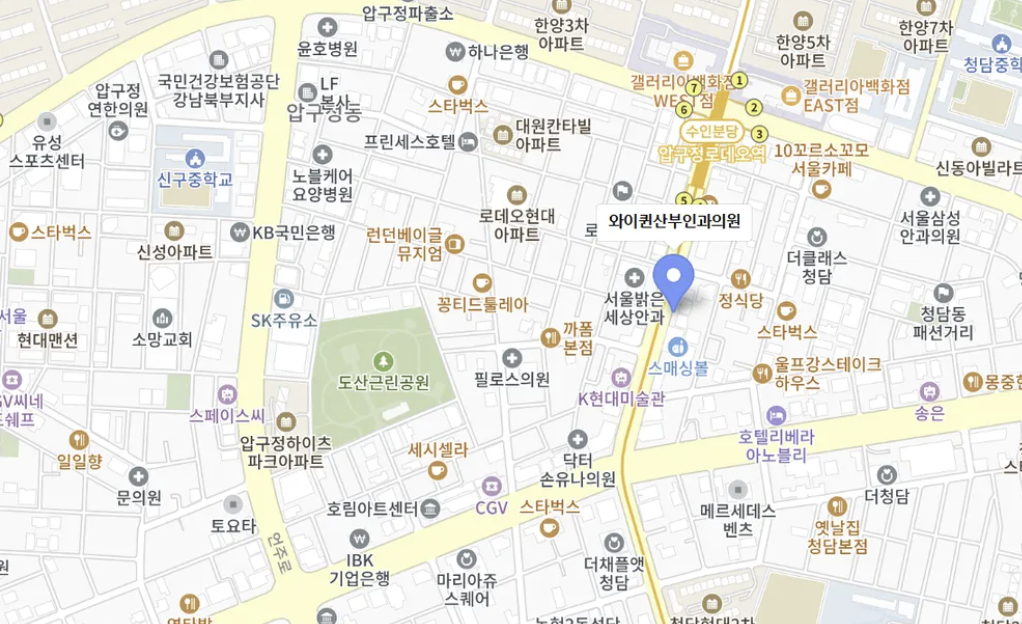
Convenient Location in Gangnam
Y Queen Women's Clinic is located in Gangnam, Seoul, with convenient access near Apgujeong Rodeo Station.
The clinic is convenient for international patients living, working, studying, or staying in Gangnam, Cheongdam, Apgujeong, Sinsa, Itaewon, Myeongdong, and other central Seoul neighborhoods.
Frequently Asked Questions
What is Nexplanon?
Nexplanon is a single-rod hormonal contraceptive implant containing etonogestrel. It is placed under the skin of the upper arm and provides long-acting, reversible contraception.
How effective is Nexplanon?
Etonogestrel implants are more than 99% effective, with fewer than one pregnancy per 100 users during the first year of typical use.
Can foreigners get Nexplanon in Seoul?
Yes. Y Queen Women's Clinic welcomes international patients and provides English-speaking contraception consultations. Current product availability should be confirmed directly with the clinic.
How long does Nexplanon last?
The approved duration of Nexplanon can depend on the product labeling and regulatory jurisdiction. Because approved duration and local guidance can change, patients in Korea should confirm the current Korean-approved replacement schedule with their OB-GYN rather than relying on information from another country.
Does Nexplanon contain estrogen?
No. Nexplanon contains the progestin etonogestrel and does not contain estrogen.
Does Nexplanon stop periods?
It can. Some users have no periods, while others experience spotting, irregular bleeding, prolonged bleeding, or other changes in menstrual patterns.
Is irregular bleeding normal with Nexplanon?
Yes. Changes in menstrual bleeding are common with contraceptive implants. New severe bleeding or other significant symptoms should still be medically evaluated.
Does Nexplanon cause weight gain?
Some patients report weight changes, but individual response varies and many factors influence body weight.
When does Nexplanon start working?
If an etonogestrel implant is inserted within the first 5 days after menstrual bleeding begins, additional contraception is generally not required. If inserted later, CDC guidance generally recommends condoms or abstinence for 7 days.
Can I use Nexplanon while breastfeeding?
Progestin-only implants can be appropriate for many breastfeeding patients. The recommended timing after delivery depends on individual postpartum circumstances.
Can I get Nexplanon if I have never been pregnant?
Yes. Previous pregnancy is not required to use a contraceptive implant.
Does Nexplanon protect against STDs?
No. Nexplanon prevents pregnancy but does not protect against sexually transmitted infections.
Can medications make Nexplanon less effective?
Yes. Certain medications can reduce etonogestrel levels and contraceptive effectiveness. Tell your doctor about all medications and supplements before insertion.
Can Nexplanon be removed whenever I want?
Yes. Nexplanon is reversible and can be removed if you want to change contraception, experience unacceptable side effects, or want to become pregnant.
How quickly can I get pregnant after Nexplanon removal?
Fertility can return quickly after removal, so another contraceptive method should be used promptly if pregnancy is not desired.
Can Nexplanon be removed and replaced on the same day?
Often yes. When medically appropriate, the existing implant may be removed and a replacement implant inserted during the same appointment.
Is Nexplanon better than an IUD?
Neither is universally better. Nexplanon is placed in the arm, while an IUD is placed in the uterus. Bleeding effects, hormones, procedure preferences, and medical considerations differ.
Does Y Queen Women's Clinic provide Nexplanon insertion and removal?
Y Queen Women's Clinic can provide contraception consultation and evaluate patients seeking Nexplanon insertion, removal, or replacement. Current implant availability, Korean-approved duration, suitability, and pricing should be confirmed during an individual consultation.