Hormone Treatment for Fibroids in Seoul Gangnam Y Queen Women's Clinic
Y Queen Women's Clinic provides English-speaking hormone treatment for uterine fibroids in Gangnam, Seoul for both local and international patients. Our OB-GYN specialists evaluate fibroids using pelvic examinations, ultrasound imaging, and individualized clinical assessment before recommending personalized hormone therapy. Treatment may include oral contraceptives, progestin therapy, hormonal intrauterine device (IUD) consultation, or GnRH medications to help reduce heavy menstrual bleeding, pelvic pain, and fibroid-related symptoms. We provide evidence-based, fertility-conscious care in a comfortable, private, and foreigner-friendly women's health clinic.
Hormone Treatment for Fibroids in Seoul at Gangnam Y Queen Women's Clinic
Hormone therapy is one of the most common non-surgical treatment options for women with symptomatic uterine fibroids. While hormonal medications do not permanently eliminate fibroids, they can help reduce heavy menstrual bleeding, relieve pelvic pain, and improve quality of life. Treatment recommendations depend on the size and location of the fibroids, your symptoms, age, and future pregnancy plans.
At Y Queen Women's Clinic in Gangnam, Seoul, we provide comprehensive evaluation and personalized hormone treatment for uterine fibroids. Our English-speaking women's health team welcomes Korean residents, expats, international students, business travelers, and medical tourists seeking expert gynecological care in Korea.
Our experienced OB-GYN specialists use pelvic ultrasound and individualized treatment planning to determine whether hormone therapy is appropriate and to monitor your response over time.
What Is Hormone Treatment for Fibroids?
Hormone therapy uses medications to regulate hormones that influence fibroid growth and menstrual bleeding.
Depending on your condition, hormone treatment may help:
- Reduce heavy menstrual bleeding
- Relieve painful periods
- Improve pelvic pressure
- Correct iron-deficiency anemia caused by heavy bleeding
- Temporarily shrink some fibroids
- Improve symptoms before surgery when appropriate
Hormonal therapy manages symptoms but does not permanently remove uterine fibroids.
Who May Benefit from Hormone Treatment?
Hormone therapy may be recommended for women who:
- Have heavy menstrual bleeding caused by fibroids
- Experience painful menstrual periods
- Have pelvic pressure or discomfort
- Prefer non-surgical treatment
- Need symptom control before surgery
- Are approaching menopause
- Are not immediate candidates for surgical treatment
Your doctor will determine whether hormone therapy is suitable based on your individual medical history.
Types of Hormonal Treatment
Treatment options may include:
- Combined oral contraceptive pills
- Progestin therapy
- Hormonal intrauterine device (IUD) consultation
- Gonadotropin-releasing hormone (GnRH) agonists or antagonists when appropriate
- Other hormone-regulating medications based on your individual condition
Your doctor will explain the expected benefits, possible side effects, and treatment duration for each option.
What Happens During Your Visit?
Your appointment may include:
- Medical history review
- Menstrual history assessment
- Symptom evaluation
- Pelvic examination
- Pelvic ultrasound
- Blood tests if heavy bleeding has caused anemia
- Discussion of treatment goals
- Personalized hormone therapy recommendations
- Follow-up planning
Regular follow-up helps monitor symptom improvement and treatment response.
Benefits of Hormone Treatment
Hormonal therapy may help:
- Reduce menstrual bleeding
- Improve pelvic pain
- Relieve menstrual cramps
- Reduce pelvic pressure
- Improve anemia caused by heavy bleeding
- Delay or avoid surgery in selected patients
Response to treatment varies depending on the type and size of fibroids.
Are There Side Effects?
Like all medications, hormone therapy may cause side effects.
Possible side effects depend on the medication prescribed and may include:
- Irregular bleeding
- Headache
- Breast tenderness
- Mood changes
- Hot flashes with certain medications
- Temporary changes in menstrual cycles
Your doctor will discuss the benefits and potential risks before starting treatment.
How Should I Prepare?
Before your appointment:
- Track your menstrual cycles and bleeding patterns
- Record your symptoms
- Bring previous ultrasound reports if available
- List current medications
- Discuss your future pregnancy plans with your doctor
This information helps determine the most appropriate treatment approach.
Hormone Treatment for Fibroids Cost in Seoul
At Y Queen Women's Clinic:
- Consultation fees vary depending on your evaluation.
- Additional costs depend on pelvic ultrasound, laboratory testing, and prescribed medications.
- Your doctor will explain the recommended treatment plan and estimated costs during your consultation.
Why Choose Y Queen Women's Clinic?
International patients choose Y Queen because of its:
- English-speaking medical support
- Experienced OB-GYN specialists
- Comprehensive fibroid evaluation
- Pelvic ultrasound available onsite
- Personalized hormone therapy plans
- Fertility-focused care
- Modern diagnostic equipment
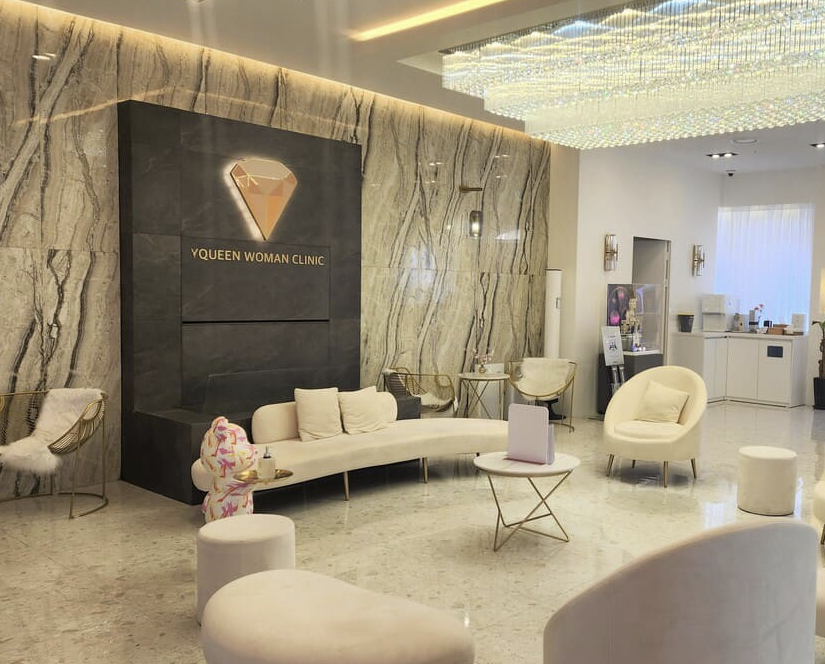
- Comfortable, private consultation rooms
- Convenient Gangnam location
- Foreigner-friendly appointment process
We provide individualized, evidence-based care to help women manage fibroid symptoms while supporting their long-term reproductive health.
Convenient Location in Gangnam
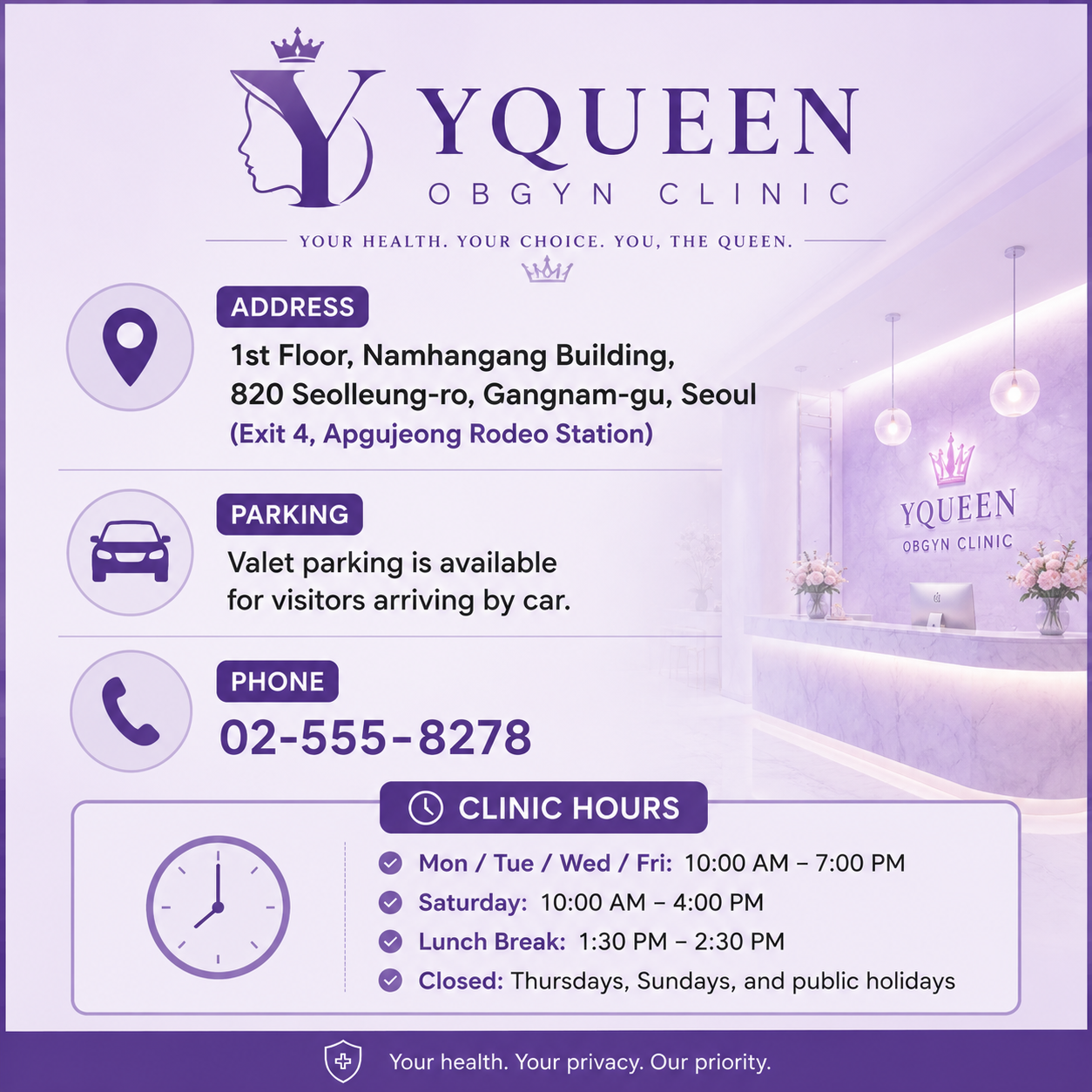
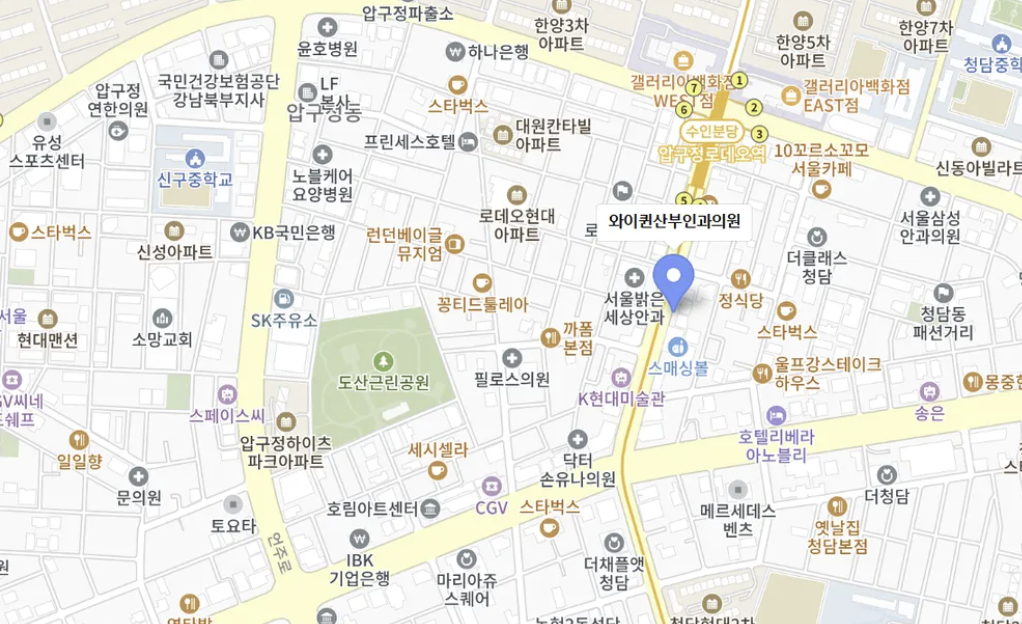
Y Queen Women's Clinic is located in Gangnam, Seoul, with convenient access near Apgujeong Rodeo Station, making it easy for international visitors staying in Gangnam, Cheongdam, Sinsa, Itaewon, Myeongdong, or other central Seoul neighborhoods to visit.
Frequently Asked Questions
Can hormone therapy shrink fibroids?
Some hormonal medications can temporarily reduce the size of certain fibroids, but the primary goal is usually to control symptoms such as heavy bleeding and pelvic pain.
Can hormone therapy cure uterine fibroids?
No. Hormone therapy helps manage symptoms but does not permanently eliminate fibroids. Symptoms may return after treatment is discontinued.
Can foreigners receive hormone treatment in Seoul?
Yes. Y Queen Women's Clinic welcomes international patients and provides English-speaking assistance.
Will I need an ultrasound?
Yes. Pelvic ultrasound is commonly used to diagnose fibroids, monitor their size, and evaluate your response to treatment.
Is hormone treatment suitable if I want to become pregnant?
Some hormonal medications are not appropriate while trying to conceive. Your doctor will recommend a treatment plan based on your fertility goals.
How long will I need treatment?
The duration depends on the medication prescribed, symptom severity, and your treatment goals. Your doctor will discuss an individualized plan during your consultation.
Will I still need surgery?
Not always. Many women achieve good symptom control with medication, while others may eventually require minimally invasive procedures or surgery depending on their condition.
Can hormone therapy reduce heavy menstrual bleeding?
Yes. Hormonal treatment is commonly used to reduce heavy bleeding caused by uterine fibroids and may also improve anemia related to excessive menstrual blood loss.