Uterine Fibroids Treatment in Seoul Gangnam Y Queen Women's Clinic
Y Queen Women's Clinic provides English-speaking uterine fibroid evaluation and treatment planning in Gangnam, Seoul for local and international patients. Uterine fibroids are common benign growths of uterine muscle that may cause heavy menstrual bleeding, anemia, pelvic pressure, painful periods, urinary frequency, constipation, abdominal enlargement, pain during intercourse, or fertility concerns. Diagnosis commonly includes pelvic ultrasound, with MRI or hysteroscopy used in selected cases. Treatment depends on symptoms, fibroid size and location, age, and pregnancy plans and may include observation, medication, hormonal therapy, a hormonal IUD for selected patients, myomectomy, uterine fibroid embolization, or hysterectomy. Many women with fibroids can become pregnant, although fibroids that distort the uterine cavity may affect fertility or pregnancy outcomes. Y Queen Women's Clinic offers confidential, foreigner-friendly gynecological care focused on individualized fibroid assessment, symptom management, fertility goals, and appropriate specialist referral.
What Are Uterine Fibroids?
Uterine fibroids, also called leiomyomas or myomas, are benign tumors that develop from uterine muscle tissue.
They can occur:
- Inside the uterine wall
- Toward the outer surface of the uterus
- Beneath the uterine lining
- On a stalk extending from the uterus
Fibroids are not the same as uterine cancer.
Most fibroids are benign.
How Common Are Uterine Fibroids?
Fibroids are very common during the reproductive years.
Some women may have:
- One small fibroid
- Several fibroids
- Large fibroids
- Fibroids that cause no symptoms
- Fibroids that significantly affect daily life
They are often discovered during a routine pelvic examination or ultrasound.
What Causes Uterine Fibroids?
The exact cause is not fully understood.
Factors believed to influence fibroid development may include:
- Estrogen
- Progesterone
- Genetics
- Family history
- Age
- Individual tissue growth factors
Fibroids often grow during reproductive years and may shrink after menopause as hormone levels decline.
What Are the Symptoms of Uterine Fibroids?
Possible symptoms include:
- Heavy menstrual bleeding
- Longer periods
- Passing large blood clots
- Painful periods
- Pelvic pressure
- Pelvic pain
- Lower abdominal fullness
- Enlarged abdomen
- Frequent urination
- Constipation
- Lower back discomfort
- Pain during intercourse
- Fatigue related to anemia
- Fertility concerns
Symptoms depend greatly on fibroid size and location.
Can Fibroids Cause Heavy Periods?
Yes.
Heavy menstrual bleeding is one of the most common fibroid-related symptoms.
Patients may notice:
- Very heavy flow
- Frequent pad or tampon changes
- Large blood clots
- Periods lasting longer than usual
- Bleeding that interferes with work or sleep
Persistent heavy bleeding can lead to iron-deficiency anemia.
Can Fibroids Cause Anemia?
Yes.
Chronic heavy menstrual bleeding can reduce iron levels and cause anemia.
Possible anemia symptoms include:
- Fatigue
- Weakness
- Shortness of breath
- Dizziness
- Headache
- Palpitations
- Pale skin
Blood testing may be recommended when menstrual bleeding is heavy.
Can Fibroids Cause Pelvic Pain?
Yes.
Fibroids can cause:
- Pelvic pressure
- Cramping
- Aching
- Lower abdominal heaviness
- Back discomfort
Pain may be constant or may worsen around menstruation.
Sudden severe pain requires medical evaluation because other gynecological conditions can cause similar symptoms.
Can Fibroids Cause a Swollen or Enlarged Abdomen?
Large or multiple fibroids can enlarge the uterus.
Some patients notice:
- Lower abdominal fullness
- Increased waist size
- A firm lower abdomen
- Clothing becoming tighter
However, abdominal enlargement has many possible causes, so imaging may be needed.
Can Fibroids Cause Frequent Urination?
Yes.
A fibroid pressing against the bladder can cause:
- Frequent urination
- Urinary urgency
- Pelvic pressure
Large fibroids may occasionally affect bladder emptying.
Other urinary conditions should also be considered.
Can Fibroids Cause Constipation?
Yes.
Fibroids that press toward the back of the uterus can sometimes put pressure on the rectum.
This may contribute to:
- Constipation
- Bowel pressure
- Difficulty with bowel movements
Persistent bowel symptoms may also have gastrointestinal causes.
Can Fibroids Cause Pain During Sex?
They can.
Some women with fibroids experience:
- Deep pelvic pain during intercourse
- Pressure
- Discomfort related to fibroid location
Pain during sex can also be caused by endometriosis, pelvic floor dysfunction, infection, vaginal dryness, or other conditions.
Types of Uterine Fibroids
Fibroids are often classified according to their location.
Common types include:
- Intramural fibroids
- Submucosal fibroids
- Subserosal fibroids
- Pedunculated fibroids
Location can influence symptoms and treatment.
What Are Intramural Fibroids?
Intramural fibroids grow within the muscular wall of the uterus.
They are among the most common types.
Depending on size, they may cause:
- Heavy bleeding
- Pelvic pressure
- Pain
- Enlargement of the uterus
What Are Submucosal Fibroids?
Submucosal fibroids grow beneath the uterine lining and may project into the uterine cavity.
Even relatively small submucosal fibroids can cause:
- Heavy bleeding
- Irregular bleeding
- Fertility problems
- Recurrent pregnancy loss in selected cases
Because they affect the uterine cavity, treatment planning may differ from other fibroid types.
What Are Subserosal Fibroids?
Subserosal fibroids grow toward the outer surface of the uterus.
They may cause more pressure-related symptoms than bleeding.
Possible symptoms include:
- Pelvic pressure
- Urinary frequency
- Constipation
- Abdominal fullness
What Are Pedunculated Fibroids?
Pedunculated fibroids grow on a stalk.
They may extend:
- Into the uterine cavity
- Outside the uterus
Treatment depends on size, location, and symptoms.
How Are Uterine Fibroids Diagnosed?
Fibroids are usually evaluated with:
- Medical history
- Pelvic examination
- Pelvic ultrasound
Additional testing may include:
- Transvaginal ultrasound
- Abdominal ultrasound
- MRI in selected cases
- Hysteroscopy for suspected cavity-related fibroids
- Blood tests for anemia
The exact evaluation depends on symptoms.
Pelvic Ultrasound for Fibroids
Ultrasound is commonly used to assess:
- Number of fibroids
- Size
- Location
- Uterine shape
- Endometrial cavity
- Ovaries
Transvaginal ultrasound may provide detailed imaging of the uterus.
Large fibroids may also require abdominal imaging.
Do I Need an MRI for Fibroids?
MRI is not necessary for every patient.
It may be useful when:
- Fibroids are very large
- There are many fibroids
- Ultrasound findings are unclear
- A procedure is being planned
- Adenomyosis is also suspected
- More detailed mapping is required
Your doctor can determine whether MRI would add useful information.
Fibroids vs. Adenomyosis
Fibroids and adenomyosis can both cause:
- Heavy periods
- Menstrual pain
- Enlarged uterus
- Pelvic pressure
However, they are different conditions.
Fibroids
Are distinct benign growths of uterine muscle.
Adenomyosis
Occurs when endometrial-type tissue is present within the uterine muscle.
Ultrasound or MRI can help distinguish them.
Fibroids vs. Ovarian Cysts
Fibroids develop from the uterus.
Ovarian cysts develop in or on the ovaries.
Both can cause pelvic pressure or pain, but they have different causes and treatments.
Pelvic ultrasound can often distinguish between them.
Uterine Fibroid Treatment in Seoul
Not every fibroid requires treatment.
Treatment depends on:
- Symptoms
- Fibroid size
- Fibroid number
- Fibroid location
- Age
- Severity of bleeding
- Anemia
- Pelvic pressure
- Fertility plans
- Pregnancy goals
- Patient preference
Options may include:
- Observation
- Medication
- Hormonal treatment
- Iron therapy for anemia
- IUD in selected patients
- Myomectomy
- Hysteroscopic fibroid removal
- Uterine fibroid embolization
- Other minimally invasive procedures
- Hysterectomy in selected patients
When Can Fibroids Be Monitored Without Treatment?
Observation may be appropriate when fibroids:
- Cause no symptoms
- Cause only mild symptoms
- Are stable in size
- Do not affect fertility plans
- Do not significantly distort the uterine cavity
Periodic ultrasound or clinical follow-up may be recommended.
Medication for Fibroid Symptoms
Medication can help control symptoms but does not necessarily permanently remove fibroids.
Treatment may include:
- Pain relievers
- Tranexamic acid for selected heavy bleeding
- Hormonal birth control
- Progestin-based treatments
- Hormonal IUD in appropriate patients
- Fibroid-specific hormone treatments in selected cases
- Iron supplementation for anemia
The best option depends on symptoms and reproductive goals.
Hormonal Birth Control and Fibroids
Hormonal contraception may help control:
- Heavy bleeding
- Menstrual pain
Possible options include:
- Birth control pills
- Progestin treatment
- Hormonal IUD
Hormonal contraception usually does not remove established fibroids.
Hormonal IUD for Fibroids
A hormonal IUD may help reduce heavy menstrual bleeding in selected patients.
However, it may not be suitable if fibroids significantly distort the uterine cavity.
Ultrasound can help assess whether IUD placement is appropriate.
Iron Treatment for Fibroid-Related Anemia
Patients with heavy bleeding may develop iron deficiency.
Treatment may include:
- Oral iron supplements
- Dietary counseling
- Intravenous iron in selected cases
- Treatment of the underlying bleeding
Severe anemia may require more urgent management.
Myomectomy
Myomectomy is surgery that removes fibroids while preserving the uterus.
It may be considered for patients who:
- Have significant symptoms
- Want to preserve the uterus
- Want future pregnancy
- Have fibroids affecting fertility
- Have cavity-distorting fibroids
The surgical approach depends on fibroid size, number, and location.
Types of Myomectomy
Possible approaches include:
- Hysteroscopic myomectomy
- Laparoscopic myomectomy
- Robotic-assisted myomectomy
- Open abdominal myomectomy
Not every approach is suitable for every fibroid.
Hysteroscopic Fibroid Removal
Hysteroscopic myomectomy is used for selected fibroids that project into the uterine cavity.
A hysteroscope is passed through the vagina and cervix into the uterus.
No abdominal incision is required.
It may be particularly appropriate for selected submucosal fibroids.
Laparoscopic Myomectomy
Laparoscopic myomectomy removes fibroids through small abdominal incisions.
It may be appropriate for selected patients depending on:
- Fibroid size
- Number
- Location
- Surgical history
Recovery is generally shorter than after open abdominal surgery, but suitability is individualized.
Open Myomectomy
Open abdominal myomectomy may be considered when fibroids are:
- Very large
- Numerous
- Difficult to access laparoscopically
- Associated with complex uterine anatomy
A larger abdominal incision is required.
Uterine Fibroid Embolization
Uterine fibroid embolization, also called uterine artery embolization, is a minimally invasive procedure that reduces blood flow to fibroids.
This causes fibroids to shrink over time.
It is performed by an interventional radiology specialist.
It may be considered for selected patients who want to avoid major surgery.
Is Fibroid Embolization Right for Everyone?
No.
Suitability depends on:
- Symptoms
- Fibroid anatomy
- Age
- Pregnancy plans
- Previous treatment
- Other uterine conditions
Patients who strongly desire future pregnancy should discuss fertility implications carefully before choosing embolization.
Hysterectomy for Fibroids
Hysterectomy removes the uterus and is the definitive treatment for uterine fibroids.
It may be considered when:
- Symptoms are severe
- Other treatments have failed
- Fibroids are very large or numerous
- Future pregnancy is not desired
- The patient prefers definitive treatment
Hysterectomy is not necessary for every patient with fibroids.
Can Fibroids Grow Back After Treatment?
It depends on the treatment.
After myomectomy, new fibroids can develop or previously small fibroids may grow.
After hysterectomy, uterine fibroids cannot recur because the uterus has been removed.
Medication and embolization have different recurrence and retreatment considerations.
Fibroids and Fertility
Fibroids do not always cause infertility.
Their impact depends on:
- Size
- Number
- Location
- Whether the uterine cavity is distorted
- Other fertility factors
Submucosal fibroids and some large intramural fibroids may be more likely to affect fertility.
Can I Get Pregnant With Fibroids?
Yes.
Many women with fibroids conceive naturally and have healthy pregnancies.
However, some fibroids may interfere with:
- Implantation
- Uterine cavity shape
- Pregnancy progression
A fertility-focused evaluation may be appropriate when pregnancy is planned.
Do Fibroids Cause Miscarriage?
Certain fibroids, particularly those that significantly distort the uterine cavity, may be associated with increased miscarriage risk.
However, miscarriage has many possible causes.
Treatment decisions should be based on fibroid type and individual reproductive history.
Fibroids During Pregnancy
Most women with fibroids can continue pregnancy without major complications.
However, some fibroids may be associated with:
- Pain
- Abnormal fetal position
- Increased cesarean delivery likelihood
- Preterm birth
- Placental problems in selected cases
Pregnancy monitoring depends on fibroid size and location.
Can Fibroids Grow During Pregnancy?
They can.
Hormonal changes and increased blood flow during pregnancy may influence fibroid size.
Some fibroids enlarge, while others remain stable or change little.
Can Fibroids Shrink After Menopause?
Yes.
Fibroids often become smaller after menopause as estrogen and progesterone levels decline.
However, new or rapidly enlarging uterine masses after menopause require appropriate evaluation.
Fibroids and Menopause
Some women experience improvement in fibroid symptoms after menopause.
However, postmenopausal bleeding should never automatically be attributed to fibroids.
Any bleeding after menopause requires medical assessment.
Can Fibroids Become Cancerous?
Typical uterine fibroids are benign.
A rare uterine cancer called leiomyosarcoma can arise in uterine muscle, but it is not generally considered a fibroid that "turned into" cancer.
Rapid growth alone does not confirm cancer, but unusual symptoms or imaging findings may require further evaluation.
When Should I See a Gynecologist?
Consider evaluation if you experience:
- Heavy menstrual bleeding
- Menstrual periods lasting longer than usual
- Large blood clots
- Severe menstrual pain
- Pelvic pressure
- Frequent urination
- Constipation
- Abdominal enlargement
- Pain during intercourse
- Fatigue or dizziness
- Fertility concerns
- Previously diagnosed fibroids with changing symptoms
When Should I Seek Prompt Medical Attention?
Seek prompt medical care if you experience:
- Very heavy bleeding
- Fainting
- Severe dizziness
- Severe sudden pelvic pain
- Significant weakness
- Pregnancy with severe pain or heavy bleeding
- Postmenopausal bleeding
These symptoms may require urgent evaluation.
What Happens During Your Appointment?
Your consultation may include:
- Medical history
- Menstrual history
- Pregnancy and fertility plans
- Review of bleeding severity
- Assessment of pelvic pain or pressure
- Pelvic examination
- Pelvic ultrasound
- Blood testing for anemia when indicated
- Discussion of treatment options
- Referral for surgery or interventional radiology when appropriate
The treatment plan is based on symptoms rather than fibroid size alone.
How Should I Prepare for a Fibroid Appointment?
Before your visit, it may help to know:
- When symptoms began
- How long your periods last
- How heavy your bleeding is
- Whether you pass large clots
- Whether you have pelvic pressure
- Previous ultrasound results
- Previous fibroid treatment
- Pregnancy plans
- Medications
- History of anemia
Bring previous imaging reports if available.
Uterine Fibroid Treatment Cost in Seoul
At Y Queen Women's Clinic:
- Consultation fees depend on the evaluation required.
- Pelvic ultrasound may involve an additional fee.
- Blood testing for anemia may have separate costs.
- Medication costs depend on the treatment prescribed.
- Surgical procedures or uterine fibroid embolization may require specialist or hospital-based care.
- Costs vary according to fibroid size, number, treatment method, anesthesia, and treatment setting.
An individualized treatment plan and expected costs can be discussed after evaluation.
Why Choose Y Queen Women's Clinic?
International patients choose Y Queen because of its:
- English-speaking medical support
- Female-focused gynecological care
- Uterine fibroid evaluation
- Pelvic ultrasound
- Heavy menstrual bleeding assessment
- Anemia evaluation
- Pelvic pain and pressure assessment
- Fertility-related fibroid counseling
- Hormonal treatment planning
- IUD counseling when appropriate
- Myomectomy consultation
- Fibroid embolization referral when appropriate
- Menopause-related care
- Personalized treatment planning
- Comfortable, private consultation environment
- Convenient Gangnam location
- Foreigner-friendly appointment process
Our approach focuses on matching treatment to symptoms, fibroid anatomy, fertility goals, and the patient's preference for conservative, minimally invasive, or surgical care.
Convenient Location in Gangnam
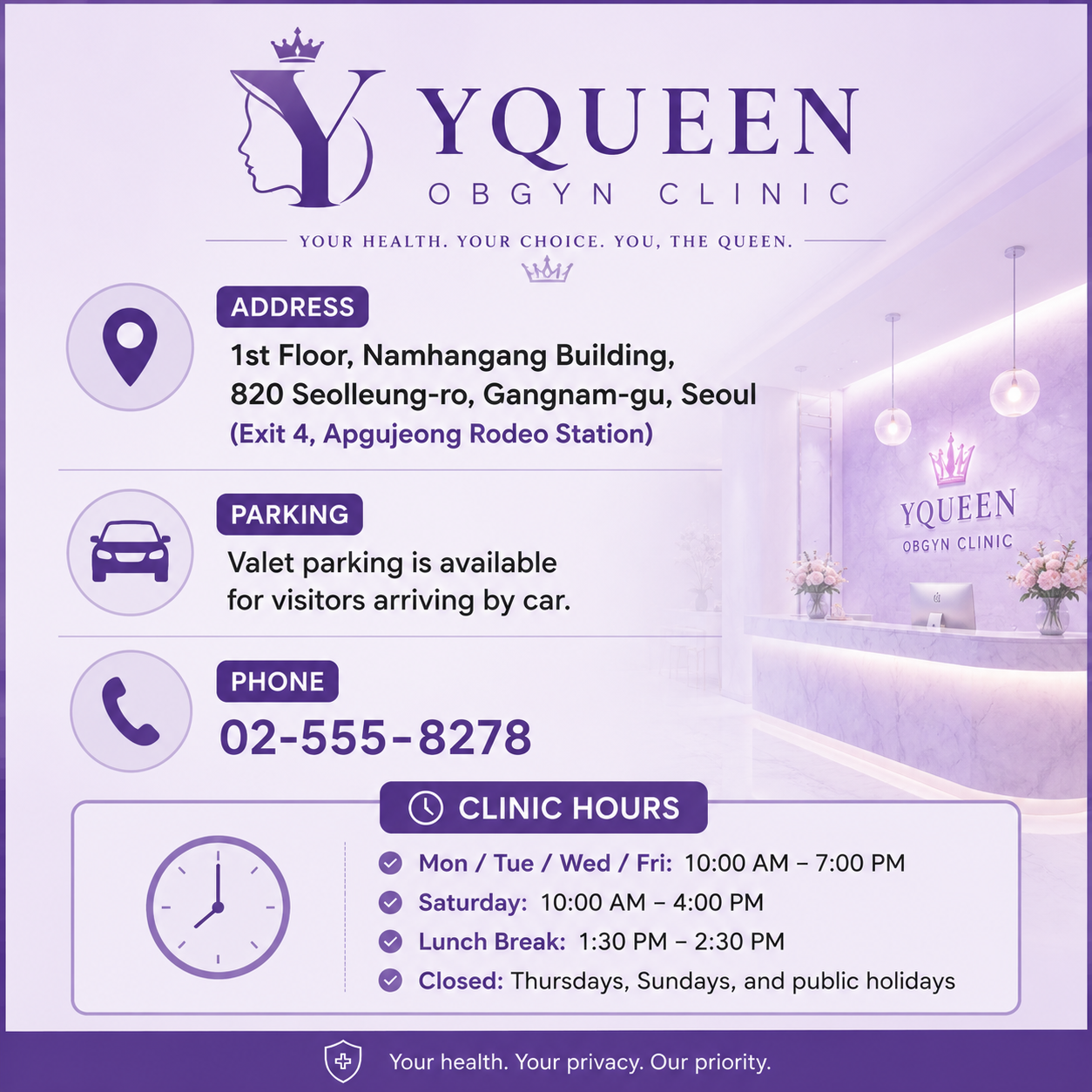
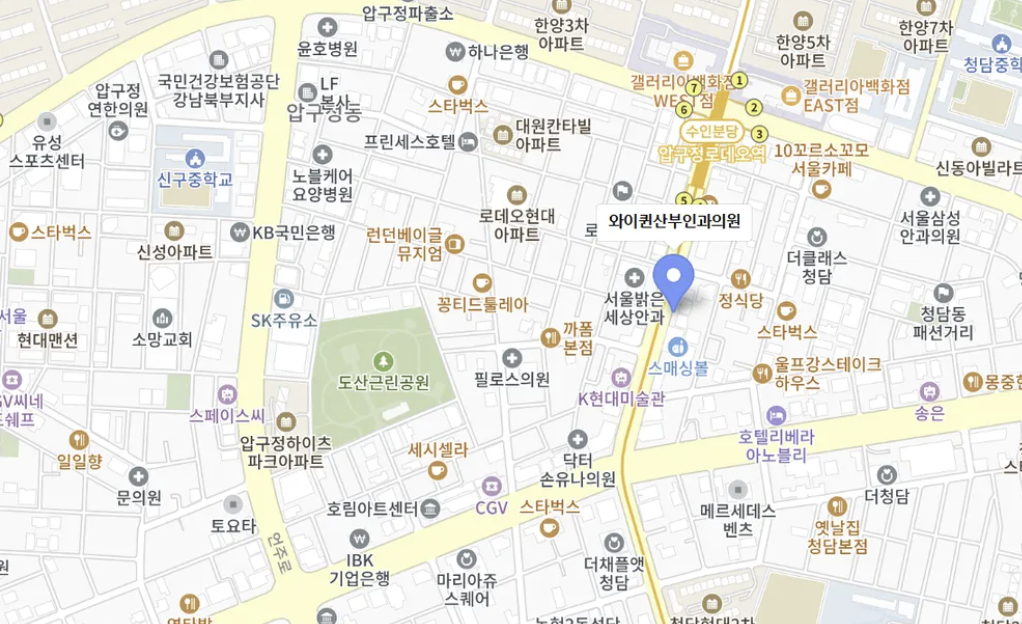
Y Queen Women's Clinic is located in Gangnam, Seoul, with convenient access near Apgujeong Rodeo Station.
The clinic is convenient for international patients living, working, studying, or staying in Gangnam, Cheongdam, Apgujeong, Sinsa, Itaewon, Myeongdong, and other central Seoul neighborhoods.
Frequently Asked Questions
What are uterine fibroids?
Uterine fibroids are benign growths made of uterine muscle and connective tissue.
Are uterine fibroids cancer?
Most fibroids are benign and are not uterine cancer.
What symptoms do fibroids cause?
Common symptoms include heavy periods, pelvic pressure, painful menstruation, frequent urination, constipation, abdominal fullness, pain during intercourse, and anemia.
Can foreigners get fibroid treatment in Seoul?
Yes. Y Queen Women's Clinic provides English-speaking evaluation for international patients with fibroid-related bleeding, pain, pressure, and fertility concerns.
How are fibroids diagnosed?
Pelvic ultrasound is commonly used to identify fibroid size, number, and location. MRI or hysteroscopy may be recommended in selected cases.
Do all fibroids need treatment?
No. Fibroids that cause no significant symptoms can often be monitored.
Can medication shrink fibroids?
Some hormone-based medications can temporarily reduce fibroid size or symptoms, but many medical treatments primarily control bleeding and pain rather than permanently eliminating fibroids.
Can birth control help fibroid bleeding?
Hormonal birth control may reduce heavy menstrual bleeding in selected patients.
Can an IUD help with fibroids?
A hormonal IUD may reduce heavy bleeding when the uterine cavity is not significantly distorted by fibroids.
What is a myomectomy?
Myomectomy is surgery that removes fibroids while preserving the uterus.
Can fibroids be removed without hysterectomy?
Yes. Myomectomy and other treatments can preserve the uterus.
What is uterine fibroid embolization?
Uterine fibroid embolization is a minimally invasive procedure that blocks blood flow to fibroids so they shrink.
Do fibroids affect fertility?
Some fibroids can affect fertility, especially when they distort the uterine cavity. Many women with fibroids still conceive naturally.
Can fibroids cause miscarriage?
Certain cavity-distorting fibroids may increase miscarriage risk, but miscarriage has many other possible causes.
Can I get pregnant after myomectomy?
Many women become pregnant after myomectomy, although timing and delivery planning depend on the extent and location of uterine surgery.
Do fibroids grow during pregnancy?
Some fibroids can enlarge during pregnancy, although growth patterns vary.
Do fibroids shrink after menopause?
They often shrink after menopause as hormone levels decline.
Can fibroids come back after myomectomy?
Yes. New fibroids may develop or other small fibroids may grow after myomectomy.
When is hysterectomy used for fibroids?
Hysterectomy may be considered for severe symptoms when future pregnancy is not desired and the patient prefers definitive treatment.
Does Y Queen Women's Clinic treat uterine fibroids?
Y Queen Women's Clinic can provide confidential evaluation for uterine fibroids, including pelvic ultrasound, assessment of heavy menstrual bleeding and anemia, pain evaluation, hormonal treatment planning, fertility counseling, and discussion of procedural or surgical options. Patients who require myomectomy, uterine fibroid embolization, or other hospital-based treatment can be referred to an appropriate specialist or medical center.