Urinary Incontinence Treatment in Seoul Gangnam Y Queen Women's Clinic
Y Queen Women's Clinic provides English-speaking urinary incontinence evaluation and treatment planning in Gangnam, Seoul for local and international patients. Urinary incontinence is involuntary urine leakage and may occur as stress incontinence during coughing or exercise, urgency incontinence associated with overactive bladder, or a combination of both. Pregnancy, childbirth, pelvic floor weakness, menopause, prolapse, medical conditions, and other factors can contribute. Treatment may include pelvic floor exercises, pelvic floor physical therapy, bladder training, lifestyle changes, medication for selected urgency symptoms, pessary support, or specialist procedures and surgery for persistent stress incontinence. Because vaginal laxity, urinary leakage, UTI symptoms, and pelvic organ prolapse can overlap, accurate assessment is important before treatment. Y Queen Women's Clinic offers confidential, foreigner-friendly women's healthcare focused on pelvic floor function, bladder symptoms, postpartum recovery, menopause-related changes, and individualized treatment planning.
What Is Urinary Incontinence?
Urinary incontinence means losing urine unintentionally.
It may range from:
- A few drops during coughing
- Leakage during exercise
- Sudden urgency with loss of urine
- Frequent small leaks
- More significant bladder-control problems
The condition can affect exercise, work, travel, sleep, sexual activity, and everyday confidence.
Treatment depends on the type and severity of incontinence.
What Are the Main Types of Urinary Incontinence?
The most common types include:
- Stress urinary incontinence
- Urgency urinary incontinence
- Mixed urinary incontinence
- Overflow incontinence
- Functional incontinence
Women may have more than one type at the same time.
Stress Urinary Incontinence
Stress urinary incontinence occurs when physical pressure on the bladder causes urine leakage.
Common triggers include:
- Coughing
- Sneezing
- Laughing
- Running
- Jumping
- Exercising
- Heavy lifting
- Sudden movement
The word "stress" refers to physical pressure, not emotional stress.
What Causes Stress Urinary Incontinence?
Stress incontinence may be associated with weakness or reduced support of the pelvic floor and urethra.
Contributing factors may include:
- Pregnancy
- Vaginal childbirth
- Pelvic floor injury
- Aging
- Menopause
- Pelvic surgery
- Connective tissue changes
- Increased abdominal pressure
The severity varies between patients.
Urgency Urinary Incontinence
Urgency urinary incontinence occurs when a sudden, strong urge to urinate is followed by involuntary leakage.
Patients may describe:
- "I cannot make it to the bathroom"
- Sudden uncontrollable urgency
- Frequent daytime urination
- Waking at night to urinate
- Leakage before reaching the toilet
Urgency symptoms may occur as part of overactive bladder.
What Is Overactive Bladder?
Overactive bladder is a group of symptoms that may include:
- Sudden urinary urgency
- Frequent urination
- Nighttime urination
- Urgency leakage
Overactive bladder is not always caused by infection.
Evaluation may be needed to exclude:
- UTI
- Bladder irritation
- Medication effects
- Diabetes
- Neurological conditions
- Other urinary disorders
Mixed Urinary Incontinence
Mixed urinary incontinence means a patient has symptoms of both:
- Stress urinary incontinence
- Urgency urinary incontinence
For example, a woman may leak when coughing and also experience sudden urgency with leakage.
Treatment may need to address both components.
Overflow Incontinence
Overflow incontinence occurs when the bladder does not empty properly and becomes overly full.
Symptoms may include:
- Frequent small leaks
- Weak urinary stream
- Difficulty starting urination
- Feeling that the bladder is not empty
- Dribbling
This type requires medical evaluation because the underlying cause may involve bladder function, medication effects, obstruction, or neurological conditions.
Urinary Incontinence After Childbirth
Pregnancy and childbirth can affect:
- Pelvic floor muscles
- Supporting connective tissues
- Nerves
- Urethral support
- Perineal tissues
Postpartum symptoms may include:
- Leakage while coughing
- Leakage while exercising
- Reduced pelvic support
- Urinary urgency
- Pelvic pressure
Some symptoms improve naturally during postpartum recovery, while persistent problems may benefit from pelvic floor rehabilitation or additional treatment.
Urinary Incontinence During Menopause
Menopause can contribute to urinary and vaginal symptoms because estrogen levels decrease.
Patients may experience:
- Urinary urgency
- Frequent urination
- Recurrent UTIs
- Vaginal dryness
- Burning
- Changes in urethral and vaginal tissues
These symptoms may occur as part of genitourinary syndrome of menopause.
Treatment should consider both bladder symptoms and hormonal changes when relevant.
Urinary Leakage During Exercise
Exercise-related leakage is often associated with stress urinary incontinence.
Common triggers include:
- Running
- Jumping
- CrossFit
- Weightlifting
- High-impact aerobics
- Tennis
- Other activities that increase abdominal pressure
Pelvic floor assessment can help determine whether weakness, poor coordination, or another issue is contributing.
Urinary Leakage When Coughing or Sneezing
Leakage during coughing or sneezing is a classic symptom of stress urinary incontinence.
A small amount of leakage does not necessarily indicate severe disease, but recurrent symptoms may benefit from treatment.
Pelvic floor rehabilitation is often an important first-line approach.
Urinary Leakage During Sex
Some women experience urine leakage during sexual activity.
This may occur:
- During penetration
- With increased abdominal pressure
- Around orgasm
- In association with urgency symptoms
Because the cause can vary, evaluation may help distinguish stress incontinence, urgency-related leakage, or another pelvic floor problem.
What Causes Urinary Incontinence in Women?
Possible contributing factors include:
- Pregnancy
- Vaginal childbirth
- Pelvic floor weakness
- Menopause
- Aging
- Obesity
- Chronic coughing
- Constipation
- Pelvic surgery
- Neurological conditions
- Certain medications
- Diabetes
- Pelvic organ prolapse
- Urinary tract infection
Treatment depends on identifying which factors are relevant.
Is Urinary Incontinence Normal After Having a Baby?
Urinary leakage is common after childbirth, especially during the early postpartum period.
However, persistent leakage should not automatically be considered normal or untreatable.
Pelvic floor recovery can continue for months, and some patients benefit from:
- Pelvic floor exercises
- Pelvic floor physical therapy
- Lifestyle adjustments
- Additional treatment when symptoms persist
Is Urinary Incontinence a Normal Part of Aging?
Urinary leakage becomes more common with age, but it is not something every woman must simply accept.
Many causes are treatable.
Evaluation can identify whether symptoms are related to:
- Pelvic floor support
- Overactive bladder
- Menopause
- Prolapse
- UTI
- Medication effects
- Other medical conditions
How Is Urinary Incontinence Evaluated?
Evaluation may include:
- Medical history
- Pregnancy and childbirth history
- Menstrual and menopause history
- Description of leakage triggers
- Urinary frequency and urgency
- Pelvic examination
- Pelvic floor assessment
- Urine testing
- Evaluation for prolapse
- Bladder diary
- Additional testing when necessary
The exact evaluation depends on symptoms.
What Is a Bladder Diary?
A bladder diary is a record of:
- How much you drink
- When you urinate
- Urgency episodes
- Leakage episodes
- Activities associated with leakage
- Nighttime urination
It can help your doctor understand urinary patterns and identify the type of incontinence.
Do I Need a Urine Test?
Urine testing may be recommended to exclude conditions such as:
- Urinary tract infection
- Blood in the urine
- Other urinary abnormalities
This is particularly important when urgency, frequency, burning, or pelvic discomfort is present.
Do I Need an Ultrasound?
Ultrasound is not required for every patient with urinary incontinence.
It may be considered when there are concerns about:
- Pelvic anatomy
- Uterine or ovarian conditions
- Pelvic organ prolapse
- Bladder emptying
- Other gynecological symptoms
Additional urinary tract testing may be recommended for more complex cases.
What Is Urodynamic Testing?
Urodynamic testing measures how the bladder and urethra store and release urine.
It is not necessary for every uncomplicated case.
It may be considered when:
- The diagnosis is unclear
- Symptoms are complex
- Previous treatment has failed
- Surgery is being considered in selected patients
- Neurological bladder dysfunction is suspected
Specialist referral may be required.
Urinary Incontinence Treatment in Seoul
Treatment depends on the type and severity of incontinence.
Options may include:
- Pelvic floor exercises
- Pelvic floor physical therapy
- Bladder training
- Lifestyle modifications
- Medication for selected urgency symptoms
- Pessary or support devices in selected patients
- Menopause-related treatment when appropriate
- Procedures for stress incontinence
- Surgery in selected cases
Not every patient needs surgery.
Pelvic Floor Exercises
Pelvic floor exercises, often called Kegel exercises, strengthen muscles that support the bladder, uterus, vagina, and rectum.
They may help selected patients with stress urinary incontinence.
Correct technique is important.
Some patients have poor muscle coordination or overly tense pelvic floor muscles rather than simple weakness, so assessment can improve the effectiveness of treatment.
How Do I Do Kegel Exercises?
A basic pelvic floor contraction involves gently tightening the muscles used to stop urine or prevent passing gas.
However, repeatedly stopping urine flow during urination is not recommended as a regular exercise.
A pelvic floor specialist can help identify the correct muscles and develop an appropriate exercise program.
Pelvic Floor Physical Therapy
Pelvic floor physical therapy provides individualized treatment for pelvic floor dysfunction.
It may include:
- Muscle strengthening
- Coordination training
- Relaxation techniques
- Biofeedback
- Breathing techniques
- Scar management
- Bladder training
- Postpartum rehabilitation
It can be useful for both stress incontinence and selected urgency symptoms.
Bladder Training
Bladder training may be helpful for urgency and overactive bladder symptoms.
The goal is to gradually improve bladder control by using scheduled urination and techniques to manage urgency.
Treatment may include:
- Timed bathroom visits
- Gradually increasing intervals between urination
- Urgency suppression strategies
- Tracking symptoms in a bladder diary
Lifestyle Changes for Urinary Incontinence
Depending on the patient, helpful changes may include:
- Avoiding excessive caffeine
- Managing constipation
- Maintaining a healthy weight
- Treating chronic cough
- Avoiding excessive fluid restriction
- Timing fluids appropriately
- Pelvic floor rehabilitation
Lifestyle changes should support, rather than replace, appropriate medical treatment.
Does Caffeine Make Urinary Incontinence Worse?
Caffeine may worsen urgency and frequency in some patients.
Possible sources include:
- Coffee
- Tea
- Energy drinks
- Cola
- Some medications
A temporary reduction may help determine whether caffeine contributes to symptoms.
Does Weight Loss Help Urinary Incontinence?
For patients with overweight or obesity, weight reduction may improve stress urinary incontinence by reducing chronic pressure on the pelvic floor and bladder.
However, not every patient with urinary leakage needs weight loss, and other causes should still be addressed.
Medication for Urgency Incontinence
Medication may be considered for overactive bladder or urgency urinary incontinence when behavioral treatment alone is not sufficient.
Depending on the patient's health and medication availability, treatment may include medicines that affect bladder muscle activity.
Medication selection depends on:
- Age
- Blood pressure
- Other medications
- Glaucoma history
- Constipation
- Cognitive concerns
- Other medical conditions
Your physician can discuss appropriate options.
Does Medication Treat Stress Incontinence?
Stress urinary incontinence is generally not treated in the same way as urgency incontinence.
Stress leakage is more often addressed through:
- Pelvic floor rehabilitation
- Mechanical support in selected cases
- Procedures
- Surgery when appropriate
Correctly identifying the type of incontinence is therefore important.
Menopause Treatment and Urinary Symptoms
For selected postmenopausal patients, local vaginal hormonal treatment may help symptoms associated with genitourinary syndrome of menopause, including:
- Vaginal dryness
- Urinary irritation
- Recurrent urinary symptoms
It is not a universal treatment for all forms of urinary incontinence.
Suitability should be assessed individually.
Pessary for Urinary Incontinence
A pessary is a device placed inside the vagina.
Selected types may help support the urethra or pelvic organs and reduce stress leakage in some women.
Pessaries may also be used for pelvic organ prolapse.
Proper fitting and follow-up are important.
Procedures for Stress Urinary Incontinence
When conservative treatment does not provide enough improvement, procedures may be considered.
Options can include:
- Urethral bulking injections
- Midurethral sling surgery
- Other continence procedures
The appropriate approach depends on symptoms, anatomy, reproductive plans, previous surgery, and specialist evaluation.
What Are Urethral Bulking Injections?
Urethral bulking involves injecting material around the urethra to improve closure and reduce stress leakage.
It may be considered for selected patients.
Potential advantages include:
- Less invasive treatment
- Shorter recovery than some surgeries
However, results may be less durable than some surgical options and repeat treatment may be necessary.
What Is a Midurethral Sling?
A midurethral sling is a surgical treatment for stress urinary incontinence.
The sling supports the urethra to reduce leakage during coughing, sneezing, and physical activity.
Surgical suitability depends on individual anatomy, symptoms, medical history, and reproductive plans.
Patients should receive detailed counseling about benefits, risks, and alternatives.
Does Urinary Incontinence Require Surgery?
No.
Many patients improve with:
- Pelvic floor rehabilitation
- Bladder training
- Lifestyle changes
- Medication for urgency symptoms
- Other conservative treatment
Surgery is generally reserved for selected patients, particularly those with persistent stress incontinence that significantly affects quality of life.
HIFU and Urinary Incontinence
Some vaginal HIFU treatments are marketed for mild stress urinary incontinence.
However, energy-based vaginal treatment should not replace an appropriate evaluation.
Patients with significant leakage, prolapse, or mixed symptoms may need established pelvic floor, urinary, or surgical treatments instead.
Radiofrequency and Urinary Incontinence
Radiofrequency vaginal procedures are also marketed for selected urinary symptoms.
Evidence, devices, protocols, and outcomes vary.
Patients should discuss:
- The exact device
- Intended indication
- Available evidence
- Alternatives
- Potential risks
before treatment.
Urinary Incontinence and Vaginal Tightening
A feeling of vaginal laxity and urinary leakage may occur together after childbirth, but they are not the same condition.
Vaginal tightening procedures do not automatically correct:
- Stress urinary incontinence
- Overactive bladder
- Pelvic organ prolapse
A pelvic floor and urinary evaluation is needed to identify the actual cause.
Urinary Incontinence and Pelvic Organ Prolapse
Pelvic organ prolapse can sometimes occur together with urinary symptoms.
Possible signs include:
- Vaginal bulging
- Pelvic heaviness
- Difficulty emptying the bladder
- Urinary leakage
- Urgency
Treatment may include:
- Pelvic floor therapy
- Pessary
- Specialized reconstructive surgery
depending on severity.
Can Urinary Incontinence Affect Sexual Health?
Yes.
Urinary leakage can contribute to:
- Anxiety during intercourse
- Reduced sexual confidence
- Avoidance of sexual activity
- Leakage during penetration or orgasm
Treatment can focus on the urinary condition while also addressing pelvic floor and sexual comfort concerns.
Can Urinary Incontinence Be Cured?
Some patients achieve complete resolution, while others experience substantial improvement rather than complete elimination of symptoms.
Outcome depends on:
- Type of incontinence
- Severity
- Pelvic floor function
- Age
- Childbirth history
- Prolapse
- Treatment selected
- Other medical conditions
A realistic treatment plan should be individualized.
How Long Does Pelvic Floor Treatment Take to Work?
Improvement is usually gradual rather than immediate.
Pelvic floor rehabilitation may require consistent exercises over weeks or months.
The timeline varies depending on:
- Severity
- Correct technique
- Muscle function
- Adherence
- Other pelvic conditions
When Should I See a Doctor?
Consider evaluation if urinary leakage:
- Happens regularly
- Affects exercise
- Interferes with work
- Causes embarrassment or distress
- Occurs with urgency
- Started after childbirth and persists
- Is associated with vaginal bulging
- Is accompanied by recurrent UTIs
- Occurs with difficulty emptying the bladder
Even mild symptoms can be discussed if they bother you.
When Should I Seek Prompt Medical Attention?
Seek prompt evaluation if urinary symptoms occur with:
- Fever
- Severe pelvic or back pain
- Blood in the urine
- Inability to urinate
- New neurological symptoms
- Sudden severe bladder-control loss
- Pregnancy with significant urinary symptoms
These may indicate another medical problem requiring urgent assessment.
How Should I Prepare for an Appointment?
Before your visit, consider noting:
- When leakage occurs
- How often it happens
- Approximate amount of urine lost
- Whether urgency is present
- How often you urinate
- Nighttime urination
- Pregnancy and childbirth history
- Previous pelvic surgery
- Menopause status
- Current medications
- Caffeine intake
- Any pelvic pressure or bulging
A short bladder diary can be especially helpful.
Urinary Incontinence Treatment Cost in Seoul
At Y Queen Women's Clinic:
- Consultation fees depend on the evaluation required.
- Urine testing may involve an additional fee.
- Pelvic examination or ultrasound may have separate costs when indicated.
- Pelvic floor treatment, medications, or procedures have different fees.
- Specialist testing such as urodynamics or surgery may require referral to an appropriate center.
Exact costs can be discussed after evaluation.
Why Choose Y Queen Women's Clinic?
International patients choose Y Queen because of its:
- English-speaking medical support
- Female-focused urinary and gynecological care
- Stress urinary incontinence evaluation
- Overactive bladder assessment
- Postpartum pelvic floor evaluation
- Menopause-related urinary care
- Pelvic floor assessment
- Urine testing when indicated
- Evaluation for pelvic organ prolapse
- Personalized conservative treatment planning
- Discussion of procedural and surgical options
- Comfortable, private consultation environment
- Convenient Gangnam location
- Foreigner-friendly appointment process
- Follow-up women's healthcare
Our approach focuses on identifying the type of urinary incontinence and choosing treatment according to symptoms, pelvic anatomy, reproductive plans, and quality-of-life goals.
Convenient Location in Gangnam
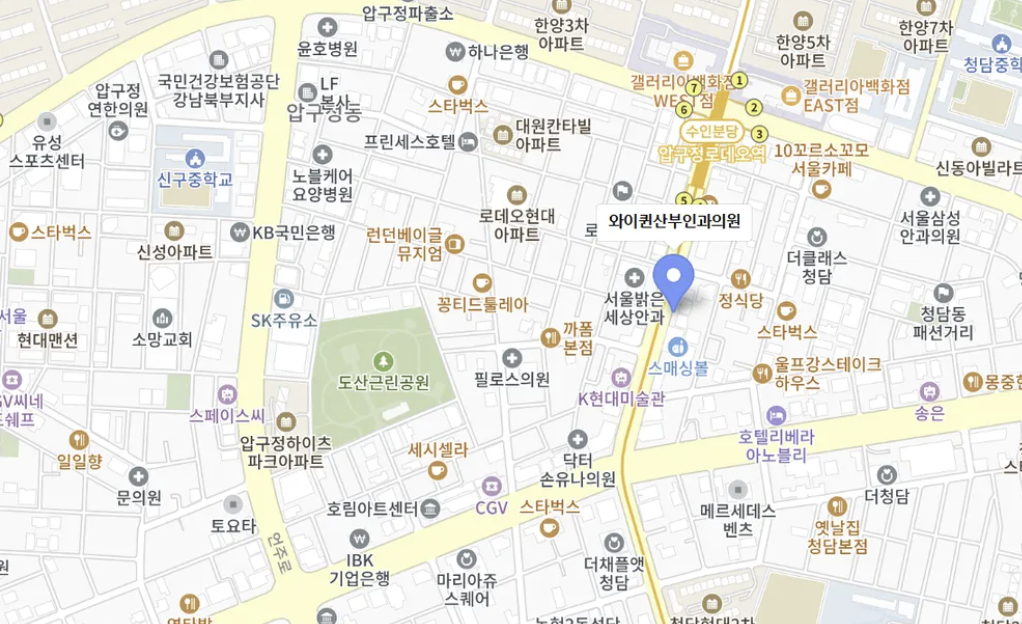
Y Queen Women's Clinic is located in Gangnam, Seoul, with convenient access near Apgujeong Rodeo Station.
The clinic is convenient for international patients living, working, studying, or staying in Gangnam, Cheongdam, Apgujeong, Sinsa, Itaewon, Myeongdong, and other central Seoul neighborhoods.
Frequently Asked Questions
What is urinary incontinence?
Urinary incontinence is involuntary urine leakage. It may occur with coughing or exercise, with sudden urgency, or because of another bladder or pelvic floor condition.
What is stress urinary incontinence?
Stress urinary incontinence is leakage caused by increased abdominal pressure during coughing, sneezing, laughing, running, jumping, or lifting.
What is urgency urinary incontinence?
Urgency incontinence is leakage associated with a sudden strong need to urinate that is difficult to control.
What is mixed urinary incontinence?
Mixed incontinence means having both stress-related leakage and urgency-related leakage.
Can foreigners get urinary incontinence treatment in Seoul?
Yes. Y Queen Women's Clinic provides English-speaking evaluation for international patients with urinary leakage, urgency, postpartum pelvic floor symptoms, and related women's health concerns.
Is urinary leakage normal after childbirth?
It is common, but persistent leakage is treatable and should not automatically be accepted as permanent.
Can menopause cause urinary incontinence?
Menopause-related hormonal changes can contribute to urinary urgency, recurrent urinary symptoms, and tissue changes, although other causes of incontinence may also be present.
Do Kegel exercises help urinary incontinence?
They can help selected patients, particularly those with stress urinary incontinence. Correct technique and consistent practice are important.
Can pelvic floor physical therapy help?
Yes. Pelvic floor therapy can address muscle strength, coordination, relaxation, postpartum changes, and selected bladder symptoms.
Can medication treat urinary incontinence?
Medication may help urgency or overactive bladder symptoms. Stress urinary incontinence usually requires a different treatment approach.
Does urinary incontinence require surgery?
No. Many patients improve with conservative treatment. Surgery is considered mainly for selected persistent cases, particularly stress urinary incontinence.
What is a sling procedure?
A midurethral sling is a surgical treatment that supports the urethra and can reduce stress urinary leakage.
Can HIFU treat urinary incontinence?
Some HIFU treatments are marketed for mild stress leakage, but evidence and protocols vary. A proper urinary and pelvic floor evaluation should come first.
Does vaginal tightening cure urinary incontinence?
No. Vaginal laxity and urinary leakage are different conditions, and tightening procedures do not automatically correct bladder-control problems.
Can urinary incontinence be completely cured?
Some patients achieve complete resolution, while others experience substantial improvement. Results depend on the type and severity of incontinence and treatment selected.
Should I see a doctor for only a few drops of leakage?
Yes, if the leakage bothers you or limits activity. Even mild symptoms can be assessed and treated.
Does Y Queen Women's Clinic treat urinary incontinence?
Y Queen Women's Clinic can provide confidential evaluation for stress urinary incontinence, urgency, overactive bladder symptoms, postpartum pelvic floor concerns, and menopause-related urinary changes. Treatment planning may include pelvic floor rehabilitation, bladder training, medication when appropriate, and referral for specialized procedures or surgery when required.