Ovarian Cyst Treatment in Seoul
Gangnam Y Queen Women's Clinic
Y Queen Women's Clinic provides English-speaking diagnosis and treatment for ovarian cysts in Gangnam, Seoul. Our OB-GYN specialists evaluate ovarian cysts using pelvic ultrasound, physical examination, pregnancy testing, and laboratory studies when appropriate. We provide personalized management for functional ovarian cysts, endometriomas, hemorrhagic cysts, dermoid cysts, and other benign ovarian masses through observation, medication, follow-up imaging, or referral for surgical care when necessary. The clinic offers compassionate, foreigner-friendly women's healthcare for both local and international patients.
Ovarian Cyst Treatment in Seoul at Gangnam Y Queen Women's Clinic
Ovarian cysts are common fluid-filled sacs that develop on or inside the ovaries. Many ovarian cysts are harmless and disappear naturally, while others may cause pelvic pain, irregular periods, bloating, or complications that require medical treatment. Early evaluation helps determine whether a cyst requires monitoring, medication, or further intervention.
At Y Queen Women's Clinic in Gangnam, Seoul, we provide comprehensive diagnosis and personalized treatment for ovarian cysts. Our English-speaking women's health team welcomes Korean residents, expats, international students, business travelers, and medical tourists seeking professional gynecological care in Korea.
Using advanced pelvic ultrasound and individualized treatment plans, we help patients understand their condition and receive appropriate care based on the type, size, and symptoms of the ovarian cyst.
What Is an Ovarian Cyst?
An ovarian cyst is a fluid-filled sac that develops on or within an ovary. Most ovarian cysts are benign (non-cancerous) and occur naturally during the menstrual cycle.
Common types include:
- Functional ovarian cysts
- Follicular cysts
- Corpus luteum cysts
- Endometriomas
- Dermoid cysts
- Cystadenomas
- Hemorrhagic cysts
While many cysts resolve without treatment, some require medical evaluation and ongoing monitoring.
Symptoms of Ovarian Cysts
Many ovarian cysts do not cause symptoms. When symptoms occur, they may include:
- Pelvic pain
- Lower abdominal pain
- Bloating
- Pelvic pressure
- Pain during sexual intercourse
- Pain during menstruation
- Irregular menstrual periods
- Frequent urination
- Difficulty emptying the bladder completely
- Sudden severe pelvic pain if a cyst ruptures or twists
Any sudden or severe pelvic pain should be evaluated promptly.
Who Should Seek Evaluation?
You should visit a gynecologist if you experience:
- Persistent pelvic pain
- Recurrent ovarian cysts
- Irregular menstrual cycles
- Abdominal bloating
- Pain during intercourse
- A pelvic mass found during a health examination
- Symptoms after menopause
- Family history of ovarian disease
- Sudden severe pelvic pain
Early evaluation helps identify whether the cyst is benign and determine the most appropriate treatment.
What Causes Ovarian Cysts?
Ovarian cysts may develop due to:
- Normal ovulation
- Hormonal changes
- Endometriosis
- Pregnancy
- Polycystic ovary syndrome (PCOS)
- Previous ovarian cysts
- Pelvic infections
Most ovarian cysts are not related to ovarian cancer, especially in younger women.
What Happens During Your Visit?
Your appointment may include:
- Medical history review
- Symptom assessment
- Pelvic examination
- Pelvic ultrasound
- Pregnancy testing if appropriate
- Blood tests when indicated
- Discussion of ultrasound findings
- Personalized treatment recommendations
- Follow-up planning if monitoring is needed
Your doctor will explain whether the cyst appears functional, benign, or requires additional evaluation.
Treatment Options
Treatment depends on your age, symptoms, cyst size, and ultrasound findings.
Options may include:
- Observation with follow-up ultrasound
- Pain management
- Hormonal therapy
- Birth control pills to reduce future functional cyst formation
- Surgical referral when necessary
- Emergency treatment for ovarian torsion or cyst rupture
Many functional ovarian cysts resolve naturally over several weeks or months.
How Should I Prepare?
Before your appointment:
- Record your symptoms and when they occur
- Track your menstrual cycle
- Bring previous ultrasound reports if available
- List any medications you are taking
- Prepare questions about fertility or future pregnancy if applicable
This information helps guide your evaluation and treatment plan.
Ovarian Cyst Diagnosis
Your doctor may recommend one or more diagnostic tests.
Pelvic Ultrasound
The primary imaging test used to evaluate the size, location, and characteristics of an ovarian cyst.
Pelvic Examination
Assesses for tenderness, enlargement, or other abnormalities.
Pregnancy Test
Recommended when appropriate to rule out pregnancy-related conditions.
Blood Tests
May be recommended depending on your age, symptoms, or ultrasound findings.
Additional Imaging or Referral
Further evaluation may be recommended if a complex ovarian cyst or another condition is suspected.
Ovarian Cyst Treatment Cost in Seoul
At Y Queen Women's Clinic:
- Consultation fees vary depending on the evaluation required.
- Additional costs depend on pelvic ultrasound, laboratory testing, or follow-up imaging.
- Treatment recommendations and estimated costs will be explained during your consultation.
Why Choose Y Queen Women's Clinic?
International patients choose Y Queen because of its:
- English-speaking medical support
- Female-focused healthcare
- Pelvic ultrasound available onsite
- Comprehensive ovarian cyst evaluation
- Personalized treatment plans
- Modern diagnostic equipment
- Comfortable, private consultation rooms
- Convenient Gangnam location
- Foreigner-friendly appointment process
- Comprehensive women's health services
We provide individualized care to help patients manage ovarian cysts safely and effectively.
Convenient Location in Gangnam
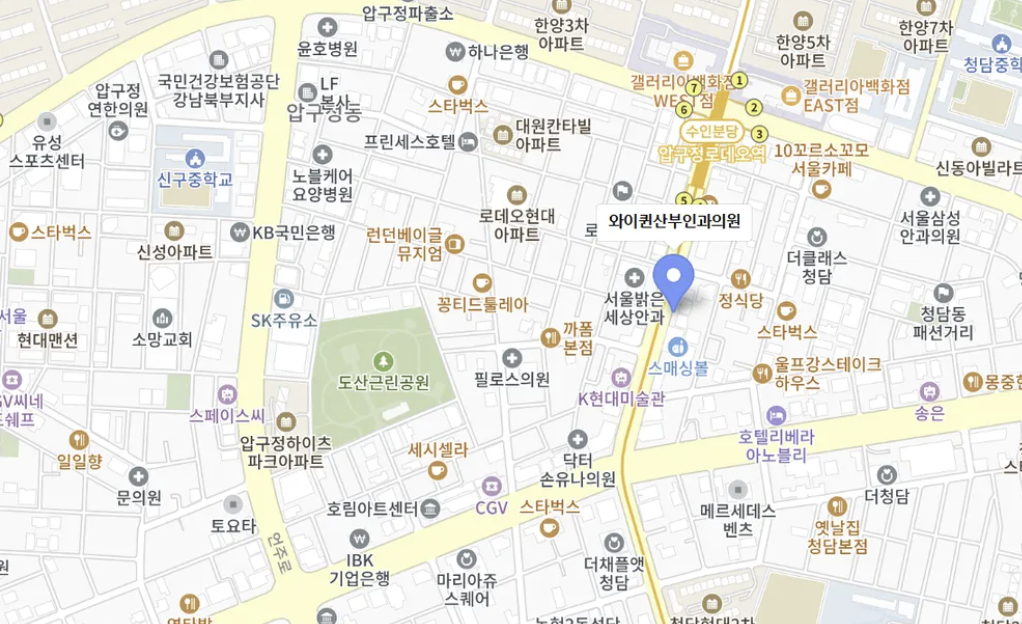
Y Queen Women's Clinic is located in Gangnam, Seoul, with convenient access near Apgujeong Rodeo Station, making it easy for international visitors staying in Gangnam, Cheongdam, Sinsa, Itaewon, Myeongdong, or other central Seoul neighborhoods to visit.
Frequently Asked Questions
What is an ovarian cyst?
An ovarian cyst is a fluid-filled sac that develops on or inside an ovary. Most ovarian cysts are benign and resolve without treatment.
Do all ovarian cysts require treatment?
No. Many functional ovarian cysts disappear naturally and only require monitoring with follow-up ultrasound.
Can ovarian cysts cause pelvic pain?
Yes. Ovarian cysts may cause pelvic pain, bloating, menstrual changes, or pain during intercourse, particularly if they become large or rupture.
Can foreigners receive treatment in Seoul?
Yes. Y Queen Women's Clinic welcomes international patients and provides English-speaking assistance.
Will I need an ultrasound?
Yes. Pelvic ultrasound is the primary diagnostic tool for evaluating ovarian cysts and determining the most appropriate management.
Can ovarian cysts affect fertility?
Some ovarian cysts, particularly those associated with endometriosis or PCOS, may affect fertility. Your doctor will discuss any concerns based on your diagnosis.
How long does the appointment take?
Most consultations are completed within 30–60 minutes, depending on whether additional examinations or imaging are required.
When should I seek emergency care?
Seek immediate medical attention if you experience sudden severe pelvic pain, severe abdominal pain, fainting, dizziness, fever, or heavy bleeding, as these symptoms may indicate ovarian torsion or a ruptured cyst.