Pelvic Exam in Seoul
Gangnam Y Queen Women's Clinic
Y Queen Women's Clinic provides English-speaking pelvic examinations in Gangnam, Seoul for both local and international patients. Pelvic exams are used to evaluate the vulva, vagina, cervix, uterus, ovaries, and surrounding pelvic organs for routine preventive care and the diagnosis of conditions such as pelvic pain, abnormal uterine bleeding, vaginal infections, ovarian cysts, uterine fibroids, and sexually transmitted infections. The clinic also offers Pap smears, HPV testing, pelvic ultrasound, STD screening, and comprehensive women's healthcare in a comfortable, private, and foreigner-friendly environment.
Pelvic Exam in Seoul at
Gangnam Y Queen Women's Clinic
A pelvic exam is a routine gynecological examination that helps evaluate the health of the female reproductive organs. It is an important part of preventive women's healthcare and is also used to diagnose symptoms such as pelvic pain, abnormal bleeding, vaginal discharge, menstrual irregularities, and other gynecological concerns. At Y Queen Women's Clinic in Gangnam, Seoul, we provide gentle, confidential pelvic examinations in a comfortable and private environment. Our English-speaking women's health team welcomes Korean residents, expats, international students, business travelers, and medical tourists seeking professional gynecological care in Korea. Whether you are visiting for a routine checkup or specific symptoms, our experienced OB-GYN specialists provide personalized, compassionate care using modern diagnostic techniques.
What Is a Pelvic Exam?
A pelvic exam is a physical examination of the female reproductive organs to assess overall gynecological health and identify possible abnormalities.
The examination may evaluate:
- Vulva
- Vagina
- Cervix
- Uterus
- Ovaries
- Surrounding pelvic structures
A pelvic exam is often combined with other tests, such as a Pap smear, HPV test, pelvic ultrasound, or laboratory testing, depending on your symptoms and medical history.
Why Might I Need a Pelvic Exam?
A pelvic examination may be recommended for:
- Routine women's health checkups
- Annual gynecological examinations
- Pelvic pain
- Abnormal uterine bleeding
- Irregular menstrual periods
- Vaginal discharge
- Vaginal itching or irritation
- Pain during sexual intercourse
- Pregnancy planning
- Contraception consultation
- Menopause evaluation
- Follow-up after abnormal test results
Regular pelvic examinations help detect many gynecological conditions early.
What Happens During a Pelvic Exam?
Your appointment typically includes:
- Medical history review
- Discussion of symptoms and menstrual history
- External examination of the genital area
- Speculum examination to evaluate the vagina and cervix
- Bimanual examination to assess the uterus and ovaries
- Additional testing if recommended
- Explanation of findings and treatment recommendations
The examination is performed respectfully and privately, with your comfort as a priority.
What Can a Pelvic Exam Detect?
A pelvic examination may help identify:
- Vaginal infections
- Cervical abnormalities
- Pelvic inflammatory disease (PID)
- Ovarian cysts
- Uterine fibroids
- Endometriosis
- Adenomyosis (with further evaluation)
- Pelvic masses
- Vaginal or cervical lesions
- Signs of sexually transmitted infections (STIs)
Some conditions may require additional imaging or laboratory testing for confirmation.
Who Should Get a Pelvic Exam?
A pelvic examination may be appropriate for:
- Women with gynecological symptoms
- Women experiencing pelvic pain
- Women with abnormal vaginal bleeding
- Women with vaginal discharge or odor
- Women planning pregnancy
- Women requiring contraception counseling
- Women undergoing cervical cancer screening
- Women seeking routine preventive healthcare
Your doctor will recommend the appropriate examination based on your age, symptoms, and medical history.
Does a Pelvic Exam Hurt?
Most women describe a pelvic examination as:
- Mildly uncomfortable
- Quick
- Well tolerated
- Less uncomfortable than expected
Some women may experience slight pressure during the examination, but significant pain is not typical. If you feel discomfort, you can let your doctor know at any time during the exam.
How Should I Prepare?
For the most comfortable and accurate examination:
- Schedule your appointment when you are not menstruating if possible
- Avoid sexual intercourse for 24 hours before the exam
- Avoid vaginal creams or medications unless instructed otherwise
- Avoid douching
- Empty your bladder before your appointment
- Bring information about your medical history and medications
These steps can help improve the accuracy of the examination.
Pelvic Exam Cost in Seoul
At Y Queen Women's Clinic:
- Consultation fees vary depending on the reason for your visit.
- Additional costs depend on whether tests such as a Pap smear, HPV test, pelvic ultrasound, laboratory testing, or STD screening are recommended.
- Your doctor will explain all recommended examinations and estimated costs during your consultation.
Why Choose Y Queen Women's Clinic?
International patients choose Y Queen because of its:
- English-speaking medical support
- Experienced OB-GYN specialists
- Gentle and respectful examinations
- Female-focused healthcare
- Comprehensive gynecological services
- Pelvic ultrasound available onsite
- Pap smear and HPV testing
- STD testing available
- Comfortable, private consultation rooms
- Convenient Gangnam location
- Foreigner-friendly appointment process
We are committed to providing compassionate and personalized women's healthcare in a welcoming environment.
Convenient Location in Gangnam
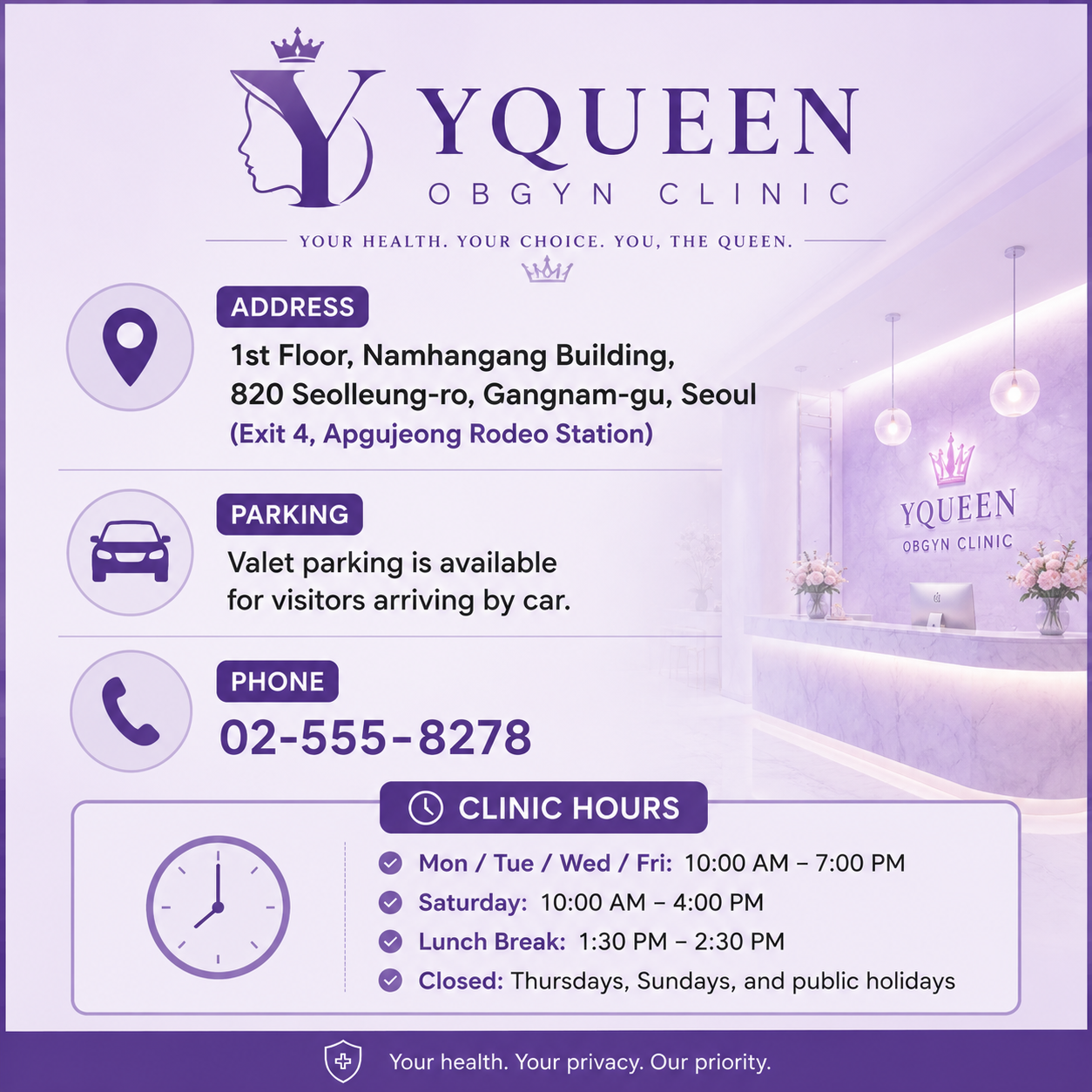
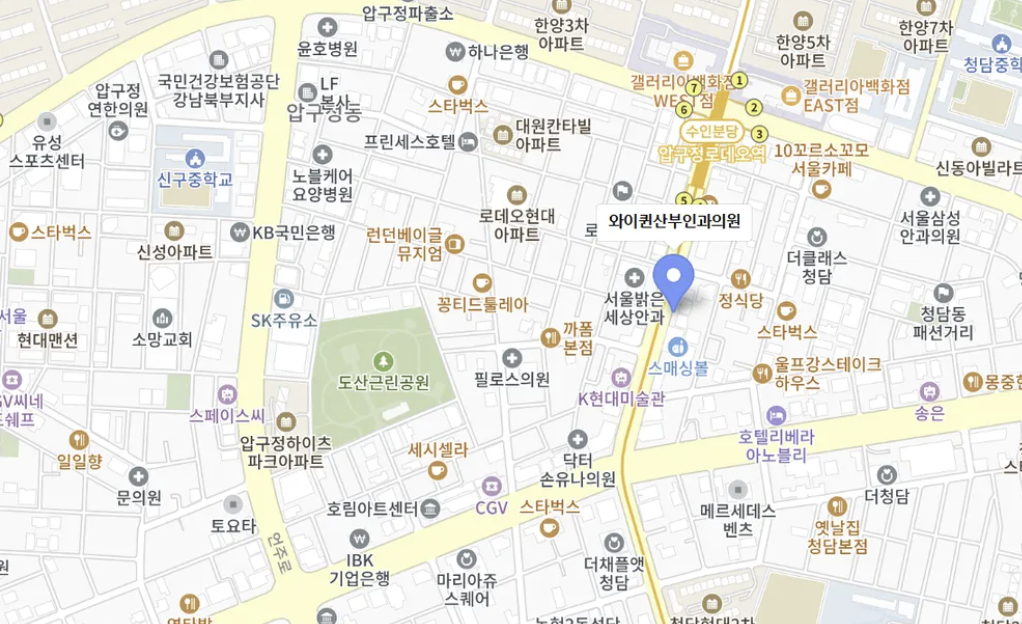
Y Queen Women's Clinic is located in Gangnam, Seoul, with convenient access near Apgujeong Rodeo Station, making it easy for international visitors staying in Gangnam, Cheongdam, Sinsa, Itaewon, Myeongdong, or other central Seoul neighborhoods to visit.
Frequently Asked Questions
What is a pelvic exam?
A pelvic exam is a physical examination of the female reproductive organs used to evaluate gynecological health and diagnose various conditions.
How long does a pelvic exam take?
The examination itself usually takes about 5–10 minutes, while the entire appointment is typically completed within 20–30 minutes.
Does a pelvic exam include a Pap smear?
Not always. A Pap smear is a separate cervical cancer screening test that may be performed during the same appointment if recommended.
Can foreigners receive a pelvic exam in Seoul?
Yes. Y Queen Women's Clinic welcomes international patients and provides English-speaking assistance.
Do I need a pelvic exam every year?
The need for routine pelvic examinations depends on your age, symptoms, medical history, and current clinical guidelines. Your doctor will recommend an appropriate schedule.
Can I have a pelvic exam during my period?
It is generally recommended to schedule the examination when you are not menstruating unless your symptoms require immediate evaluation.
Will I need additional tests?
Depending on your symptoms,
your doctor may recommend a pelvic ultrasound, Pap smear, HPV test, STD screening, or laboratory testing.
Is a pelvic exam confidential?
Yes. All examinations and medical information are handled with strict confidentiality and respect for patient privacy.