Hysteroscopy in Seoul
Gangnam Y Queen Women's Clinic
Y Queen Women's Clinic provides English-speaking hysteroscopy consultations and uterine cavity evaluations in Gangnam, Seoul for local and international patients. Hysteroscopy uses a thin camera passed through the vagina and cervix to directly examine the inside of the uterus and may be recommended for abnormal uterine bleeding, endometrial polyps, submucosal fibroids, intrauterine adhesions, abnormal ultrasound findings, and selected fertility concerns. Our OB-GYN specialists provide pelvic ultrasound, individualized evaluation, treatment planning, and counseling about diagnostic and operative hysteroscopy. When specialized or hospital-based hysteroscopic procedures are required, appropriate referral can be coordinated in a comfortable, private, and foreigner-friendly healthcare setting.
Hysteroscopy is a gynecological procedure that allows a doctor to look directly inside the uterus using a thin, lighted instrument called a hysteroscope. It can help diagnose causes of abnormal uterine bleeding, identify uterine polyps or certain fibroids, evaluate the uterine cavity in selected fertility cases, and guide treatment when abnormalities are found.
At Y Queen Women's Clinic in Gangnam, Seoul, we provide comprehensive gynecological evaluation and hysteroscopy consultations in a comfortable and private environment. Our English-speaking women's health team welcomes Korean residents, expats, international students, business travelers, and medical tourists seeking professional women's healthcare in Korea.
Our OB-GYN specialists evaluate your symptoms and medical history to determine whether hysteroscopy is appropriate. When operative or hospital-based hysteroscopy is required, referral to an appropriate gynecologic surgeon or medical facility can be coordinated.
What Is a Hysteroscopy?
Hysteroscopy is a procedure used to examine the inside of the uterus.
A thin instrument called a hysteroscope is gently passed through:
- The vagina
- The cervix
- Into the uterine cavity
The hysteroscope contains a light and camera that allow the physician to directly examine the endometrial lining and identify abnormalities.
Because the hysteroscope enters through the cervix, hysteroscopy generally does not require an abdominal incision.
Why Is Hysteroscopy Performed?
Hysteroscopy may be recommended to investigate or treat:
- Abnormal uterine bleeding
- Heavy menstrual bleeding
- Bleeding between periods
- Postmenopausal bleeding
- Uterine polyps
- Certain submucosal uterine fibroids
- Abnormal ultrasound findings
- Suspected intrauterine adhesions
- Certain fertility concerns
- Recurrent pregnancy loss in selected cases
- Retained intrauterine tissue in appropriate circumstances
- Certain problems involving an intrauterine device (IUD)
Whether hysteroscopy is necessary depends on your symptoms and previous test results.
Diagnostic vs. Operative Hysteroscopy
There are two main types of hysteroscopy.
Diagnostic Hysteroscopy
Diagnostic hysteroscopy is used to examine the uterine cavity and identify possible abnormalities.
It may help diagnose:
- Endometrial polyps
- Submucosal fibroids
- Uterine adhesions
- Structural abnormalities
- Possible causes of abnormal bleeding
Operative Hysteroscopy
Operative hysteroscopy allows certain abnormalities to be treated during a hysteroscopic procedure.
Depending on the condition, it may be used for:
- Uterine polyp removal
- Removal of selected submucosal fibroids
- Treatment of intrauterine adhesions
- Removal of certain retained tissue
- Other appropriate intrauterine procedures
The appropriate procedure depends on the diagnosis and individual clinical circumstances.
What Happens During Your Consultation?
Your appointment may include:
- Medical history review
- Menstrual history assessment
- Evaluation of abnormal bleeding
- Pregnancy and fertility history
- Pelvic examination when appropriate
- Pelvic or transvaginal ultrasound
- Review of previous imaging
- Discussion of hysteroscopy
- Explanation of alternative diagnostic options
- Treatment or referral planning
Your doctor will determine whether hysteroscopy is likely to provide useful diagnostic or therapeutic information.
What Happens During a Hysteroscopy?
During the procedure:
- You are positioned similarly to a routine pelvic examination.
- The hysteroscope is gently introduced through the vagina and cervix.
- The uterine cavity is expanded using fluid so the lining can be clearly examined.
- The physician examines the inside of the uterus.
- A biopsy or treatment may be performed if medically indicated.
The exact procedure varies depending on whether the hysteroscopy is diagnostic or operative.
Does Hysteroscopy Hurt?
The amount of discomfort varies between patients and depends on the procedure being performed.
You may experience:
- Mild pressure
- Menstrual-like cramping
- Brief cervical discomfort
- Mild cramping afterward
Diagnostic hysteroscopy may require little or no anesthesia in some settings, while operative hysteroscopy may require local anesthesia, sedation, or general anesthesia.
Your doctor will explain the appropriate pain-control options beforehand.
How Should I Prepare?
Preparation depends on the type of hysteroscopy.
Before your appointment or procedure, you may be asked to:
- Provide the date of your last menstrual period
- Inform your doctor if pregnancy is possible
- Bring previous ultrasound or imaging results
- List your medications and supplements
- Inform your doctor about blood-thinning medications
- Follow fasting instructions if sedation or anesthesia is planned
Do not stop prescribed medication unless your healthcare provider specifically instructs you to do so.
When Is Hysteroscopy Usually Scheduled?
For women who still have menstrual periods, hysteroscopy may sometimes be scheduled after menstruation and before ovulation because the uterine lining may be easier to evaluate at that time.
However, timing depends on:
- The reason for the procedure
- Your menstrual cycle
- Bleeding symptoms
- Pregnancy possibility
- Urgency of evaluation
Your doctor will recommend appropriate scheduling.
Hysteroscopy for Uterine Polyps
Hysteroscopy is commonly used to diagnose and remove uterine or endometrial polyps.
A hysteroscopic polypectomy allows the physician to:
- Directly identify the polyp
- Determine its location
- Remove it under visual guidance
- Send tissue for pathological examination when appropriate
This approach generally does not require an abdominal incision.
Hysteroscopy for Uterine Fibroids
Certain fibroids that grow into the uterine cavity, known as submucosal fibroids, may be suitable for hysteroscopic treatment.
Suitability depends on:
- Fibroid size
- Location
- How deeply the fibroid extends into the uterine wall
- Number of fibroids
- Your symptoms
- Fertility goals
Fibroids located primarily within or outside the muscular uterine wall usually require different treatment approaches.
Hysteroscopy and Fertility
Hysteroscopy may be useful in selected fertility evaluations when a structural problem inside the uterus is suspected.
It can help identify:
- Endometrial polyps
- Submucosal fibroids
- Intrauterine adhesions
- Certain uterine cavity abnormalities
Treating appropriate abnormalities may improve the uterine environment, but hysteroscopy itself does not guarantee pregnancy.
Risks and Possible Complications
Hysteroscopy is generally considered a safe procedure when performed appropriately, but complications are possible.
Potential risks include:
- Bleeding
- Infection
- Cervical injury
- Uterine perforation
- Complications related to anesthesia
- Fluid-related complications during some operative procedures
- Need for additional treatment
The risk varies depending on whether the procedure is diagnostic or operative.
Recovery After Hysteroscopy
After an uncomplicated hysteroscopy, you may experience:
- Mild menstrual-like cramping
- Light vaginal bleeding
- Spotting
- Watery discharge
Recovery time depends on the type of procedure and whether anesthesia was used.
Your treating physician will provide instructions regarding exercise, sexual intercourse, tampon use, bathing, and return to normal activities.
When Should I Seek Medical Attention?
Contact a healthcare provider promptly after hysteroscopy if you develop:
- Heavy vaginal bleeding
- Severe or worsening pelvic pain
- Persistent fever
- Foul-smelling vaginal discharge
- Dizziness or fainting
- Other symptoms that concern you
Your physician will explain which symptoms require urgent evaluation before you leave the medical facility.
Hysteroscopy Cost in Seoul
At Y Queen Women's Clinic:
- Consultation fees vary depending on the evaluation required.
- Additional costs may apply for pelvic ultrasound, laboratory testing, biopsy, or pathology.
- The cost of hysteroscopy depends on whether it is diagnostic or operative, the anesthesia required, and the facility where it is performed.
Your doctor can explain the recommended evaluation and expected costs before treatment or referral.
Why Choose Y Queen Women's Clinic?
International patients choose Y Queen because of its:
- English-speaking medical support
- Experienced OB-GYN specialists
- Abnormal uterine bleeding evaluation
- Uterine polyp and fibroid assessment
- Pelvic ultrasound available
- Fertility-focused counseling
- Personalized treatment planning
- Comfortable, private consultation rooms
- Convenient Gangnam location
- Foreigner-friendly appointment process
- Referral coordination when specialized procedures are required
We provide individualized gynecological care focused on identifying the underlying cause of symptoms and recommending an appropriate diagnostic or treatment approach.
Convenient Location in Gangnam
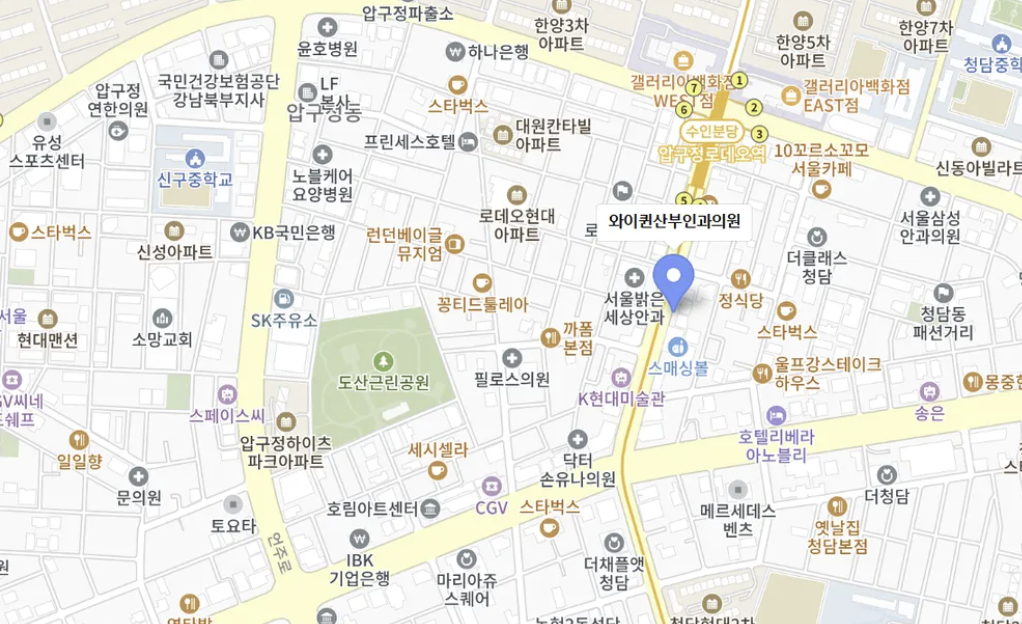
Y Queen Women's Clinic is located in Gangnam, Seoul, with convenient access near Apgujeong Rodeo Station.
The clinic is accessible for international patients living, working, studying, or staying in Gangnam, Cheongdam, Sinsa, Itaewon, Myeongdong, and other central Seoul neighborhoods.
Frequently Asked Questions
What is a hysteroscopy?
Hysteroscopy is a procedure that uses a thin camera called a hysteroscope to examine the inside of the uterus through the vagina and cervix.
Why would I need a hysteroscopy?
It may be recommended for abnormal uterine bleeding, uterine polyps, certain fibroids, abnormal ultrasound findings, intrauterine adhesions, or selected fertility concerns.
Is hysteroscopy the same as an ultrasound?
No. Ultrasound creates images of the reproductive organs using sound waves, while hysteroscopy allows a physician to directly see the inside of the uterine cavity.
Can foreigners get a hysteroscopy consultation in Seoul?
Yes. Y Queen Women's Clinic welcomes international patients and provides English-speaking gynecological consultations.
Can a uterine polyp be removed during hysteroscopy?
Yes. Hysteroscopic polypectomy is commonly used to remove uterine polyps under direct visualization.
Can fibroids be removed with hysteroscopy?
Certain submucosal fibroids that extend into the uterine cavity can potentially be removed hysteroscopically. Other types of fibroids may require different treatments.
Do I need anesthesia for hysteroscopy?
It depends on the procedure. Some diagnostic hysteroscopies may require little or no anesthesia, while operative procedures may use local anesthesia, sedation, or general anesthesia.
How long does recovery take?
Recovery after a simple diagnostic hysteroscopy is often relatively quick. Operative hysteroscopy may require additional recovery time depending on the procedure performed.
Does hysteroscopy affect fertility?
Diagnostic hysteroscopy does not normally impair fertility. In selected cases, treating polyps, adhesions, or certain fibroids may address structural factors that could interfere with conception.
Does Y Queen Women's Clinic perform hysteroscopy?
Y Queen Women's Clinic can provide gynecological evaluation, pelvic ultrasound, treatment planning, and consultation for conditions that may require hysteroscopy. The appropriate setting depends on the procedure required; when specialized or hospital-based hysteroscopy is necessary, referral can be coordinated.