Vaginal Fat Transfer in Seoul
Gangnam Y Queen Women's Clinic
Y Queen Women's Clinic provides English-speaking vaginal fat transfer consultations in Gangnam, Seoul for local and international patients. Vaginal fat transfer, more accurately described in many cases as labia majora or vulvar fat grafting, uses fat harvested from the patient's own body to restore volume to selected external intimate tissues. It may be considered for labia majora deflation, asymmetry, age-related volume loss, changes after weight loss, menopause, or postpartum changes. Because some transferred fat is naturally reabsorbed and final volume cannot be predicted precisely, treatment should be planned conservatively with realistic expectations. Fat transfer does not directly tighten the vaginal canal or guarantee improved sexual function. Y Queen Women's Clinic offers confidential, foreigner-friendly consultation focused on anatomy, donor-site assessment, fat survival, recovery, risks, and individualized treatment planning.
What Is Vaginal Fat Transfer?
Vaginal fat transfer is a term commonly used for transferring autologous fat, meaning fat taken from the patient's own body, into selected intimate tissues.
In practice, the procedure may involve fat transfer to the:
- Labia majora
- Vulvar tissues
- Perineal area in selected cases
- Other appropriate external intimate tissues
The procedure is generally intended to restore volume rather than surgically tighten the vaginal canal.
Is Vaginal Fat Transfer the Same as Labia Majora Fat Grafting?
In many aesthetic gynecology settings, these terms refer to the same or very similar procedures.
Labia Majora Fat Grafting
Specifically refers to adding volume to the outer labial folds.
Vaginal Fat Transfer
Is a broader marketing term that may refer to fat grafting in the external intimate area.
Patients should ask exactly which anatomical area will be treated before undergoing the procedure.
Why Do Women Consider Vaginal Fat Transfer?
Patients may seek consultation because of:
- Loss of labia majora volume
- Deflated or flattened outer labial tissue
- Asymmetry
- Changes after weight loss
- Age-related volume loss
- Menopause-related tissue changes
- Postpartum changes
- Personal cosmetic concerns
- Desire for a fuller external contour
Treatment is elective when concerns are cosmetic and anatomy is otherwise healthy.
What Causes Volume Loss in the Labia Majora?
External vulvar volume can change because of:
- Aging
- Menopause
- Reduced estrogen
- Significant weight loss
- Pregnancy and childbirth
- Natural body composition
- Genetic factors
- Previous procedures
- Changes in subcutaneous fat distribution
Not every change requires treatment.
What Happens During Vaginal Fat Transfer?
The general process typically involves two steps:
- Fat is harvested from another area of the body.
- The processed fat is injected into selected intimate tissues.
Common donor areas may include:
- Abdomen
- Flanks
- Thighs
- Other areas with suitable fat
The exact donor site depends on body composition and treatment planning.
How Is the Fat Harvested?
Fat is usually collected using a small-volume liposuction technique.
The physician may:
- Apply appropriate anesthesia
- Make a small access point
- Use a cannula to remove a limited amount of fat
- Process the harvested fat
- Prepare the purified fat for injection
The harvesting area will also require recovery and aftercare.
How Is the Fat Injected?
After processing, small amounts of fat are injected into selected areas.
The goal is generally to:
- Restore volume
- Improve symmetry
- Create a smoother contour
- Avoid excessive overfilling
- Preserve natural anatomy
Fat is usually distributed in small amounts rather than placed as one large deposit.
What Happens During Your Consultation?
Your appointment may include:
- Confidential discussion of your concerns
- Medical and gynecological history
- Pregnancy and childbirth history
- Weight-change history
- Review of previous intimate procedures
- External examination when appropriate
- Assessment of labia majora volume and asymmetry
- Evaluation of donor fat availability
- Discussion of expected results
- Explanation of fat survival and possible volume loss
- Review of risks
- Recovery planning
The purpose is to determine whether fat grafting or another treatment is more appropriate.
Who May Consider Vaginal Fat Transfer?
A consultation may be appropriate for adults who:
- Have reduced labia majora volume
- Notice tissue deflation
- Have asymmetry
- Have changes after weight loss
- Have age-related vulvar volume changes
- Prefer using their own tissue rather than synthetic filler
- Understand that some transferred fat may be reabsorbed
The procedure is not appropriate for everyone.
Who May Not Be a Good Candidate?
Treatment may need to be postponed or avoided in patients with:
- Active vaginal or vulvar infection
- Active skin infection at the donor site
- Unexplained vulvar lesions
- Significant bleeding disorders
- Certain medical conditions affecting healing
- Pregnancy
- Very limited available donor fat
- Unrealistic expectations
- Other contraindications identified during evaluation
Your physician should review your medical history before treatment.
Vaginal Fat Transfer vs. Dermal Filler
Both can be used to add volume, but they are different.
Fat Transfer
Uses your own fat and requires a donor-site procedure.
Dermal Filler
Uses an injectable manufactured material.
Potential differences include:
- Procedure time
- Recovery
- Longevity
- Predictability of retained volume
- Risk profile
- Need for repeat treatment
The appropriate option depends on anatomy, goals, and medical assessment.
Vaginal Fat Transfer vs. Labia Majora Reduction
These procedures have opposite goals.
Fat Transfer
Adds volume to tissue that appears deflated or lacks fullness.
Labia Majora Reduction
Removes or reshapes excess outer labial tissue.
A physical examination helps determine whether the primary concern is excess tissue, volume loss, or both.
Vaginal Fat Transfer vs. Labiaplasty
Labiaplasty and fat transfer address different anatomical concerns.
Labiaplasty
Most commonly reduces or reshapes the labia minora.
Fat Transfer
Typically adds volume to the labia majora or surrounding external tissues.
They are not interchangeable.
Vaginal Fat Transfer vs. Vaginoplasty
These procedures are also different.
Vaginal Fat Transfer
Usually adds volume to external vulvar tissues.
Vaginoplasty
Involves surgical repair or reconstruction of vaginal tissues.
Fat transfer does not directly tighten or reconstruct the vaginal canal.
Does Vaginal Fat Transfer Tighten the Vagina?
Not necessarily.
Fat grafting to the labia majora changes external volume and contour.
It should not be presented as a reliable method for tightening the vaginal canal or treating pelvic floor weakness.
Patients concerned about vaginal laxity should receive a separate pelvic and pelvic floor evaluation.
Can Vaginal Fat Transfer Improve Sexual Function?
Improvement in sexual function cannot be guaranteed.
Some patients may feel more comfortable or confident after addressing a volume-related concern, but sexual function depends on many factors, including:
- Pelvic floor health
- Hormones
- Lubrication
- Nerve function
- Pain conditions
- Medications
- Psychological factors
- Relationship factors
Fat transfer should not be promoted as a guaranteed method of improving orgasm or sexual satisfaction.
Does Vaginal Fat Transfer Help Vaginal Dryness?
Fat grafting is not a standard treatment for vaginal dryness.
Dryness is commonly associated with:
- Menopause
- Perimenopause
- Breastfeeding
- Low estrogen
- Certain medications
- Vulvovaginal conditions
These problems may require moisturizers, lubricants, hormonal treatment when appropriate, or other medical therapy.
How Much Fat Survives After Transfer?
Not all transferred fat survives permanently.
Some of the injected fat is naturally reabsorbed by the body during healing.
The amount that remains can vary depending on:
- Technique
- Blood supply
- Tissue quality
- Volume injected
- Smoking status
- Weight stability
- Individual healing
This means final volume may be lower than the immediate post-procedure appearance.
Will I Need More Than One Fat Transfer?
Possibly.
Some patients may need repeat treatment if:
- More fat is absorbed than expected
- Significant asymmetry remains
- Additional volume is desired
- Aging or weight changes alter the result
Repeat procedures should only be considered after adequate healing and reassessment.
Are the Results Permanent?
Some surviving transferred fat may remain long term, but results are not perfectly permanent or predictable.
The treated area can still change because of:
- Aging
- Hormonal changes
- Menopause
- Weight gain
- Weight loss
- Pregnancy
- Childbirth
- Natural tissue changes
Stable body weight can help maintain more consistent results.
Does Vaginal Fat Transfer Hurt?
Appropriate anesthesia or pain control is used.
Patients may experience discomfort in both the donor and recipient areas.
Temporary symptoms may include:
- Swelling
- Bruising
- Tenderness
- Pressure
- Soreness
- Mild asymmetry during healing
The donor area may feel similar to a small liposuction recovery.
Recovery After Vaginal Fat Transfer
Recovery involves healing at both:
- The fat-harvesting site
- The intimate injection site
Temporary effects may include:
- Swelling
- Bruising
- Tenderness
- Local pressure
- Donor-site soreness
- Temporary asymmetry
The treated labia may initially appear fuller than the final result because of swelling and planned volume adjustment.
When Can I Exercise?
Exercise restrictions depend on:
- Donor site
- Amount of fat harvested
- Injection area
- Swelling
- Individual healing
Activities that create pressure or friction around the vulvar area may need to be temporarily avoided.
These can include:
- Cycling
- Running
- Strenuous gym workouts
- Horseback riding
- Heavy lifting
Your physician will advise when exercise can safely resume.
When Can I Have Sexual Intercourse?
Sexual activity involving the treated area should generally be avoided while swelling, tenderness, and tissue healing are present.
The appropriate timing depends on:
- Injection volume
- Healing progress
- Tenderness
- Bruising
- Follow-up findings
Follow your physician's specific aftercare instructions.
Can I Sit Normally After the Procedure?
Sitting may be uncomfortable initially depending on swelling and the treatment area.
Your physician may recommend:
- Avoiding prolonged pressure
- Changing position frequently
- Wearing loose clothing
- Following specific postoperative precautions
The exact instructions vary by procedure.
What Happens to the Donor Area?
Because fat transfer requires fat harvesting, the donor area may experience:
- Bruising
- Swelling
- Tenderness
- Temporary numbness
- Minor contour irregularity
- Small access-point scars
Donor-site healing is part of the overall procedure and should be included when considering recovery.
Will There Be Scars?
Fat transfer generally requires small access points for fat harvesting and injection.
Any skin puncture or incision can leave a scar.
Scarring depends on:
- Access-site size
- Technique
- Individual healing
- Infection or wound complications
- Skin type
Scars are generally smaller than those associated with open surgery but cannot be guaranteed to be invisible.
Risks and Possible Complications
Potential risks include:
- Bleeding
- Infection
- Bruising
- Swelling
- Pain
- Fat resorption
- Uneven fat survival
- Asymmetry
- Lumps or firmness
- Fat necrosis
- Oil cyst formation
- Overcorrection
- Undercorrection
- Donor-site contour irregularity
- Scarring
- Need for revision treatment
Rare but serious complications are possible with any fat injection procedure and should be discussed with the treating physician.
Can Fat Transfer Cause Lumps?
Yes.
Irregular fat survival can sometimes lead to:
- Small lumps
- Firm areas
- Uneven texture
- Fat necrosis
- Oil cysts
Many irregularities improve with healing, but persistent changes may require further evaluation.
Can the Fat Move?
Properly placed surviving fat becomes integrated into the surrounding tissue rather than behaving like a free-moving liquid.
However, uneven placement, resorption, or tissue response can create asymmetry or contour irregularity.
Technique and conservative volume placement are important.
Can Vaginal Fat Transfer Be Reversed?
Not in the same way that some temporary fillers can potentially be dissolved.
Once fat survives and integrates into tissue, removal or correction may require:
- Observation
- Revision
- Liposuction
- Surgical correction in selected cases
This is one reason careful planning is important.
Vaginal Fat Transfer After Childbirth
Some patients notice labia majora deflation or asymmetry after pregnancy or childbirth.
However, postpartum intimate concerns can also involve:
- Pelvic floor weakness
- Perineal injury
- Vaginal laxity
- Scar tissue
- Vaginal dryness
Fat transfer addresses volume loss but does not treat all postpartum conditions.
A comprehensive postpartum gynecological assessment may therefore be helpful.
Vaginal Fat Transfer During Menopause
Menopause can affect vulvar and vaginal tissues through hormonal changes.
Patients may experience:
- Tissue thinning
- Dryness
- Reduced elasticity
- Volume changes
Fat transfer may address selected external volume concerns, but it does not replace medical treatment for genitourinary syndrome of menopause when hormonal or vaginal symptoms are present.
How Should I Prepare for a Consultation?
Before your appointment:
- Identify your primary concern
- Note recent weight changes
- Mention pregnancies and childbirth
- Tell your doctor about previous intimate procedures
- List medications and supplements
- Mention smoking or nicotine use
- Discuss future pregnancy plans
- Tell your doctor about infections or skin conditions
- Prepare questions about fat survival and recovery
This information helps determine whether fat grafting is appropriate.
Vaginal Fat Transfer Cost in Seoul
At Y Queen Women's Clinic:
- Consultation fees depend on the evaluation required.
- Procedure costs vary according to the amount of fat harvesting and transfer.
- Pricing may also depend on donor-site treatment, anesthesia, procedure complexity, and follow-up care.
- Additional costs may apply for laboratory testing, medication, or other treatments.
Current pricing and an individualized treatment plan can be discussed after evaluation.
Why Choose Y Queen Women's Clinic?
International patients choose Y Queen because of its:
- English-speaking medical support
- Female-focused gynecological care
- Confidential intimate health consultations
- Assessment of labia majora volume
- Postpartum gynecological evaluation
- Menopause-related women's healthcare
- Individualized anatomical assessment
- Personalized treatment planning
- Discussion of fat transfer and alternative options
- Attention to realistic volume and symmetry goals
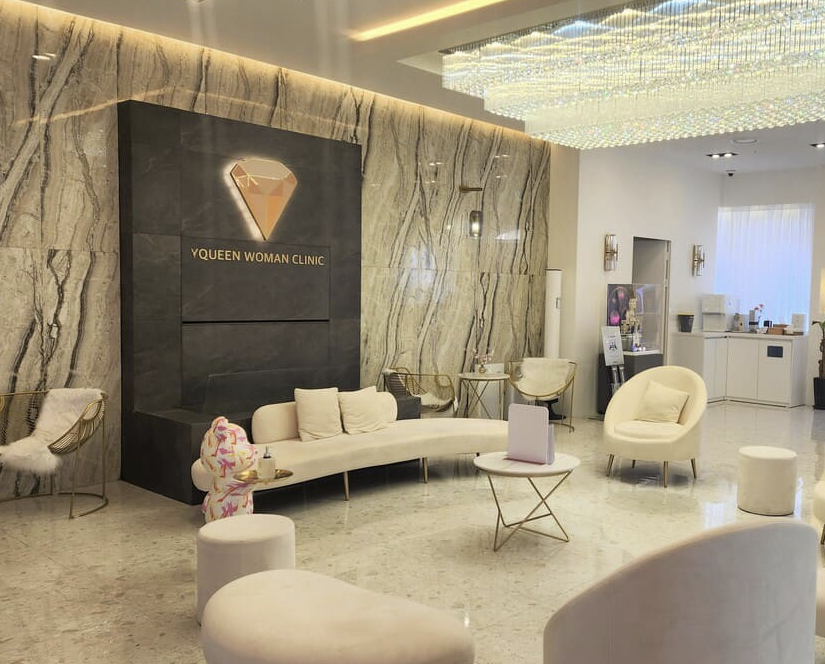
- Comfortable, private consultation environment
- Convenient Gangnam location
- Foreigner-friendly appointment process
- Follow-up women's healthcare
Our approach emphasizes individualized anatomy, healthy tissue, realistic expectations, and informed decision-making before elective intimate procedures.
Convenient Location in Gangnam
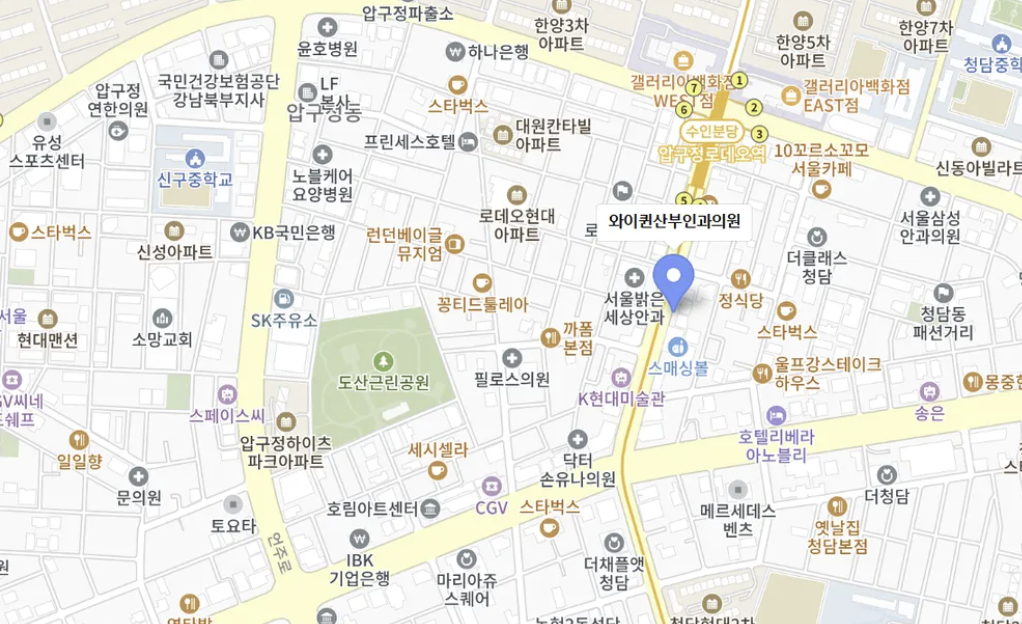
Y Queen Women's Clinic is located in Gangnam, Seoul, with convenient access near Apgujeong Rodeo Station.
The clinic is accessible for international patients living, working, studying, or staying in Gangnam, Cheongdam, Apgujeong, Sinsa, Itaewon, Myeongdong, and other central Seoul neighborhoods.
Frequently Asked Questions
What is vaginal fat transfer?
Vaginal fat transfer generally refers to using a patient's own fat to restore volume to selected external intimate tissues, most commonly the labia majora or surrounding vulvar area.
Is vaginal fat transfer actually performed inside the vagina?
Usually, the term refers primarily to external vulvar or labia majora fat grafting rather than injecting fat throughout the internal vaginal canal. Patients should confirm the exact treatment area during consultation.
Why do women get vaginal fat transfer?
Common reasons include labia majora volume loss, tissue deflation, asymmetry, changes after weight loss, aging, menopause, or postpartum changes.
Where does the fat come from?
Fat is usually harvested from another area of the patient's body, such as the abdomen, flanks, or thighs, depending on body composition and treatment planning.
Is vaginal fat transfer permanent?
Some transferred fat may survive long term, but part of the injected volume is usually reabsorbed. Results can also change with aging, weight fluctuation, pregnancy, and hormonal changes.
Can foreigners get vaginal fat transfer in Seoul?
Yes. Y Queen Women's Clinic welcomes international patients and provides English-speaking assistance for confidential intimate health and vulvar volume consultations.
Does vaginal fat transfer tighten the vagina?
No. Fat transfer generally adds volume to external tissues and does not reliably tighten or reconstruct the vaginal canal.
Is vaginal fat transfer the same as labiaplasty?
No. Fat transfer adds volume, typically to the labia majora, while labiaplasty most commonly reduces or reshapes the labia minora.
Is fat transfer better than filler?
Neither is universally better. Fat uses the patient's own tissue and may provide long-term retained volume, while fillers avoid a fat-harvesting procedure but have different longevity and risks. The appropriate option depends on individual anatomy and goals.
How much of the transferred fat survives?
Fat survival varies between patients and cannot be precisely predicted. Some volume is usually lost during healing.
Will I need a second procedure?
Possibly. Repeat treatment may be considered if significant fat resorption occurs or additional volume is desired after healing.
Does fat transfer help vaginal dryness?
Fat grafting is not a standard treatment for vaginal dryness. Dryness should be evaluated for hormonal and other medical causes.
Can fat transfer improve sexual function?
Improvement in sexual satisfaction or orgasm cannot be guaranteed. Fat transfer primarily addresses tissue volume and contour rather than the multiple factors involved in sexual function.
What are the risks?
Potential risks include swelling, bruising, infection, asymmetry, fat resorption, lumps, fat necrosis, oil cysts, donor-site irregularities, and the need for revision.
Does Y Queen Women's Clinic provide vaginal fat transfer?
Y Queen Women's Clinic can provide confidential evaluation and consultation for labia majora volume loss, vulvar tissue changes, postpartum concerns, and patients considering intimate fat grafting. The availability, technique, donor-site options, suitability, and current pricing of vaginal fat transfer should be confirmed during an individual consultation.