Common Mistakes International Patients Make Before Their Appointment in Korea
Introduction
International patients often spend considerable time choosing a women's clinic in Korea, but the preparation before the appointment can be just as important.
A lack of preparation can lead to missed appointments, unnecessary delays, incomplete medical histories, unexpected costs, or difficulty arranging follow-up care. These problems are particularly relevant for patients traveling to Korea for a short period or visiting a clinic where they are unfamiliar with the healthcare system.
Fortunately, most appointment-related problems can be avoided with a little planning.
Mistake 1: Booking the Wrong Type of Appointment
Choosing a General Appointment Without Explaining Your Needs
Women's healthcare covers many different services, including:
- Gynecology consultations
- Preventive checkups
- Cervical screening
- Pelvic ultrasound
- Fertility consultations
- Contraception
- Menopause care
- Menstrual disorder evaluation
Selecting a general appointment without explaining your main concern may make it harder for the clinic to prepare.
How to Avoid It
When booking, briefly explain why you want to visit.
For example, mention whether you need a routine checkup, evaluation of irregular periods, fertility consultation, or ultrasound.
Mistake 2: Not Confirming the Appointment
Assuming an Online Request Is Automatically Confirmed
Some online reservation systems immediately confirm appointments, while others simply submit a request.
International patients should verify that the appointment is actually confirmed.
How to Avoid It
Check for:
- Confirmation message
- Appointment date
- Appointment time
- Physician name
- Clinic location
- Registration instructions
Mistake 3: Not Checking the Clinic's Location
Assuming the Clinic Is Close to Your Hotel
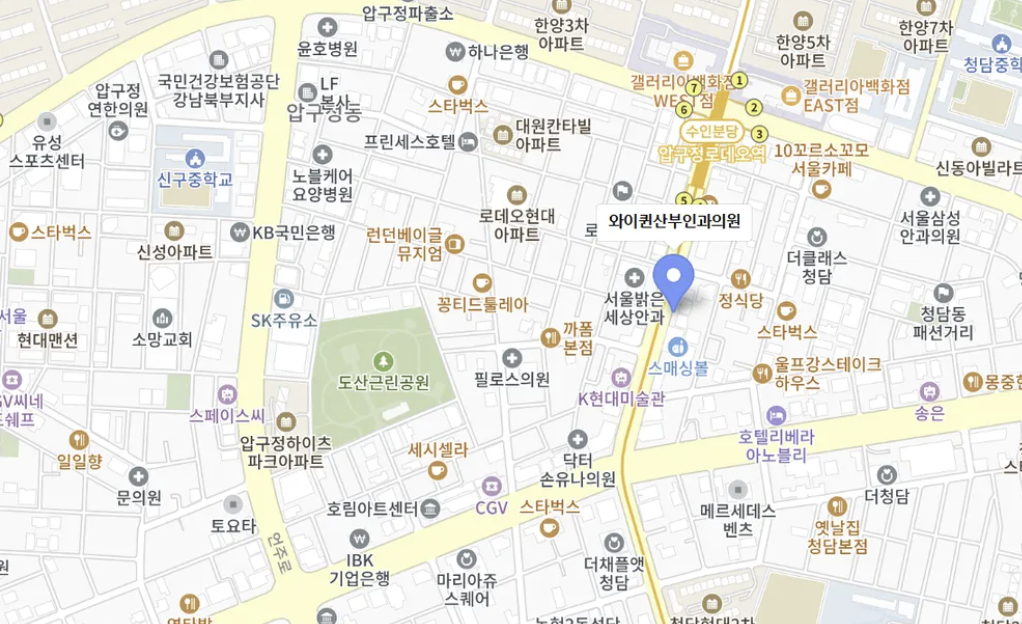
Seoul is a large city, and travel time can vary considerably depending on where you are staying.
A clinic may be located farther from your accommodation than expected.
How to Avoid It
Check the exact address and estimated travel time before your appointment.
If you have a scheduled consultation, arrive early enough to allow for transportation delays.
Mistake 4: Not Confirming Language Support
Assuming Every Clinic Provides English Medical Care
A clinic may have an English-language website or English-speaking reception staff without having an English-speaking physician available.
How to Avoid It
Before booking, ask:
- Is the doctor English-speaking?
- Is a medical interpreter available?
- Are written instructions available in English?
- Can medical reports be provided in English?
Mistake 5: Relying on Automatic Translation for Complex Medical Information
Translation Apps Have Limitations
Translation tools can be useful for basic communication, but they should not be your only method of communicating complex medical information.
Medical terminology can be difficult to translate accurately.
How to Avoid It
Prepare a short written medical summary in English and ask the clinic about professional language support when necessary.
Mistake 6: Forgetting Previous Medical Records
Arriving Without Relevant Test Results
Previous ultrasound reports, laboratory results, medication information, or surgical records can help a doctor understand your medical history.
This is especially useful when you have received healthcare in another country.
How to Avoid It
Bring digital or printed copies of relevant:
- Ultrasound reports
- Blood-test results
- Pathology reports
- Previous diagnoses
- Surgical records
- Medication lists
Do not overwhelm the doctor with unrelated documents.
Mistake 7: Not Preparing a Medication List
Forgetting Medication Names or Doses
Patients may remember the purpose of a medication but not its exact name or dose.
This can make medical assessment more difficult.
How to Avoid It
Prepare a current medication list that includes:
- Medication name
- Dose
- Frequency
- Reason for use
Include relevant supplements when appropriate.
Mistake 8: Forgetting Allergy Information
Allergies Should Be Clearly Communicated
Make sure the healthcare provider knows about significant medication or other relevant allergies.
How to Avoid It
Keep a written allergy list with your other medical information.
If you have experienced a serious reaction to a medication, describe what happened rather than simply naming the medication.
Mistake 9: Not Knowing Your Menstrual History
The Last Menstrual Period Can Be Important
Gynecological consultations often involve questions about menstrual patterns.
Not knowing the date of your last period can make the consultation less efficient.
How to Avoid It
Before your appointment, record:
- First day of your last period
- Typical cycle length
- Number of bleeding days
- Recent changes
- Spotting
- Menstrual pain
Mistake 10: Ignoring Pregnancy Possibility
Tell the Clinic if Pregnancy Is Possible
A missed period may have several causes, including pregnancy.
Pregnancy status can also affect decisions about medications and certain diagnostic procedures.
How to Avoid It
If pregnancy is possible, tell the healthcare provider during booking or consultation.
Mistake 11: Assuming Every Test Can Be Completed in One Visit
Some Services Require Additional Time
Patients sometimes expect a consultation, ultrasound, laboratory tests, results, and treatment to all happen immediately.
This is not always realistic.
How to Avoid It
Ask the clinic:
- Which tests can be completed during the first visit?
- Which require separate scheduling?
- Which results take additional time?
- Will follow-up be necessary?
Mistake 12: Not Asking About Preparation Requirements
Some Tests Have Specific Instructions
Depending on the examination, you may need to:
- Fast
- Drink water
- Have a full bladder
- Empty your bladder
- Attend at a specific time in your menstrual cycle
How to Avoid It
Ask the clinic for written preparation instructions before your appointment.
Mistake 13: Scheduling the Appointment Too Close to Your Flight
International Travel Requires Flexibility
If you are visiting Korea for medical care, scheduling an appointment immediately before your departure can be risky if additional testing or follow-up is recommended.
How to Avoid It
When possible, leave enough time for:
- Additional consultation
- Test results
- Follow-up
- Referral
- Treatment planning
Mistake 14: Assuming a Weekend Appointment Includes Every Service
Weekend Hours May Be Limited
A clinic may be open on Saturday but offer fewer diagnostic or laboratory services than during weekdays.
How to Avoid It
If you need ultrasound, blood testing, cervical screening, or another service, confirm that it is available during the exact appointment time.
Mistake 15: Not Asking About Costs
The Consultation Fee May Not Cover Everything
Additional charges may apply for:
- Ultrasound
- Laboratory testing
- Screening
- Procedures
- Medication
- Interpretation
How to Avoid It
Ask for an estimated cost before agreeing to optional services.
If you have insurance, confirm what is covered and what is not.
Mistake 16: Assuming Foreign Insurance Will Automatically Be Accepted
International Insurance Policies Differ
A clinic may not directly bill your international insurance provider.
You may need to pay first and request reimbursement later.
How to Avoid It
Contact both the clinic and your insurer before the appointment if direct billing is important.
Ask what documentation you will receive for reimbursement.
Mistake 17: Not Bringing Identification
Registration May Require Identification
International patients may need appropriate identification when registering.
How to Avoid It
Bring the identification requested by the clinic, such as a passport or relevant Korean identification document.
Mistake 18: Not Checking Payment Methods
Payment Options Can Differ
Do not assume that every clinic accepts every payment method.
How to Avoid It
Confirm whether the facility accepts:
- Credit cards
- Debit cards
- Cash
- Other available payment methods
Ask whether deposits are required for certain services.
Mistake 19: Not Asking How Results Will Be Delivered
Results May Require Follow-Up
Laboratory, pathology, and other diagnostic results may not be available immediately.
How to Avoid It
Before leaving, ask:
- When will the results be ready?
- How will I receive them?
- Can I receive an English report?
- Do I need another appointment?
- Can results be sent electronically where appropriate?
Mistake 20: Forgetting to Explain Your Reproductive Goals
Treatment Depends on Your Plans
Your treatment options can differ depending on whether you:
- Want to avoid pregnancy
- Want pregnancy soon
- May want pregnancy later
- Are actively trying to conceive
How to Avoid It
Tell your gynecologist about your reproductive goals before discussing treatment.
Mistake 21: Not Preparing Questions
Important Questions Are Easy to Forget
Appointments can feel overwhelming, particularly when medical information is unfamiliar.
How to Avoid It
Write down your most important questions beforehand.
For example:
- What could be causing my symptoms?
- What tests do I need?
- What do the results mean?
- What treatments are available?
- What are the alternatives?
- Do I need follow-up?
Mistake 22: Expecting a Diagnosis Before the Examination
Symptoms Alone May Not Identify the Cause
For example, irregular periods can have several possible causes.
A doctor may need medical history, examination, laboratory testing, ultrasound, or other evaluation before reaching a conclusion.
How to Avoid It
Approach the appointment as an evaluation rather than expecting a specific diagnosis or treatment.
Mistake 23: Requesting Unnecessary Tests
More Tests Do Not Always Mean Better Healthcare
International patients sometimes assume that a comprehensive package containing many tests is automatically better.
Medical testing should be based on individual risk factors, symptoms, age, history, and preventive recommendations.
How to Avoid It
Ask why a test is being recommended and how the result would affect your care.
Mistake 24: Not Planning Follow-Up Care
Your Care May Continue After You Leave Korea
Some conditions require monitoring or additional treatment.
If you are returning home, ask what follow-up will be necessary.
How to Avoid It
Request copies of relevant:
- Reports
- Laboratory results
- Imaging
- Prescriptions
- Treatment recommendations
Mistake 25: Treating a Routine Appointment as Emergency Care
Urgent Symptoms Need Appropriate Attention
Routine appointments are not intended to replace urgent medical assessment.
If you experience severe pelvic or abdominal pain, very heavy bleeding, fainting, or rapidly worsening symptoms, seek prompt medical attention rather than simply waiting for a scheduled appointment.
A Simple Preparation Checklist
Before Leaving for the Clinic
Check that you have:
- Appointment confirmation
- Clinic address
- Identification
- Insurance information
- Medication list
- Allergy information
- Previous relevant medical records
- Menstrual history
- Questions for the doctor
- Payment method
Conclusion
International patients can make their women's healthcare experience in Korea considerably easier by preparing before the appointment.
The most common problems involve booking the wrong service, failing to confirm language support, forgetting medical records, misunderstanding preparation requirements, assuming all testing can be completed in one day, or failing to plan for follow-up care.
Before your appointment, confirm the clinic location, appointment details, language support, required preparation, expected costs, available testing, and results process. Bring relevant medical information and clearly explain your symptoms and reproductive goals.
Good preparation does not guarantee that every appointment will be completed exactly as planned, but it can reduce unnecessary delays and help your doctor make better-informed decisions.
For international patients, the goal should be more than simply completing a medical appointment in Korea. It should be to ensure that your healthcare information, expectations, communication needs, and follow-up plans are all clearly understood.
FAQs About Preparing for Women's Health Appointments in Korea
1. What should international patients bring to a women's clinic in Korea?
Bring identification, relevant medical records, medication and allergy information, insurance details, menstrual history, and your main questions.
2. Should I confirm my appointment before visiting?
Yes. Verify the appointment date, time, doctor, location, and whether the appointment is fully confirmed.
3. Do Korean women's clinics provide English support?
Some do, but the level of English support varies. Confirm whether the doctor, staff, or interpreter can communicate in English.
4. Should I bring previous ultrasound results?
Yes, if they are relevant to your current concern. Previous imaging can help the physician understand changes over time.
5. Do I need to know my last menstrual period?
It is useful to know the date of your last period and your usual cycle pattern for many gynecology consultations.
6. Can I complete all women's health tests during one visit?
Not necessarily. Some tests require specific preparation, timing, laboratory processing, or follow-up.
7. Should I ask about costs before my appointment?
Yes. Ask whether consultation, ultrasound, laboratory testing, screening, medication, and interpretation are charged separately.
8. Can foreign insurance be used at Korean women's clinics?
This depends on the clinic and your insurance policy. Some patients may need to pay first and request reimbursement.
9. Should I schedule my appointment before my flight home?
Leave enough time for possible test results and follow-up. Avoid scheduling complex medical care immediately before departure when possible.
10. What if I have severe symptoms before my scheduled appointment?
Do not simply wait for a routine appointment. Severe pain, very heavy bleeding, fainting, or rapidly worsening symptoms may require prompt medical assessment.